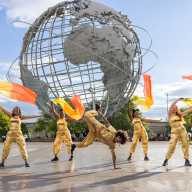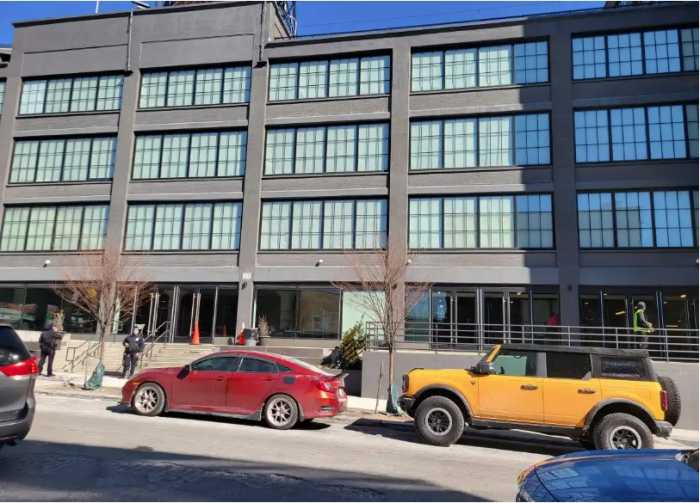


The anti-casino movement in Queens continues to grow as 30 faith leaders representing over 10,000 congregants across the borough released statements in opposition to the Metropolitan Park casino development. The project, spearheaded by billionaire Steve Cohen, will be located next to Citi Field in Flushing.
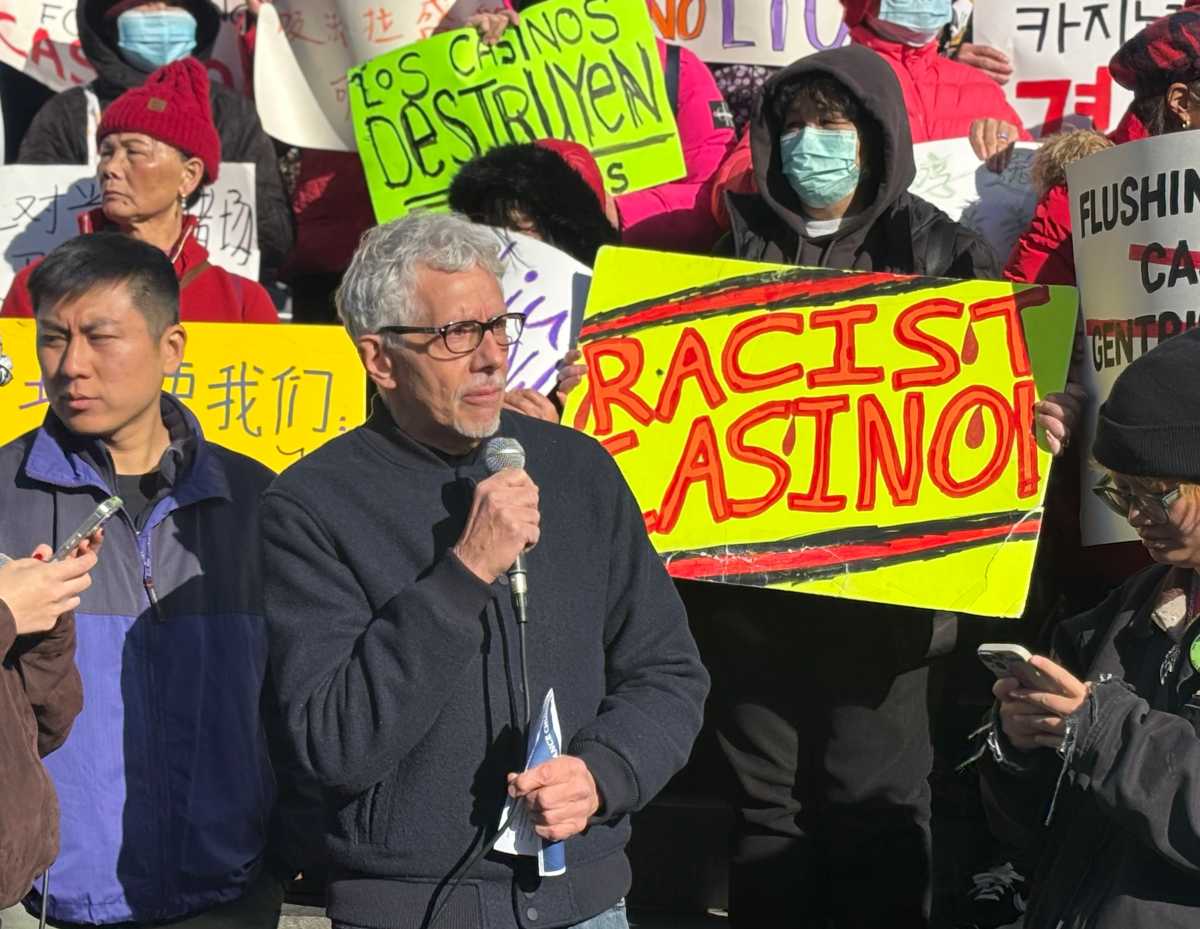
After an anti-casino protest following the NYS Gaming Facility Location Board’s (GFLB) decision on Dec. 1 to recommend licenses be granted to three casino operators proposing locations in New York City, including Metropolitan Park, organizers and faith leaders are now demanding the NYS Gaming Commission deny the licenses during their vote this Monday.
As of press time, the gaming commission did not respond to QNS’ request for comment.
Faith leaders released statements in English, Spanish, Chinese and Korean, citing concerns of exploitation, deception, addiction, rising poverty and more associated with the looming casino license approvals.
“We are here to benefit a community, and gambling is taking money from people and investing their time in a prosperous illusion of winning more money,” wrote Pastor Mark Perri of Immanuel Community Church. “The government should not be supporting an illusion that hurts the individual and families. It creates an addiction in which people do not have the wherewithal, and the institution does not promote restraint that can be enjoyable for the moment. The institution relies on increased participation in losing money.”
Gambling addiction
While an October 2024 study released by the University of Massachusetts Amherst revealed that “the prevalence of problem and at-risk gambling has not significantly changed since casinos were introduced in Massachusetts beginning in 2015,” the study notes that 90 percent of revenue at these casinos come from at-risk or problem gamblers. The study said that this is not exclusive to Massachusetts.
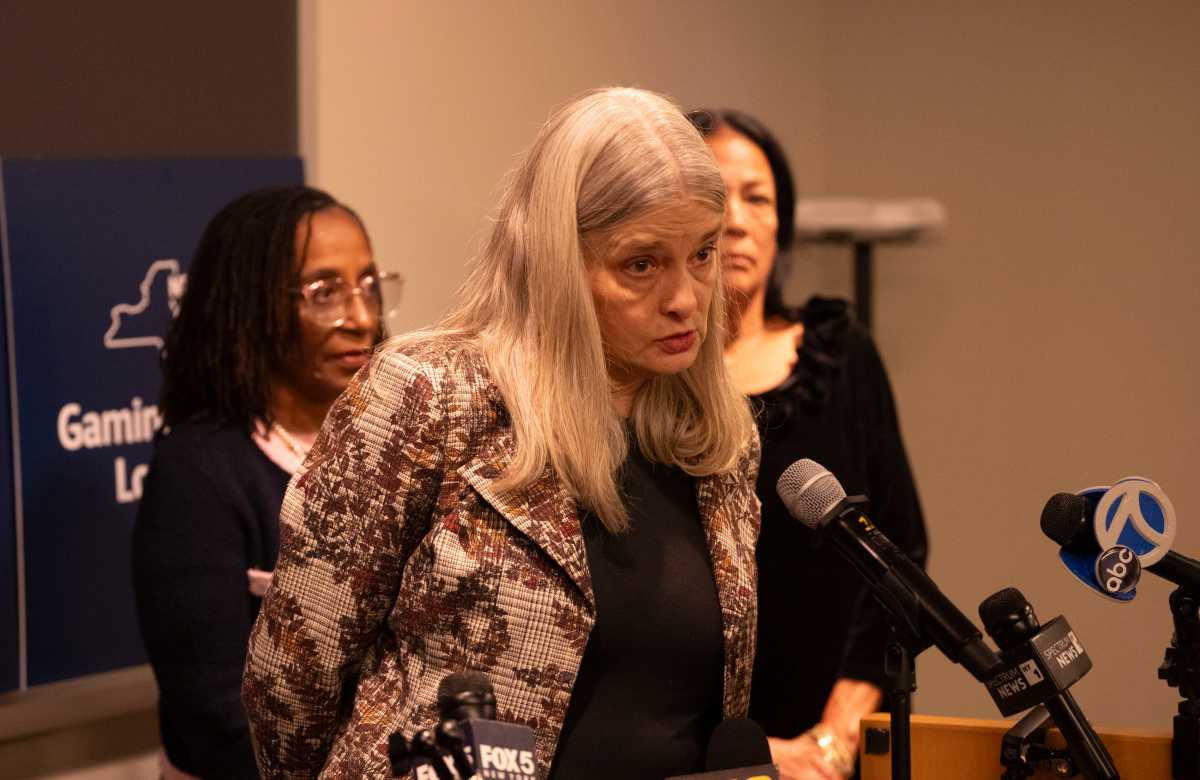
Vicki L. Been, chair of the GFLB, said the board’s own analysts or consultants did not estimate such a high amount of revenue coming from at-risk or problem gamblers.
“We were very, very concerned about the issue of problem gambling,” Been said, adding the board urges the casino operators and gaming commission to provide active intervention for gambling addiction. “[It’s] not just making information available about resources for problem gamblers, but actually monitoring what’s going on on the floor, intervening and trying to help somebody with a sort of warm handoff to a source of help.”
An October 2022 study by Frontiers in Psychiatry, however, states that many suffering from gambling addiction do not seek help in an effort to conceal the extent of their debt.
According to the study, “The only way to effectively prevent extreme gambling-related harms, such as suicidality, and the processes of indebtedness and shame that connect to it, appears to be shifting perspective in regulation toward a more comprehensive public health approach and prevention at a population level to relieve the blame on individuals.”
Perri added that he felt relying on gambling to generate revenue in a community is dehumanizing, and he said anyone listening to the promises made by both political players and project officials are “violating what humanity is here for.”
Peter Ong, assistant director of community engagement at Redeemer City to City and member of the clergy in Flushing, said he is opposed to building the casino for a few reasons — first, that he views the project as a theft of public land; second, that he believes the proposal had inadequate environmental review; third, that he believes casinos have predatory economic practices; and fourth, that he has personally witnessed the human cost of gambling addiction that broke families and burdened them with debt.
A 2023 study by the Indian Journal of Psychiatry noted that eight separate U.S. studies reported that those with gambling addiction had the highest suicide rate of any addiction disorder, which was also consistent with findings in the UK. While the Indian J Psychiatry study specifically focused on online gambling addiction, the U.S. and UK studies found that this was the case for all types of gamblers, whether online or in-person.
The October 2022 Frontiers in Psychiatry study, for example, show that gambling is identified as an important contributor to suicide, linking feelings of shame and indebtedness to suicidal ideation. A January 2021 study by Psychiatry Investigation also concluded that suicide rates among gamblers is much higher compared to the general population.
“The public health risks are severe,” Ong said. “Placing a casino near the Asian community in Flushing — targeting vulnerable individuals with compulsion-driven rewards — is a recipe for disaster. Please prioritize sustainable investments in education, housing and healthcare over the exploitation of our neighbors. Reject the casino.”
Polling and demographics
According to a 2009 Columbia University study, 2.3 percent of Native/Asian Americans are disordered gamblers, which is almost twice the rate of White Americans, at 1.2 percent. Statistical Atlas shows 71 percent of Flushing identifies as Asian.
A recent exit poll by the MinKwon Center, a community-based organization dedicated to supporting the Asian American community and immigrants rights in Flushing, stated that 83 percent of Flushing Asian American voters were either “unaware” or “unable to participate” in what it described as the “flawed” Metropolitan Park Casino public review process.
While a March 2024 poll of 250 residents conducted by Schoen Cooperman Research shows support for the Metropolitan Park project exceeds 80 percent boroughwide and 75 percent in Senate District 13 — including 76 percent in the borough and 62 percent in SD-13 for the casino — oversampling was only conducted in Jackson Heights, East Elmhurst and Corona, and the only languages the survey was conducted in were English and Spanish.
The localized survey conducted by MinKwon, on the other hand, received responses from 371 Flushing voters, which was conducted as part of the 2025 Asian American Exit Poll.
The Asian American Legal Defense and Education Fund also released a joint survey with MinKwon that showed 68.6 percent of Flushing Asian American voters oppose the casino, citing “gambling addiction,” “public safety” and “congestion” as their top concerns.
Senior Pastor Jim Swanson, of Faith Baptist Church in Corona, said in his statement that he recalled someone approaching him and asking him to sign something in support of “family-friendly entertainment that is coming to Citi Field.” When the pastor asked if it was in reference to the casino, the person told him yes.
“That’s when I told them as a pastor and community leader, I’m very much opposed because I know what it will do to homes and to the individual,” Swanson said. “It’s a horrible vice. There is no place for that in the city. There’s other things that we could do instead of gambling our money away. We can save it or invest it.”
Community support and economics
Metropolitan Park spokesman Karl Rickett asserted that the project maintains overwhelming support.
“From the overwhelming support at public hearings to approvals by six out of six community boards, the City Council, and the state Legislature and the Community Advisory Committee, it’s clear the community backs Metropolitan Park,” Rickett wrote in an email to QNS.
Rickett also said Metropolitan Park has engaged the community “every step of the way,” undergoing a “rigorous and transparent” review process. He said this process included 16 community workshops, over 20 public hearings, six community board votes and two CAC meetings. A majority of speakers were supportive, he added.
According to Been, the CACs were tasked with hearing from local community members, soliciting input, holding hearings and deciding whether or not the project should go forward based upon a two-thirds vote. She said the board reviewed the CAC hearings and looked at thousands of comments that were received, but the decision was ultimately in their hands.
“We insisted that if they made a promise to the community that they wanted to be considered, that it had to be in their applications,” Been said. “We reviewed the promises made to the community and thought about whether we were seeing them reflected in their application.”
Rickett also pointed to the team’s projections for $1 billion in economic benefits and growth. He said projected benefits include $33.5 billion in anticipated new tax revenue over 30 years; 23,000 good-paying jobs, including over 17,000 construction jobs and over 6,000 permanent jobs; a Queens-first hiring initiative; $100 to $150 million in anticipated spending each year by Hard Rock New York with local vendors, including contractors and food and services providers; $25 million set aside for a Minority/Woman-owned Business Enterprises lending program.
Aside from revenue generated by the casino, the Metropolitan Park team said it plans on investing in the community by upgrading infrastructure, creating and maintaining public parks, opening a food hall featuring local restaurants and vendors, funding community organizations and nonprofits, investing in health initiatives, and creating culturally sensitive and community-adapted addiction services and programming.
During the Dec. 1 press conference, Been said elected officials would be responsible for monitoring whether those commitments are delivered.
According to Pastor Rev. Andrew M. Kim, of St Paul Chong Ha-Sang Roman Catholic Church in Flushing, prioritizing financial gains made by casinos neglects the moral obligation and character of the community. He argued that Catholic social teaching instead invites residents to engage in stewardship of the community and environment.
Kim said the existing park space at Flushing Meadows Corona Park is a place for recreation, reflection and connection, and transforming space next to the park into a casino removes part of its purpose as a communal space.
“As one of the largest parishes in the Diocese of Brooklyn, we stand united with numerous other communities that share our concerns,” Kim said. “We urge you to listen to the voices of those who will be directly affected by this decision and to consider the long-term implications of allowing such a facility to operate in our neighborhood.”