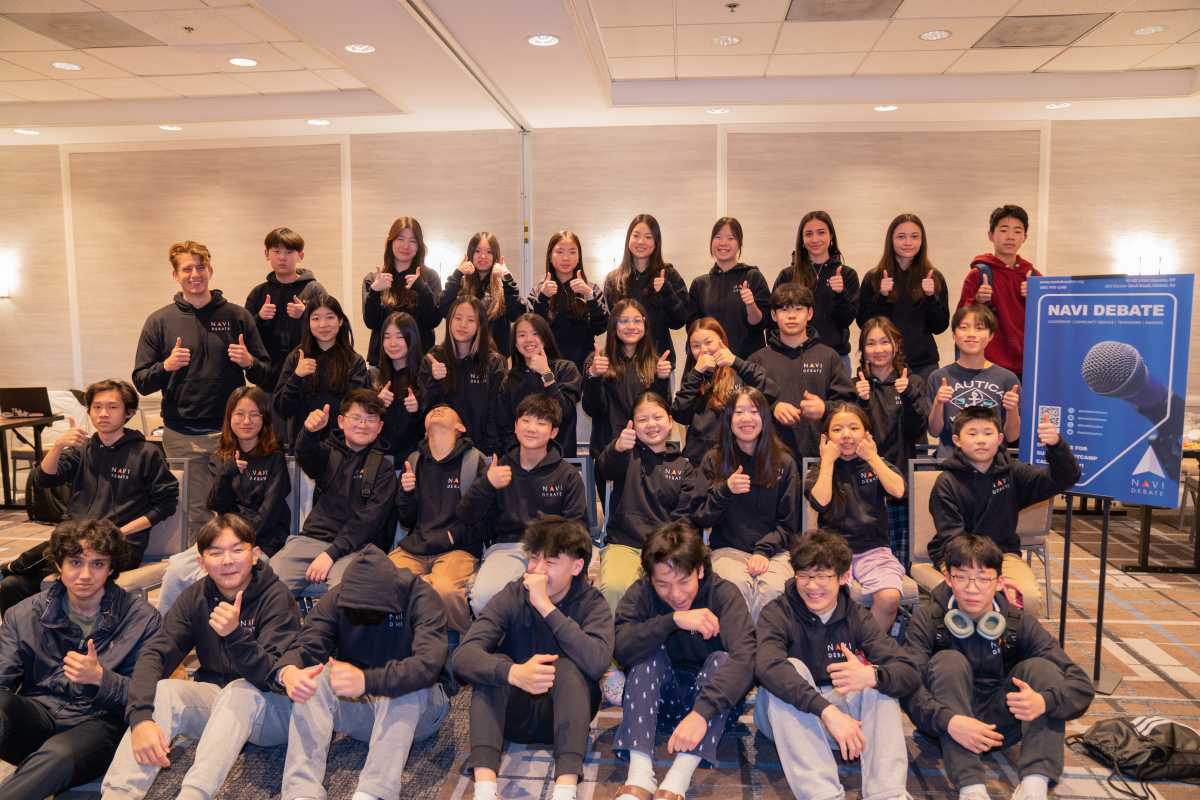
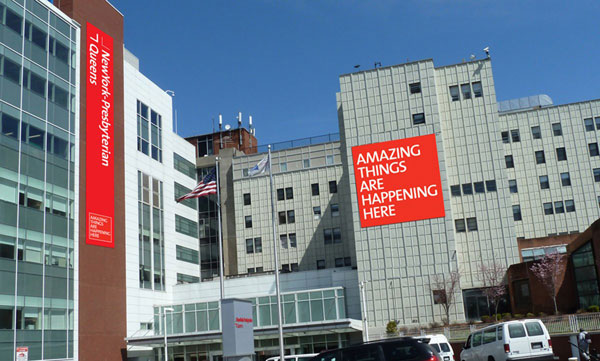
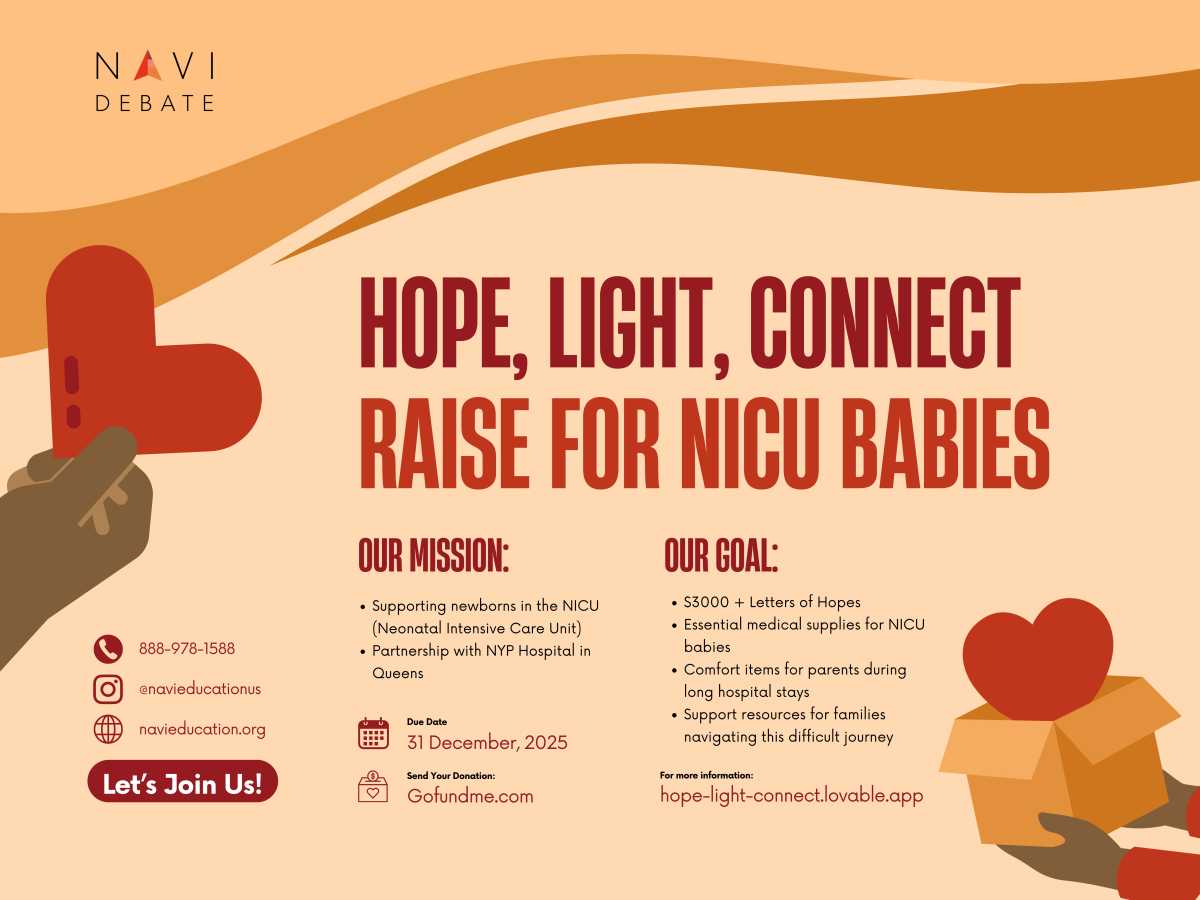
Navi Education, an academic tutoring and college consulting service for students, raised nearly $2,000 in donations for premature infants in the Neonatal Intensive Care Unit at NewYork-Presbyterian (NYP) Hospital in Flushing.
The funds, collected through a GoFundMe campaign, will be used to purchase supplies for care packages such as books, socks, lotion and toys.
Once supplies are purchased, the team will deliver them to families in the NICU unit that are navigating the challenges of premature births, low birth weight and other serious neonatal health complications.
According to Kay Choi, director of Navi Education, the organization has been partnering with NYP Queens for over 10 years, coordinating fundraising projects for different causes each year.
The organization itself is composed of debate teams in New York and New Jersey, which recruit students in grades 3-12 to research topics, learn argumentative and communicative skills, and compete in debate tournaments.
However, the students said they view the fundraising efforts as a way of directly contributing to the causes they advocate for through debate, extending their reach far beyond the classroom.
What are preterm births?
The World Health Organization defines preterm as babies born alive before 37 weeks of pregnancy are completed. It is then broken down into three categories — extremely preterm, which is less than 28 weeks; very preterm, which is 28 to less than 32 weeks; and moderate to late preterm, which is between 32 to 37 weeks.
Immediate complications associated with prematurity at birth include respiratory complications, neurodevelopmental problems, intestinal disease, susceptibility to infections, and blood and heart complications.
Long-term developmental difficulties include cerebral palsy, learning disabilities, vision and hearing loss, and chronic diseases such as asthma, lung or cardiovascular disease, and type 2 diabetes.
“These babies are fighting from the moment they’re born,” said Kate Kim, student secretary of the NY debate team. “Their parents are dealing with these emotional, financial and medical challenges all at once. We feel that supporting NICU infants means supporting life at its very beginning and helping families during one of the hardest moments they’ll ever go through.”
Infants in the NICU unit at NYP receive 24/7 respiratory care for newborns and neonatal cardiac care for infants with congenital heart disease. They are often placed in incubators to keep them warm and administered medications and fluids through an IV by highly specialized staff.
“Families are supposed to be celebrating their new child’s birth, but instead that time is being spent in hospitals,” said Jason Hwang, treasurer of the NJ debate team. “It can take up a lot of your energy both mentally and physically.”
Who is impacted by preterm births?
According to March of Dimes, Queens had a preterm birth rate of 9.7% between 2020-2023 — slightly higher than the state average of 9.5%.
When broken down by demographic across the state, Black infants had the highest rate of preterm births at 13.8%, followed by American Indian/Alaska Natives at 10.8%, Hispanics at 10.3%, Asian/Pacific Islanders at 9.2% and Whites at 8.2%.
High rates of poverty also significantly impacts preterm birth rates and subsequent infant mortality rates, the latter of which shows an increase of over 60 percent compared to neighborhoods with low rates of poverty.
According to Equity NYC, parents from neighborhoods with a poverty rate between 30-100% had a 0.5% infant mortality rate — which encompasses all causes of death, not just preterm births — compared to 0.31% for neighborhoods with a poverty rate between 0 to less than 10%.
While there is no single cause for preterm births, certain health factors increase risk such as maternal age, smoking, birth spacing and obesity.
Additionally, lack of health insurance is a contributing factor to preterm births. March of Dimes states that in 2023, 5.6% of women of childbearing age were uninsured in New York, making it significantly more difficult for those mothers to receive care before, during and after their pregnancies.
It’s not just the babies that are impacted by preterm births, Jason pointed out, but the entire family as a whole. These families suffer immense pain and anguish, he continued, which is why he feels participating in the fundraising project helps lessen their financial burden and offering some emotional support can make a huge difference in their lives.
The cost and impact of preterm births
Kate said the team spent a lot of time researching, organizing their thoughts and learning how to communicate clearly and persuasively to educate others about premature births and why the community should support the cause.
According to a 2021 study by the University of Utah, it cost families in the U.S. an average of $64,815 per preterm birth in 2016 — a majority of the cost being attributed to medical costs and inpatient stays in the NICU unit.
“We were surprised at how limited support can be for families once they leave the NICU unit,” Kate said. “Long-term resources aren’t always available like financial guidance and follow-up services.”
In recent years, scientific research and advancements have improved the survival rates of infants in the U.S., with one study funded by the Neonatal Research Network demonstrating an increase in survival rate from 76% between 2008-2012 to 78.3% between 2013-2018.
However, the study shows that rehospitalization rates for preterm infants born at 27 weeks or less were still high at 49.9%, and severe neurodevelopmental impairment occurred in 21.2% of those cases
Marley Han, student vice president of the NJ debate team, said before working on the NICU project, she had no idea how overwhelming it is for parents of premature infants to watch their babies suffer in the unit and the mental weight it bears on them every day.
“I didn’t know how much mental struggle these parents go through after the babies get out of NICU, or how long it takes for them to recover,” Marley said. “I also learned how underrepresented it is as an issue.”
“This is not a short-term medical issue,” Kate emphasized. “These are actually long-term family and community issues.”
Navi students spring into action
Choi said the student leaders host a meeting each year to discuss ideas and choose a fundraising project. She then communicates with NYP and asks what units or areas need the most help.
The team chose to raise funds for the NICU unit in November, which is National Prematurity Awareness Month.
From there, Choi continued, students spearheaded the fundraising efforts. “This is an extension of their debate activities,” she explained. “They shape the project together and come up with ideas to make the project more meaningful for its recipients.”
This year, the debate team chose to record videos and write handmade cards to deliver directly to families with infants in the NICU unit.
Jason explained that the student leaders at Navi set up website links, recorded motivational messages and uploaded videos to their social media accounts in addition to creating a GoFundMe campaign.
By leveraging the team’s existing resources, he continued, the team was able to implement a marketing strategy around the cause through their Instagram account, newsletters and a website Jason created just for the fundraiser.
“We thought we could be the voices of people that maybe couldn’t speak up as much for themselves,” Jason said.
Marley said the NICU project isn’t just about financially supporting the patients and their families, but rather using their voices to raise awareness around premature births and advocating for expanded access to neonatal care.
“We hope we can get greater community involvement by spreading the word about the fundraiser so others are aware of what these families go through at this vulnerable time,” Marley said. “We want to ensure that no family facing these NICU challenges are alone. There are people who are advocating for them and supporting them, because I can understand how a family who has a child in the NICU center can feel really isolated and lonely during that time.”
The letters of hope and their video greetings, she continued, are intended to help families feel a sense of face-to-face connection.
Lessons beyond the classroom
While Kate said initially joined Navi to improve her communication skills and express herself more confidently, the experience has continued to foster her desire to help others using what she’s learned at the organization.
“As debaters, we start conversations so these issues aren’t ignored,” Kate said. “We can advocate for better policies and resources, like expanded access to maternal care and mental health resources for parents, or stronger neonatal programs. Advocacy and education can help create a lasting impact.”
She said the project forced her to learn about things she normally wouldn’t come across in school, such as healthcare systems, social issues and community needs.
By becoming more informed about what’s happening beyond her own experiences, Kate said she learned that real world problems are complex — but learning about them is the first step towards making a difference.”
Donating directly to NYP in Flushing makes the project even more meaningful to the team, she added, because it allows them to benefit their own community.
Marley said Navi does a great job at studying and translating real-world issues and turning them into tangible actions. By using effective communication skills and persuasive language learned in debate classes, she said the team gets to educate others about the cause and convince them to take action to support it.
“It’s really hard imagining yourself actually helping and contributing to the cause,” she noted. “But I think Ms. Choi and the Navi organization as a whole gives us the opportunity to help these individuals and make a real impact on the issues we’re learning about. It offered a lot of new perspective and insight.”
Jason said it’s not all about flashy websites, a huge network or the biggest social media presence to help make a difference.
“You can make the most out of anything,” he said. “I’m glad I could be part of this journey. I feel like I’m not just using my debate skills to earn accolades or accomplishments, but also for the fulfillment of giving to others.”
Choi said the Navi team plans to deliver the letters and care packages to the NICU unit at NYP sometime in the next week, and the GoFundMe fundraiser is still collecting donations.
She said she views the yearly fundraising projects not only as a way to support others, but to teach her students what it means to give back to the community they belong to.
“I want my kids to feel grateful for the life they have,” Choi said. “Every year, the more we do to support the patients, the more meaningful change I see from the kids.”