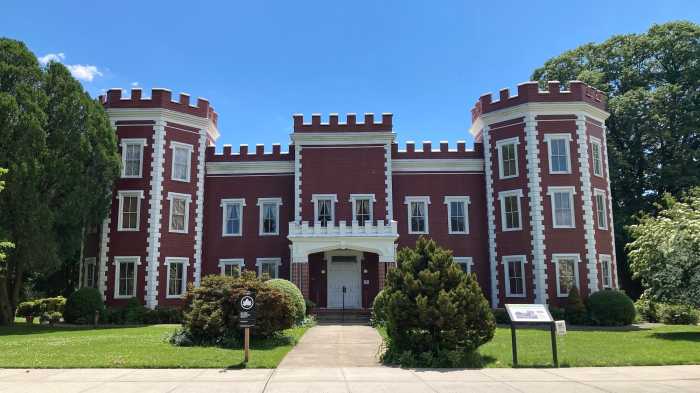

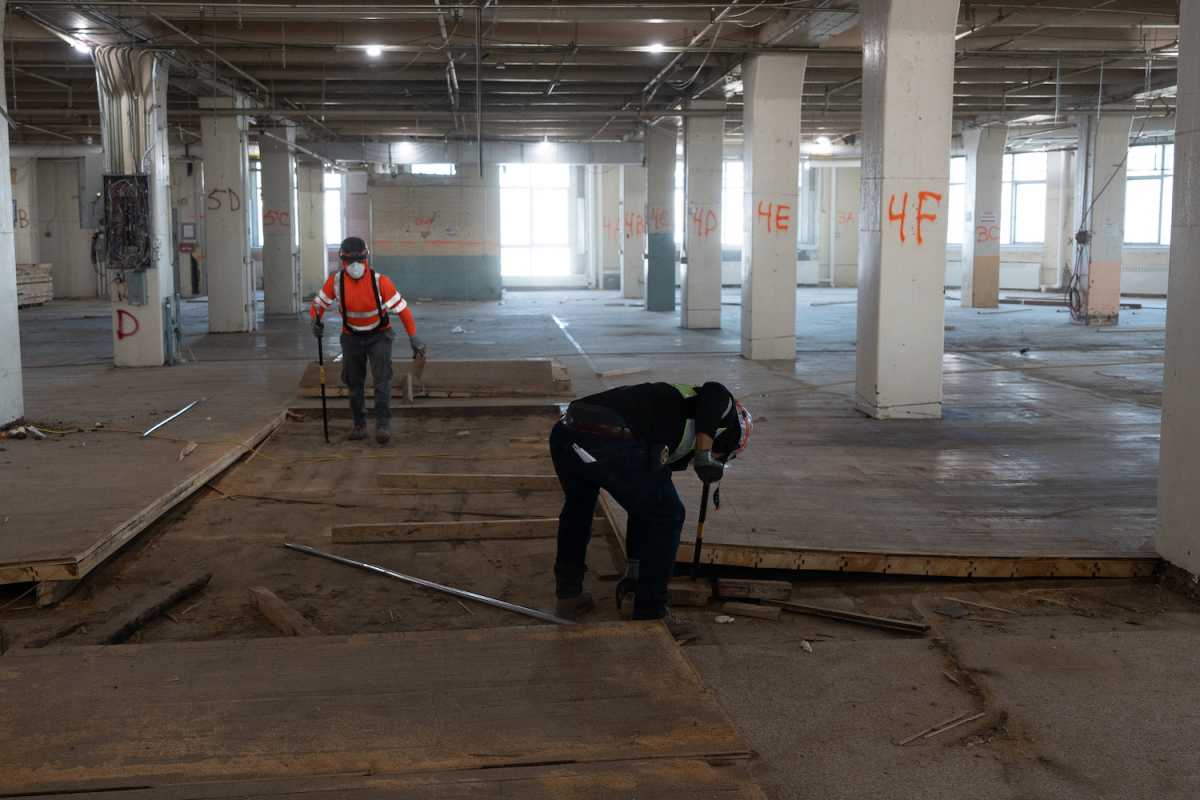
LaGuardia Community College in Long Island City is donating more than 50,000 square feet of hardwood to local businesses and lumber yards in a bid to preserve the history of the school’s century-old Building C.
LaGuardia’s C Building, located at 29-10 Thomson Ave., is currently undergoing a major renovation, transforming the building’s fifth and sixth floors into a state-of-the-art workforce development hub.
The two floors were once home to the largest bakery in the world, housing the Loose-Wiles Biscuit Company when the building opened in 1914.
The company originally used the fifth floor for its sugar wafer department, while the building’s sixth floor was used for packaging. The space, which boasted floors of high-quality maple placed on top of a pine subfloor, was later transformed into LaGuardia’s English language learning center when the college opened in 1971.
Now, the space is to be transformed into a workforce development hub financed through a $116 million grant from the Steven and Alexandra Cohen Foundation—led by philanthropist Alex Cohen, owner of the New York Mets with husband Steve Cohen—installing a number of different classrooms that will provide hands-on, skills-focused programs. The hub will be split into four sections, preparing students for careers in healthcare, construction, culinary and green jobs.
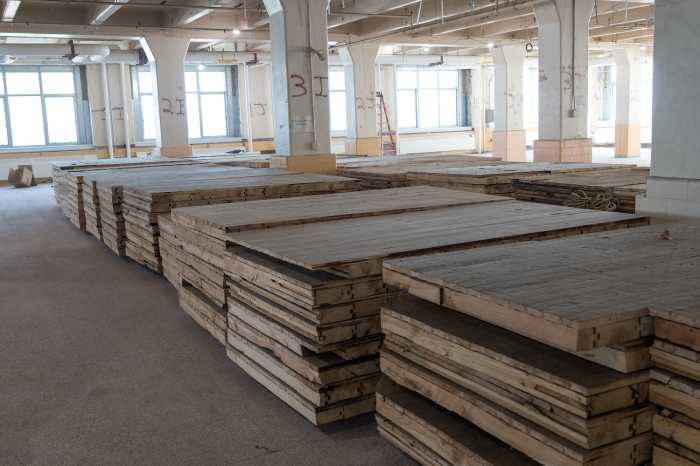
As renovation continues across the two floors ahead of a slated 2029 opening date, LaGuardia has committed to donating all 50,000 square feet of the old hardwood floors to local businesses free of charge.
Kate Reggev, one of the architects overseeing the renovation, said some of the wood will also be reused in the newly-designed space in a nod to the previous history of the building, with plans earmarked to install the wood in lounge areas in the new space.
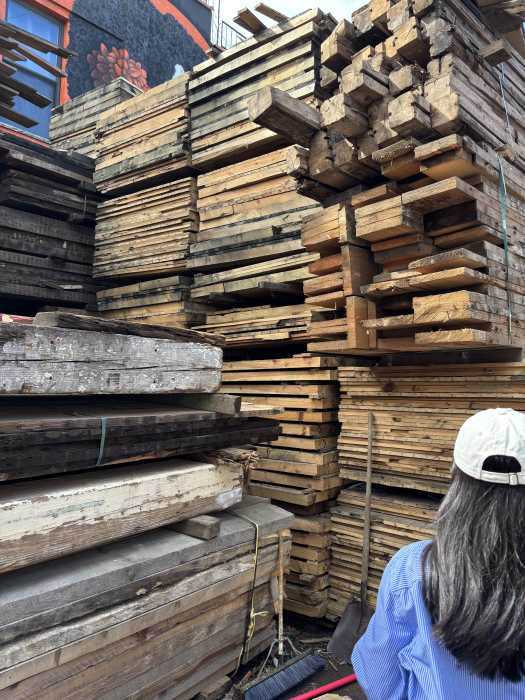
The remaining wood that is not used in the renovation will be donated to businesses, with roughly 35,000 square feet already accounted for. The college is now looking to offload the remaining wood, which measures approximately 20,000 square feet.
Reggev said LaGuardia was legally required to donate at least 50% of the wood to meet sustainability requirements but said the college could have technically complied with the requirement by sending the material to a facility that essentially converts wood into sawdust. However, she said that was never an option for the college.
“That didn’t really sit right with us because the wood is really high quality,” Reggev said. “Part of this is us trying to be good stewards of New York City and the world.”
However, the donations are not as straightforward as identifying local businesses and simply giving away wood free of charge. The wood’s location on the fifth and sixth floor of the building has posed a problem, especially because the 15-foot planks are too big to fit in any of the building’s freight elevators.
Instead, LaGuardia has cut the wood into four-foot by four-foot sections resembling a “very large tile” in order to remove the material from the building.
“If someone is able to get a truck here, we are able to help get the material on a truck,” Reggev said.
Local businesses have also refinished some of the wood so that it can be used in the renovated workforce development hub.
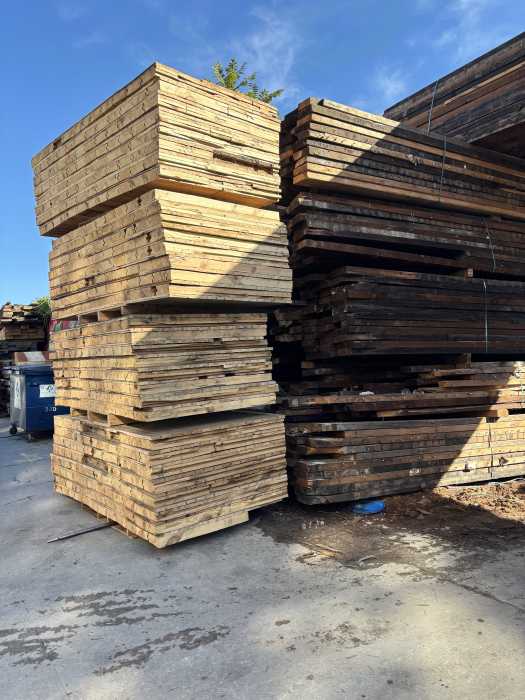
Among businesses to have already taken wood from LaGuardia include wood salvaging company M Fine Lumber, which took 25,000 square feet of the material, and local lighting company Stickbulb, which took 1,000 square feet in order to make custom light fixtures for the renovation.
The refurbishment of sections of the old floors has led to several interesting discoveries that highlight the building’s storied past.
On one occasion, for example, Reggev noticed dusty material clinging to the wood and momentarily worried that there had been a termite infestation, only to realize it was brown sugar from when the building was used as a biscuit factory.
“I saw this dusty stuff in between the wood planks and I got a little worried that we had termites in the wood,” Reggev said. “But as I got closer and closer, I like touched it and it had sort of a clumpy texture to it. I smelled it and I realized that it was actually brown sugar from when it was the sugar wafer floor.”
She has also come across decades-old graffiti on several boards in the space, telling stories about individuals who once worked across the two floors.
Reggev also noted the importance of incorporating some of the old boards in designs for the renovated space.
“It really helps to give it a sense of place,” she said. “I think that that’s part of what makes the design meaningful and special, is that it’s really rooted in where we are and who we are.”
Once completed, the workforce development hub will allow LaGuardia to greatly expand its workforce development courses, with numbers currently limited because the college is forced to use a smaller basement space. It also uses other facilities around the city to house its workforce development programs.
The completion of the new hub, therefore, will also allow the college to offer full campus benefits to all students.