
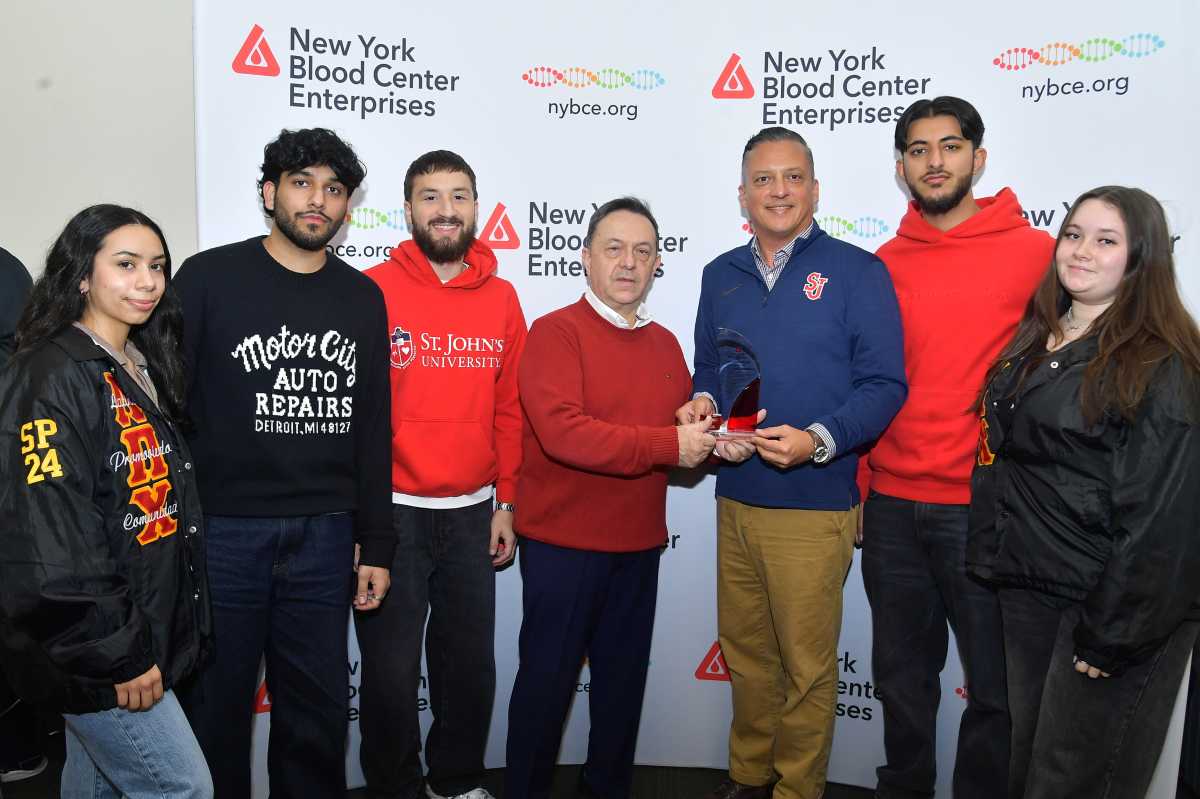
St. John’s University has officially surpassed an all-time total of 15,000 pints of donated blood through its ongoing partnership with the New York Blood Center for over two decades. During a Nov. 13 blood drive on the campus, located in Jamaica, which was sponsored by the Office of Alumni Relations, 90 pints of blood were collected, which helped the college reach the milestone.
The November blood drive, hosted at the D’Angelo Center on the college campus, featured volunteers from the St. John’s Red Cross Club chapter and the Lambda Pi Chi Sorority.
According to NYBC officials, an estimated 45,000 patients have benefited from the blood collected through the college since the partnership began.
The metropolitan area is experiencing a significant blood shortage, according to the NYBC. The organization currently reports it only has a three-day supply of O-positive and O-negative blood — the types most needed for emergency and trauma care — in its reserves.
During October 2025, the organization noted, donations in the region were down 11%, with an average of 1,000 fewer donations per week as hospital demand remained high.
A news release from St. John’s said the college hosts several blood drives each semester, offering opportunities for students, faculty, administration and staff to donate. The university is committed to its longstanding partnership with NYBC, the news release continued, as well as its support of the region’s health needs.
“For 20 years, St. John’s has been an enthusiastic partner of NYBC and the work it performs,” said Paul Lazauskas, associate director of alumni relations office. “Our entire community, but especially our students, recognize its lifesaving potential. The University is ready to answer the call at a time of critical blood shortages, when donations are essential.”
NYBC noted the importance of St. John’s contributions during this period, and throughout the organizations’ long relationship. Jeannie Mascolino, vice president of regional operations at NYCB, said the organization is grateful for the college’s support.
“St. John’s has been an exceptional partner to NYBC for two decades — raising awareness, collecting an exceptional 15,000 units of blood, mobilizing young donors, and playing an essential role in meeting the region’s critical need for blood, especially during challenging times,” Mascolino said.
The college said student leadership played a key role in the success of St. John’s November blood drive. Members of the Red Cross Club distributed flyers in residence halls and academic buildings and used social media outreach to encourage participation. Lambda Pi Chi members assisted the blood drive on site and also helped promote the effort across the campus.
Nadira Hussain, a Red Cross Club student representative, said the outreach efforts helped spread the word about the need for donors at a critical time.
“We worked closely with our partners, including Lambda Pi Chi, to plan, promote and engage students across campus,” Hussain said. “Many students felt encouraged to donate after learning that a single donation can save up to three lives. These drives matter because hospitals and patients rely on a consistent blood supply.”
NYBC has served the tristate area for more than six decades, delivering more than 500,000 pints of blood annually to more than 150 health care partners, according to the news release. Donations from younger participants, including college-age students, are essential since the percentage of donors under 30 has declined significantly in recent years, the NYBC stated.