
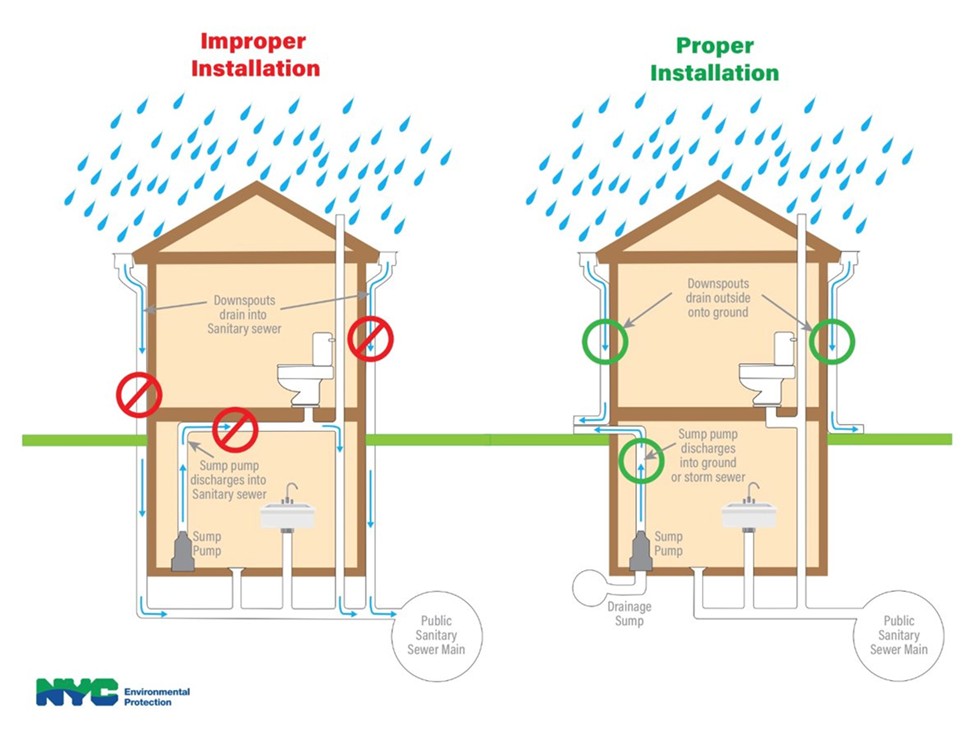
The Department of Environmental Protection (DEP) began notifying people across the city in January that homeowners must inspect their exterior downspouts and gutters to ensure that they are not leading directly into the sewers. The department addressed the letters to individual homeowners, though they were quickly shared on social media, causing confusion among local residents about whether or not they were required to do the same.
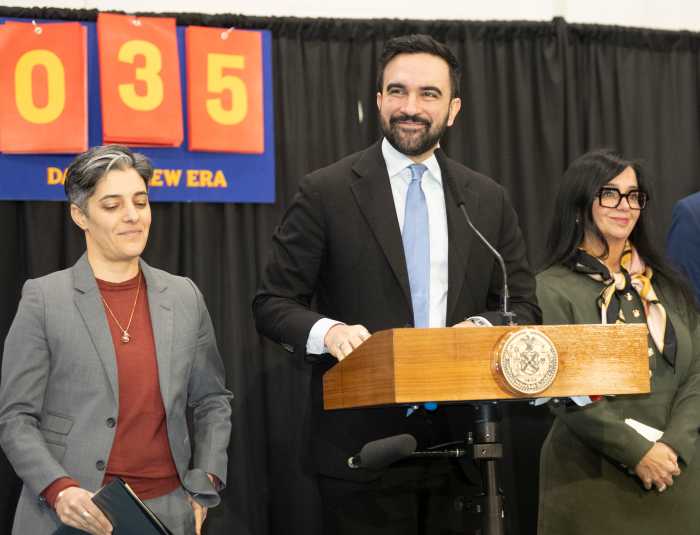
On Jan. 29, Council Member Phil Wong met with the DEP and other officials via Zoom to clarify the requirement, and made note that well over 90% of District 30 residents are not included with the latest enforcement operation as a majority of homes are connected to combined sewers, designed for both waste- and storm-water, meaning no changes need to be made.
“My office is committed to helping residents navigate this issue while continuing to push for long-overdue investments in sewer maintenance, flood prevention, and enforcement against illegal paving that puts entire neighborhoods at risk,” said Wong. “Thank you to the Commissioner and his team for meeting with me and giving much-needed clarification on this issue.”

During the meeting, the DEP representatives confirmed that only about 20 homes in District 30 are connected with purely sanitary sewers, the target for this new enforcement operation of a local law that was passed in 2017 and went into affect the following year. The DEP stated they will provide a list of the homes to Wong’s office, which will then proceed with contacting the homeowners to ensure compliance and aid with the disconnection process.
The local law that amended the city code did so to avoid causing a burden on New York’s ailing sewer system. According to a DEP spokesperson, the city has multiple types of sewers: combined and sanitary. Sanitary sewers are only designed for wastewater and lead directly to sewage treatment plants. However, many contractors over the years have mistaken them for the combined sewers, and connected homes’ downspouts directly to the sanitary sewers, causing an overload to the system and leading to back ups and even flooding to the homes in question.
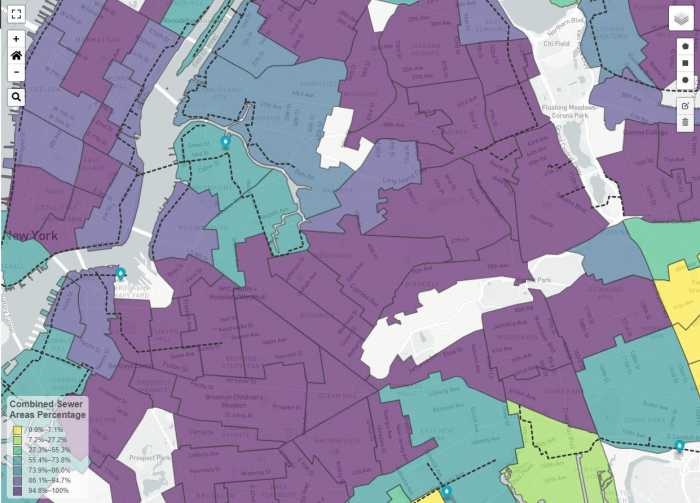
According to data from NYC Open Data, assembled into a helpful map by Data Engineer Allan Lu, who works for NYC Emergency Management, a majority of District 30 is 94.8-100% connected with the combined sewers. A portion of Maspeth is the only neighborhood slightly lower, at about 86.1-94.7% combined sewers.
Wong also noted other issues within the district, including concerns related to flooding and the root causes increasing the risk, such as aging sewer infrastructure and illegal paving over green space. Wong stated he will continue to work closely with the DEP in the near future to address flooding concerns and other issues around District 30.