
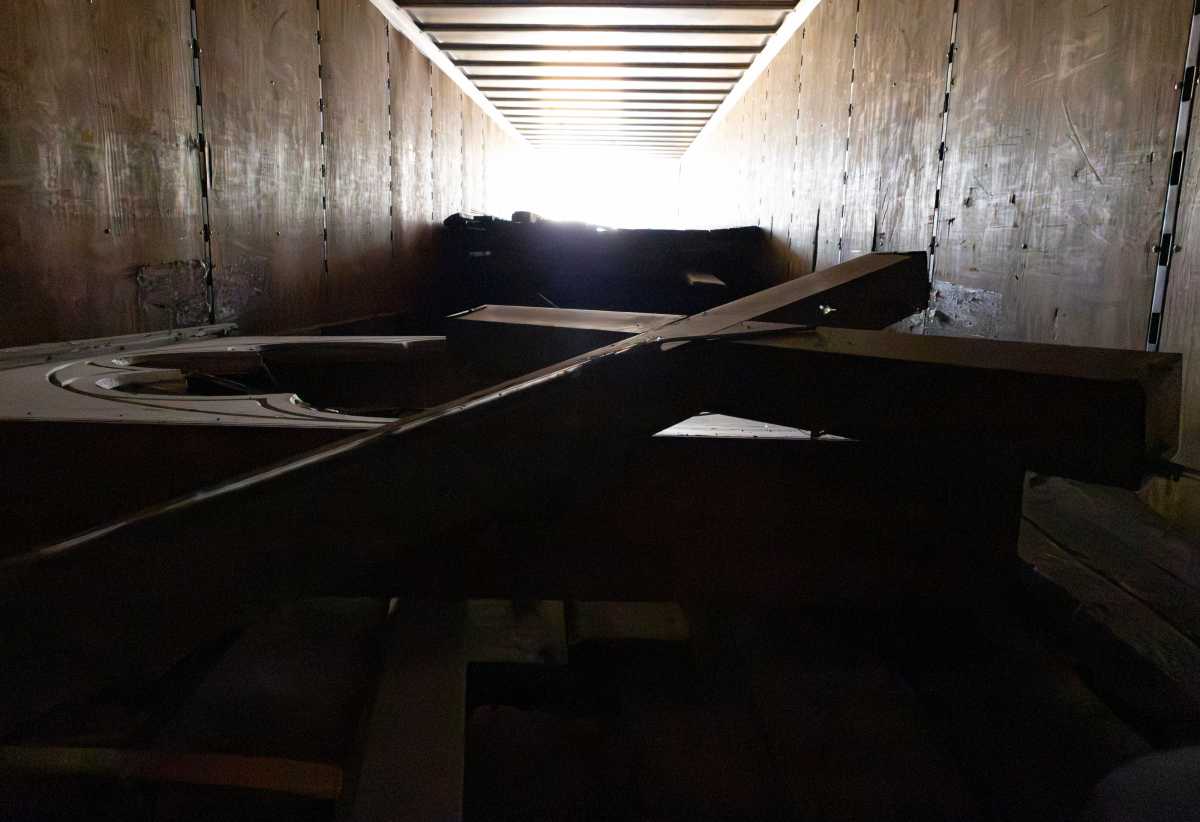
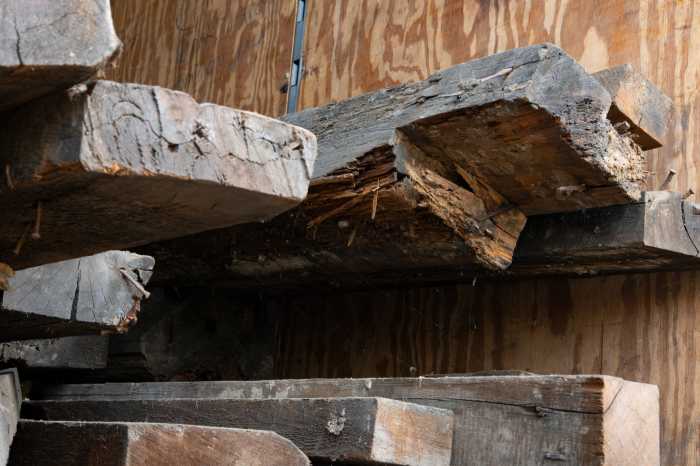
Here lies in pieces the remains of St. Saviour’s Church, a Maspeth landmark that has been rotting slowly for more than 15 years now in a forgotten corner of All Faiths Cemetery in Middle Village.
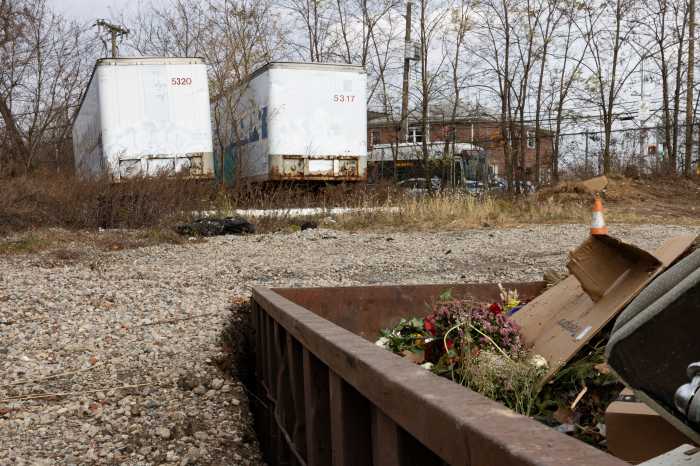
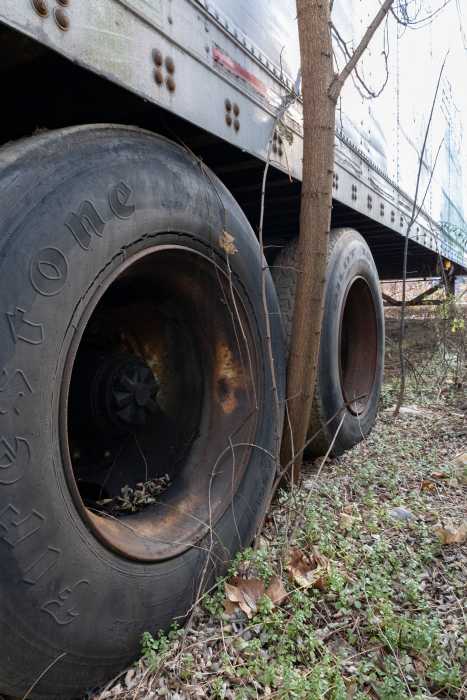
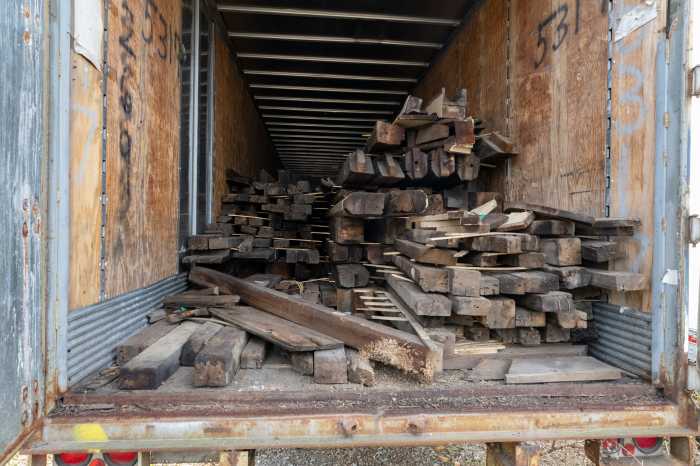
For 150 years, it stood in glory on a hill in Maspeth. For much of the last 15 years, it has sat ingloriously inside two graffiti-covered, damaged tractor-trailers with flat tires.
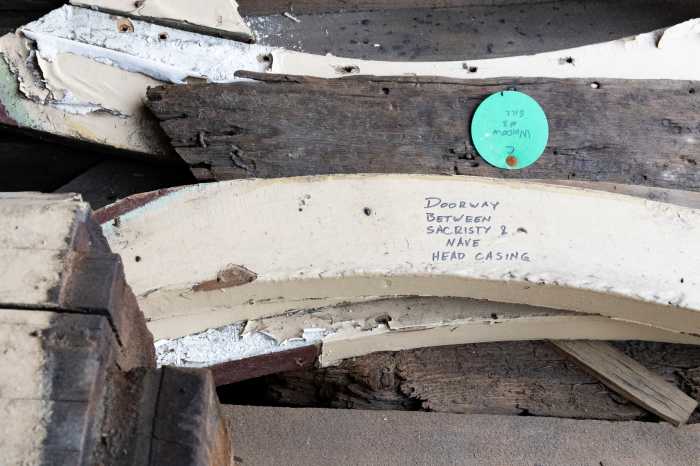
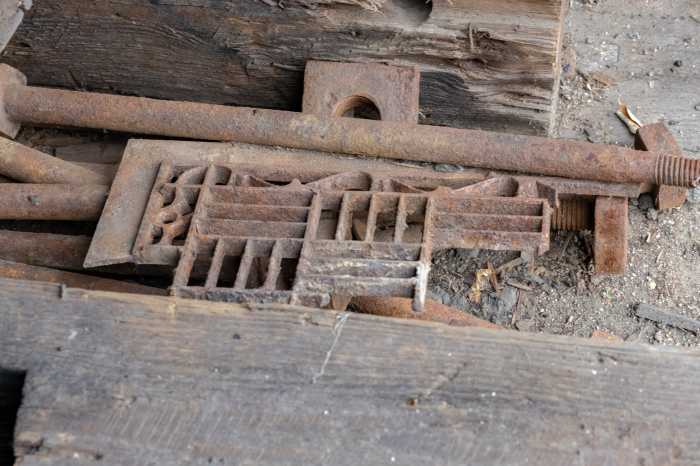
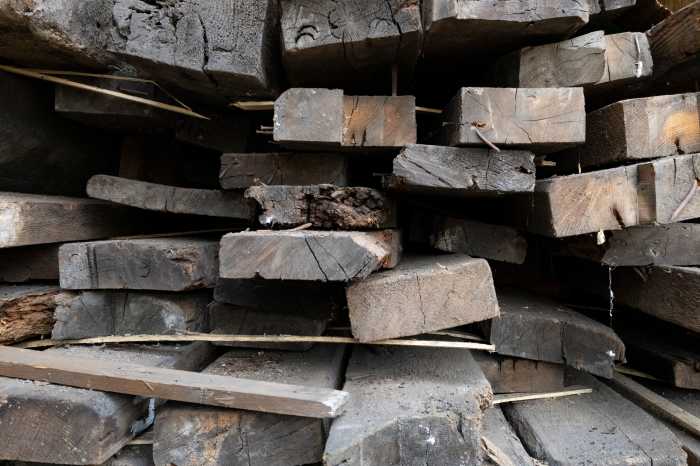
During a Dec. 4 visit to All Faiths, a QNS/Ridgewood Times reporter observed the contents — mostly moldy piles of wood filled with rusted nails — stored within the unlocked trailers, located in public view, with no gates or warning signs nearby to prohibit access.
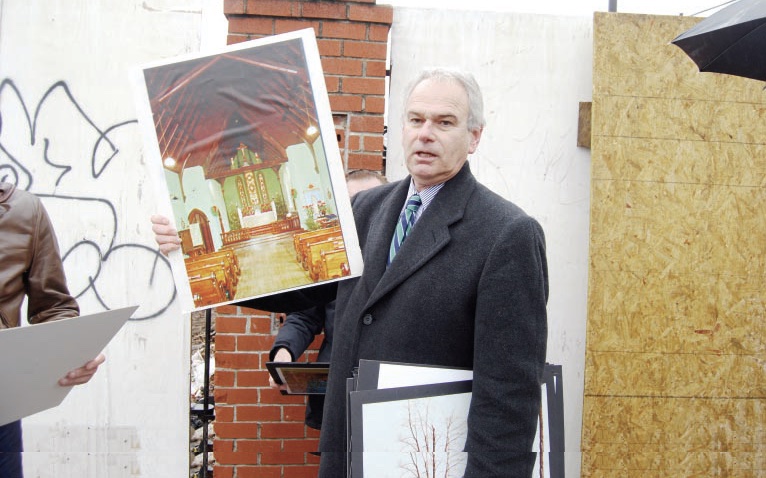
This is what remains of a years-long effort by civic leaders, including outgoing Council Member Robert Holden, to preserve a piece of local history. Under Holden’s leadership, the Juniper Park Civic Association (JPCA) led a furious battle to “save St. Saviour’s” in some capacity. Those efforts spared St. Saviour’s from the wrecking ball, leading to an agreement to have the church meticulously dismantled and catalogued, then stored away for eventual reconstruction, in a $250,000 effort.
But it never happened. The property that once weathered artillery fire during the Revolutionary War was ultimately redeveloped — and the church that stood strong during fires, civil unrest and more remains in pieces to this day, seemingly turned into an entire community’s afterthought.
And Holden, who had spoken so loudly in defense of the church 15 years ago, had little to say on the topic now. When QNS reached out to him for an interview, he declined — declaring “There’s no story here.”
How St. Saviour’s Church got here
Between 2006 and 2009, Holden’s JPCA repeatedly rallied the communities of Middle Village and Maspeth together to stop St. Saviour’s Church from being demolished by developers by establishing it as a historic landmark.
However, the City never granted St. Saviour’s the status, and a scheme unique to landmark preservation unfolded: the church was painstakingly disassembled, with each piece labeled and stored away to be rebuilt at a new location.
However, the last report on the church’s rebuilding effort was in 2009, when then-Borough President Helen Marshall and then-District 30 Councilmember Elizabeth Crowley dedicated approximately $2 million to its reconstruction. Holden, backed by the JPCA, ran against Crowley in 2017 and criticized her failure to save St. Saviour’s, ultimately beating her by a slim margin of just 200 votes.
“Unfortunately, it appears that Councilwoman Elizabeth Crowley has given up the fight to save one of the most historic sites in the City of New York and Maspeth’s most important landmark. I’m not surprised,” Holden said in 2011. “While the church still sits in trailers in West Maspeth, the St. Saviour’s historic land now contains warehouses as symbolic and grotesque monuments to the failure of the City of New York and our elected officials to recognize the importance of saving the last remaining landmarks of Maspeth’s history for future generations to enjoy.”
St. Saviour’s was founded in 1848 on land donated by Rep. James Maurice, an iconic Queens politician of the 19th century. Famed New York Architect Richard Upjohn designed the church in the Carpenter Gothic style based on unused designs for a church in Manhattan. The land itself was full of relics from the Revolutionary War: old coins and even artillery fired during the Battle of Long Island.
“This is an incredible Richard Upjohn church, and at the time, a rare Carpenter Gothic survivor,” said New York Landmarks Conservancy (NYLC) President Peg Breen. “This was once a wonderful building by a really important architect, and could have been serving some useful function today.”
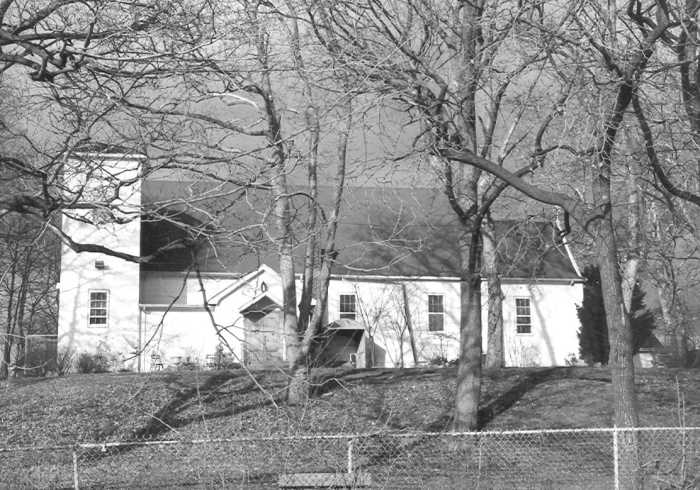
The rift over the church started forming in 2005, after the San Sung Korean Methodist Church congregation sold the land on Maspeth Hill where St. Saviour’s stood for more than 150 years.
Locals reported that since the congregation bought the church from the Episcopal Archdiocese in 1995, the historic plot was mostly left unattended and long grass grew high against the 100+ year old trees. Though the community objected, the congregation alleged the cost of renovations and upkeep of the old building was too steep, and the City granted its sale for development via a “hardship application.”
The congregation originally bought the church for $450,000, and ultimately sold it for $10 million, flipping the historic building for a slick seven-figure profit.
Maspeth Development LLC bought the land with the intention of rezoning the area for housing. The company would prematurely rip out the trees in preparation for the project. Determined, the JPCA and the Newtown Historical Society began the crusade to save St. Saviour’s — a battle they would wage for more than two years.
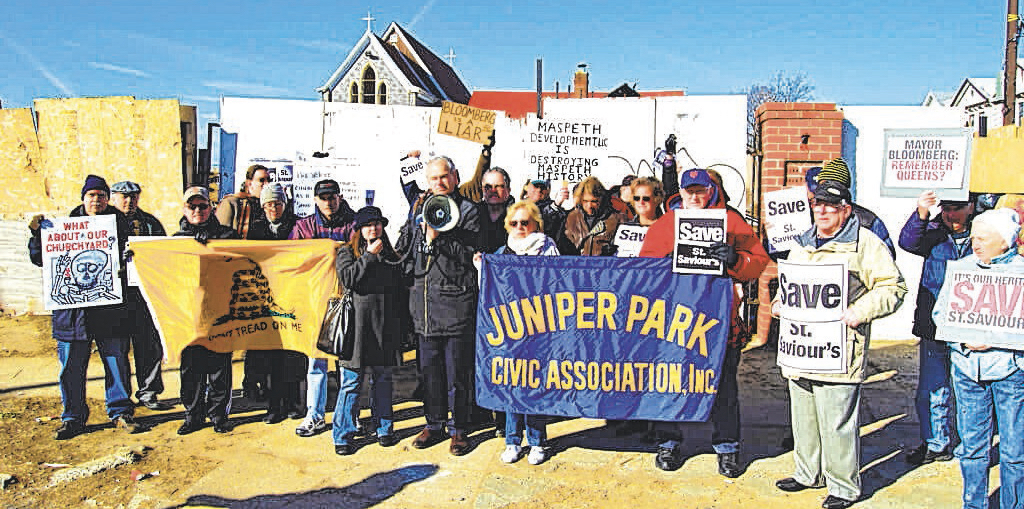
Protests over St. Saviour’s upcoming demise broke out in the streets, and they blamed then Councilmember Dennis Gallagher, who preceded Crowley, for allowing the development to go through in the first place and turning a blind eye while the developer destroyed the property.
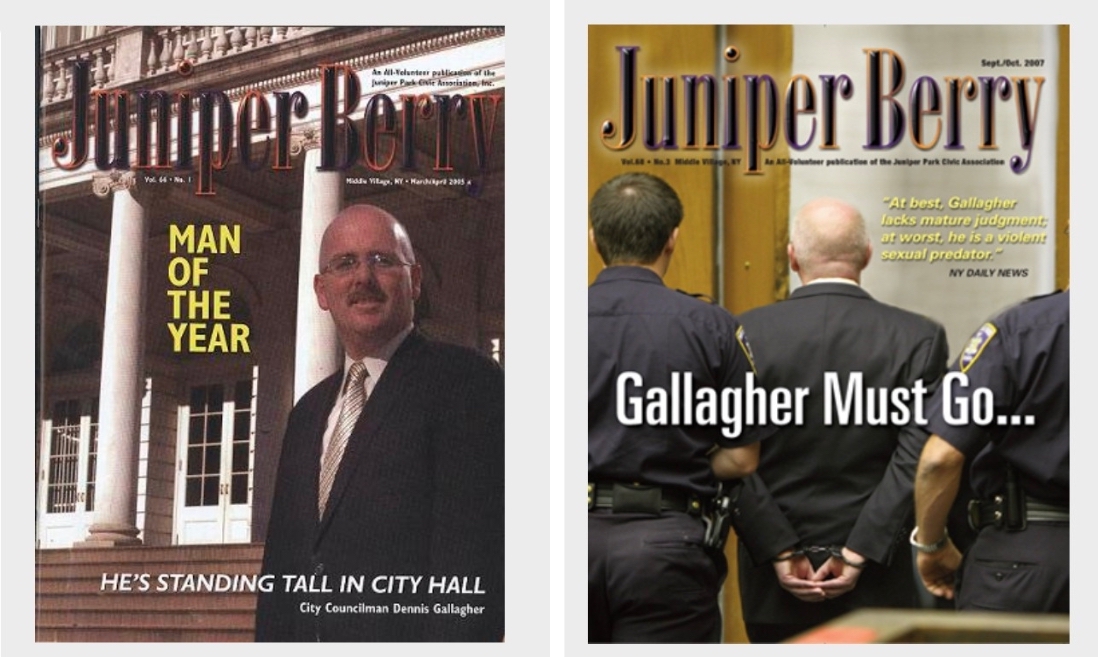
That formed an irreparable rift between the JPCA and Gallagher, whom the group had previously honored in March 2005 as its Man of the Year. The organization, under Holden’s direction, publicly vilified Gallagher as an enemy of preservation and the neighborhood at public meetings and in its quarterly magazine, the Juniper Berry.
“It was like the Hatfields and McCoys,” said James McClelland, treasurer of All Faiths Cemetery and then employee of Melinda Katz, then councilmember for District 29. “There was one side, who wanted to compromise, the other side who wanted the full restoration in the park and the whole site… there was name calling, [people] getting thrown out of meetings. It was bad.”
Gallagher responded in kind by organizing a rival community group, the Middle Village Maspeth Civic Association. In September 2006, members of both groups clashed at a JPCA meeting where Gallagher’s attempt to speak was turned aside, and his supporters engaged in shouting matches with JPCA members.
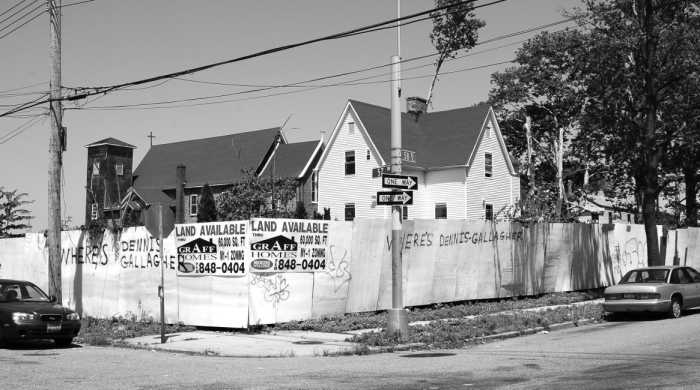
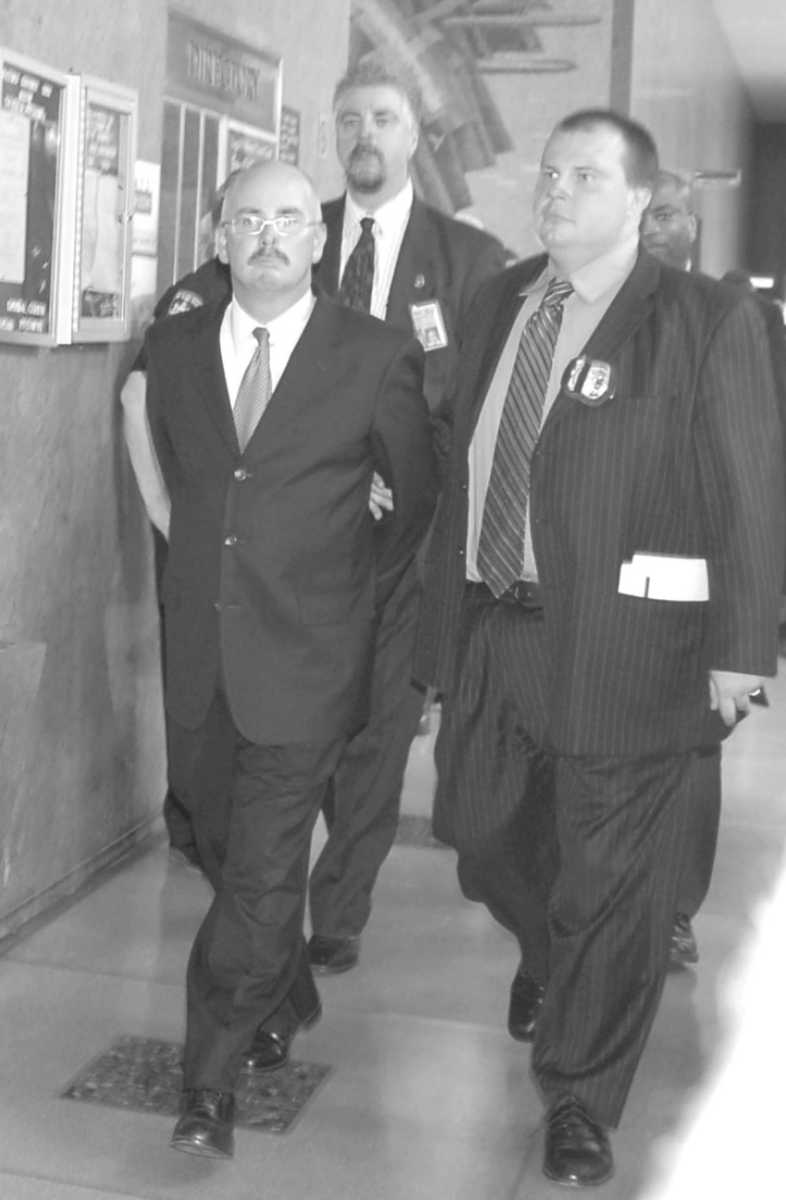
However, despite less than a year left, Gallagher’s term was cut short after a scandal in which he sexually abused a woman in his campaign office. He was charged in August 2007 with rape, but ultimately pled guilty to a lesser charge early the next year, and resigned from office.
But the die was already cast for St. Saviour’s, and its date with a wrecking ball was scheduled. It was Holden and President of Newtown Historical Society, an offshoot of the JPCA, Christina Wilkinson who negotiated with the developers at the eleventh hour and struck a deal: disassemble the church in 30 days, or it gets taken down.
The community rallied, current JPCA President Tony Nunziato purchased two truck trailers for storage, and Wilkinson, Holden and volunteers helped construction workers carefully remove and label every single piece, costing the city and state a total of $250,000.
“We did everything humanly possible… we all put a lot of time into it to save it,” Nunziato said. “It’s just that the final frontier had a few drawbacks as far as funding and all. Hopefully, we can pass it on to finally get it done with the new administration and new council people, so we can get more funding to take care of it.”
Christabel Gough, a notable activist in the world of architectural conservancy, had donated an additional $50,000 to NYLC to plan the disassembly and even create blueprints for its reconstruction. Gough, now 87, was disappointed to hear the status of the church — but after a long career in conservancy, understood the difficulties.
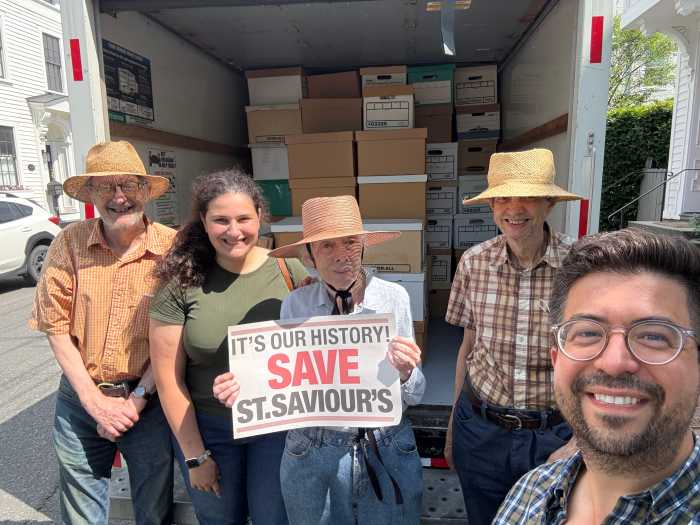
“It’s no reproach to him if he never managed to do it,” Gough said on Holden. “Many historic churches have serious problems, all over America now… it’s not an easy situation. So many people are no longer active within their churches anymore, if they’re even affiliated with one at all, and that takes its toll on the architecture.”
‘All that for nothing…’
Elizabeth Crowley was elected in November 2008 to the City Council seat Gallagher previously held. In that historic election that saw Barack Obama elected president, the Democratic Crowley defeated the incumbent, Anthony Como, a Republican and former Gallagher aid who won the seat in a March special election.
Holden heavily criticized Crowley in his campaign for failing to rebuild St. Saviour’s. In 2011, Crowley dedicated nearly $2 million in funding from her office and the borough president to repurchase the St. Saviour’s site for a park and rebuild the church at All Faiths Cemetery. However, the property cost was valued at $5 million. Wilkinson spearheaded extensive fundraising efforts, contacting elected officials and more, eventually reaching $4.5 million in funding. But it was too little too late.
Crowley abandoned the St. Saviour’s site for the park project and set her eyes to a nearby plot one-third the size owned by Martin Luther School, who she said were willing to sell. The year came to an end, no park site was purchased, the church remained in its trailers, and the St. Saviour’s site was developed into four large warehouses.
The debacle was a blemish on Crowley’s record, allowing Holden to clinch the 2017 election by 200 votes. The original site gone, he vowed to restore St. Saviour’s to its former glory.
“It will act as a great community center for generations to come and a chapel,” Holden told the Ridgewood Times in 2008.
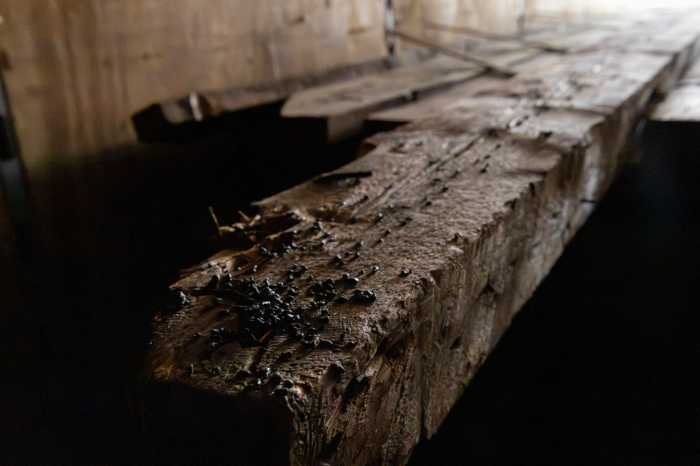
However, Queens Community Board 5 Managing Director Gary Giordano stated the plan to rebuild St. Saviour’s has not been included as a capital budget request “any time recently.”
McClelland said Holden approached All Faiths Cemetery in 2020, claiming to have secured the funding to build the church on the property and the trailers were briefly moved — then returned to the same location.
Alicia Vaichunas, Holden’s deputy chief of staff, said he asked her if the property she owned would be a suitable plot for St. Saviour’s, but ultimately to no avail.
Wilkinson, who spearheaded the St. Saviour’s site park project, had no knowledge of any funding efforts to rebuild the church since it was dismantled.
“All that for nothing,” said McClelland.
Meanwhile, Councilmember-elect Phil Wong, Holden’s budget director and successor, has yet to respond for a comment if he will continue his boss’s efforts to secure funding.
Breen said no one has approached NYLC about St. Saviour’s for years, but that they still have the blueprints for reconstruction and will be sending someone to All Faith’s to determine if its still feasible. If it is, McClelland stated the cemetery is still open to building it on its land.
“We would love to have a historical church on site for people to go and pray when they’re burying their loved ones, I think it’s the perfect marriage,” McClelland said. “But we don’t have millions of dollars of expendable money to fund this project.”
The project would cost millions, and according to Breen, would require a non-profit larger than NYLC to see it through and operate it in the future.
Nunziato said the church’s bell, which Holden previously told the Times had gone missing before the disassembly, is in a “safe location” and hopes enough of the wood could be salvaged to at least build the old bell tower as a tribute to the once great church and the community’s valiant effort to save it.
Though St. Saviour’s may never truly be saved, its scattered pieces still remain in the heart of Middle Village as a rotting relic of times past.
Editor’s note: An earlier version incorrectly implied that the church was hit with artillery fire during the American Revolution. This was in reference to the historical site’s use during the war, but the church itself was built in 1847, and founded in 1848. We regret the error and any confusion which may have resulted.