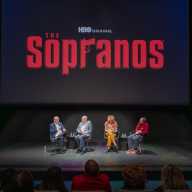
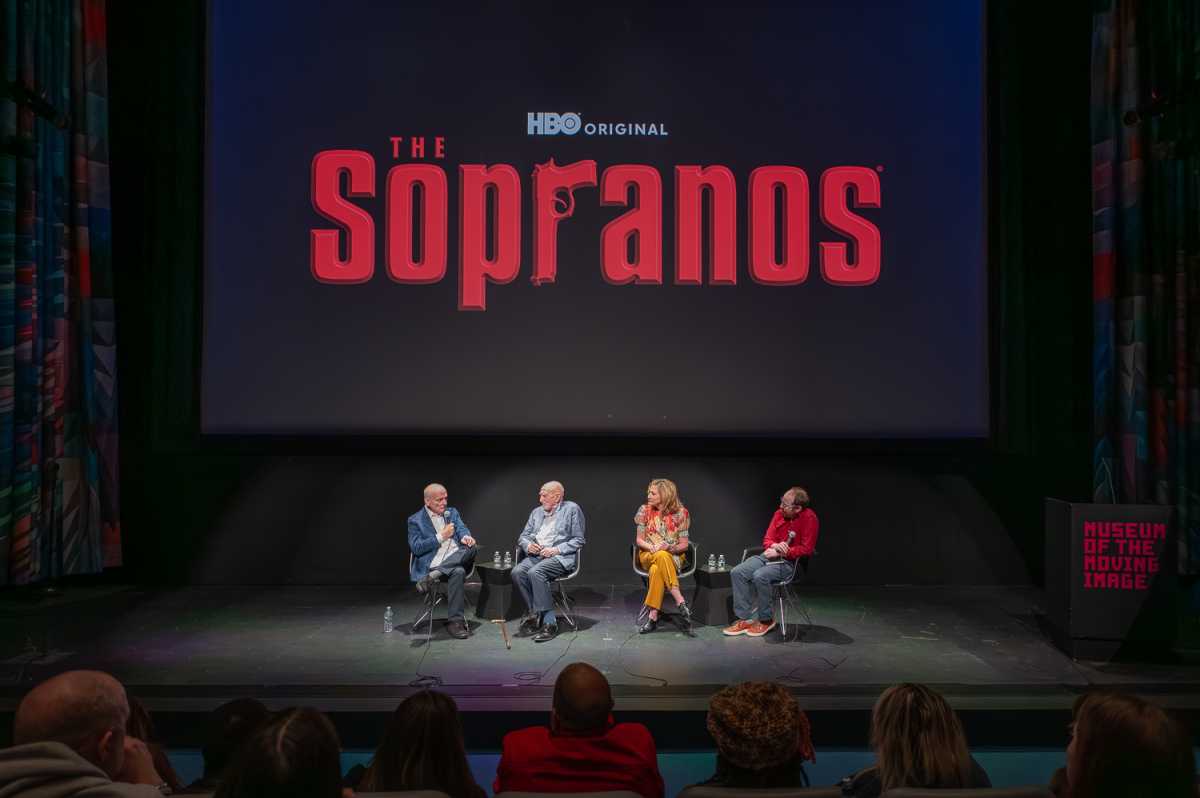
David Chase, creator of and showrunner of “The Sopranos,” sat in a chair on stage at the Museum of the Moving Image in Astoria on Feb. 27 near two of the stars, discussing how the first season of the hit HBO show was supposed to end.
Tony Soprano, played by James Gandolfini, was going to smother his mother, Livia Soprano, portrayed by Nancy Marchand, after she plotted to have him killed. It would be brutal, practical, and memorable. Then something happened. Marchand made a request, if not an offer, that he couldn’t refuse.
“She was very sick at the end of season one,” Chase said in a recent a panel on “The Sopranos” at the museum. “She had emphysema and lung cancer. She was supposed to go out at end of the first season.”
Marchand, an experienced actor whom Chase admired, asked him to let her character live, so she could keep acting. “At the end of season one, she said to me, ‘David, just keep me working,’” Chase continued. “So we did.”
Tony Soprano, still grabbed a pillow, but never used it as a weapon and “The Sopranos’” plot changed direction. Marchand and Livia lived one more season until Marchand died in 2000, but the show lives on, inspiring viewers, exhibits and tributes.
“It’s unclassifiable. It’s satire and drama. I don’t know how you did it. Every time I watch it, I’m amazed,” filmmaker Ari Aster, who led a recent panel on the show at the museum, said. “This is the best show ever made. I think it is the paradigm and will remain the paradigm for as long as television or even film is being made. It’s an angry show. It’s angry about what America is.”
The Sopranos, which ran January 10, 1999, to June 10, 2007, ending nearly 20 years ago, is back in Queens, near Silvercup Studios where much of it was shot, with an exhibit at the Museum of the Moving Image.
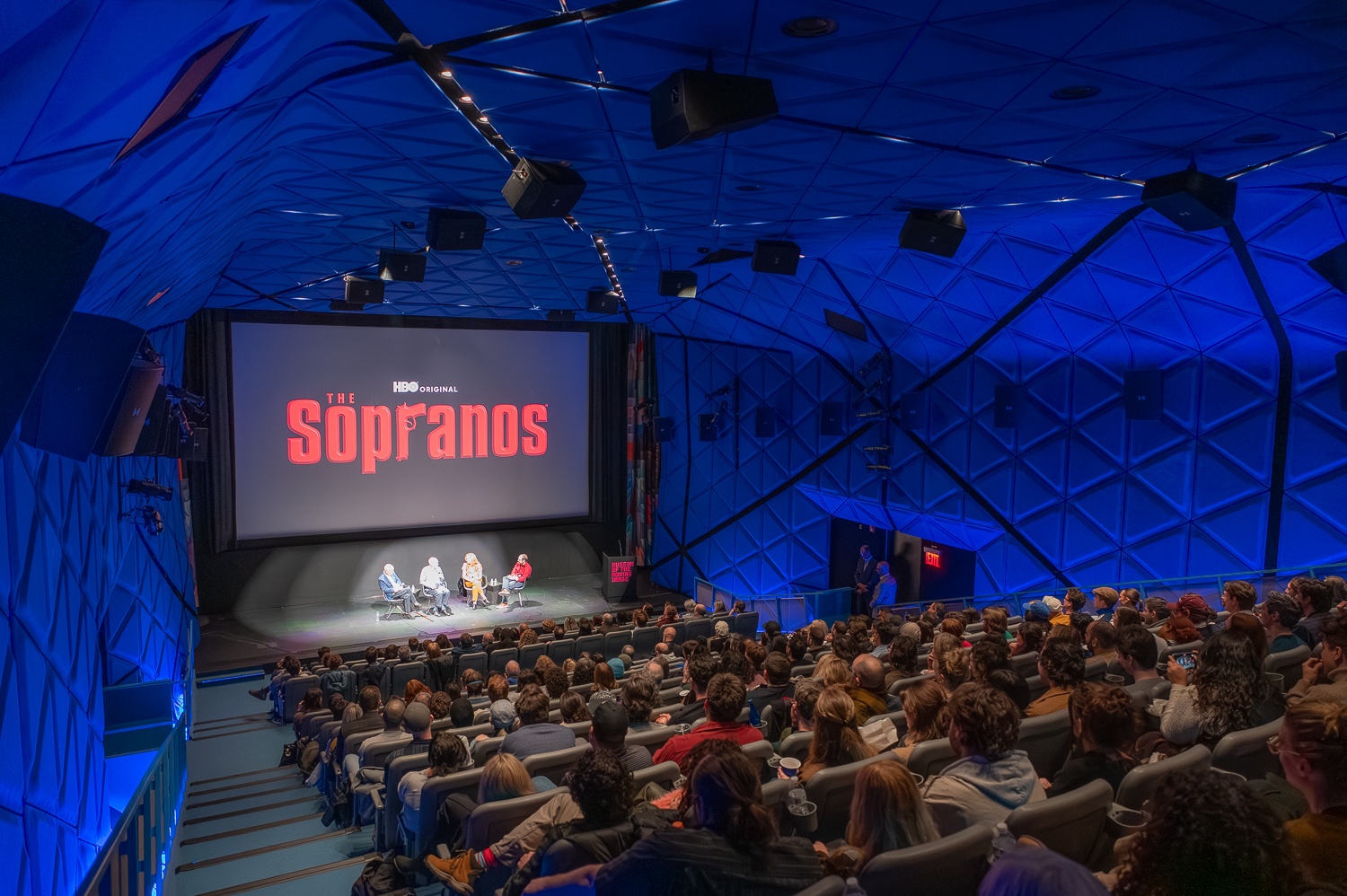
Chase on Feb. 27 returned with Edie Falco, who played Carmela Soprano, and Dominic Chianese, who played Uncle Junior. The museum showed the episode titled “A Second Opinion” where Uncle Junior wrangles with a cancer diagnosis and Carmela considers therapy. Steven Van Zandt, Ariel Kiley and Annabella Sciorra also came on nights with viewings and discussion Feb. 26–28.
“I realized it was 25 years since the third season of ‘The Sopranos,’” Senior Curator of Film Michael Koresky said of the tribute. “I thought it was the greatest season.”
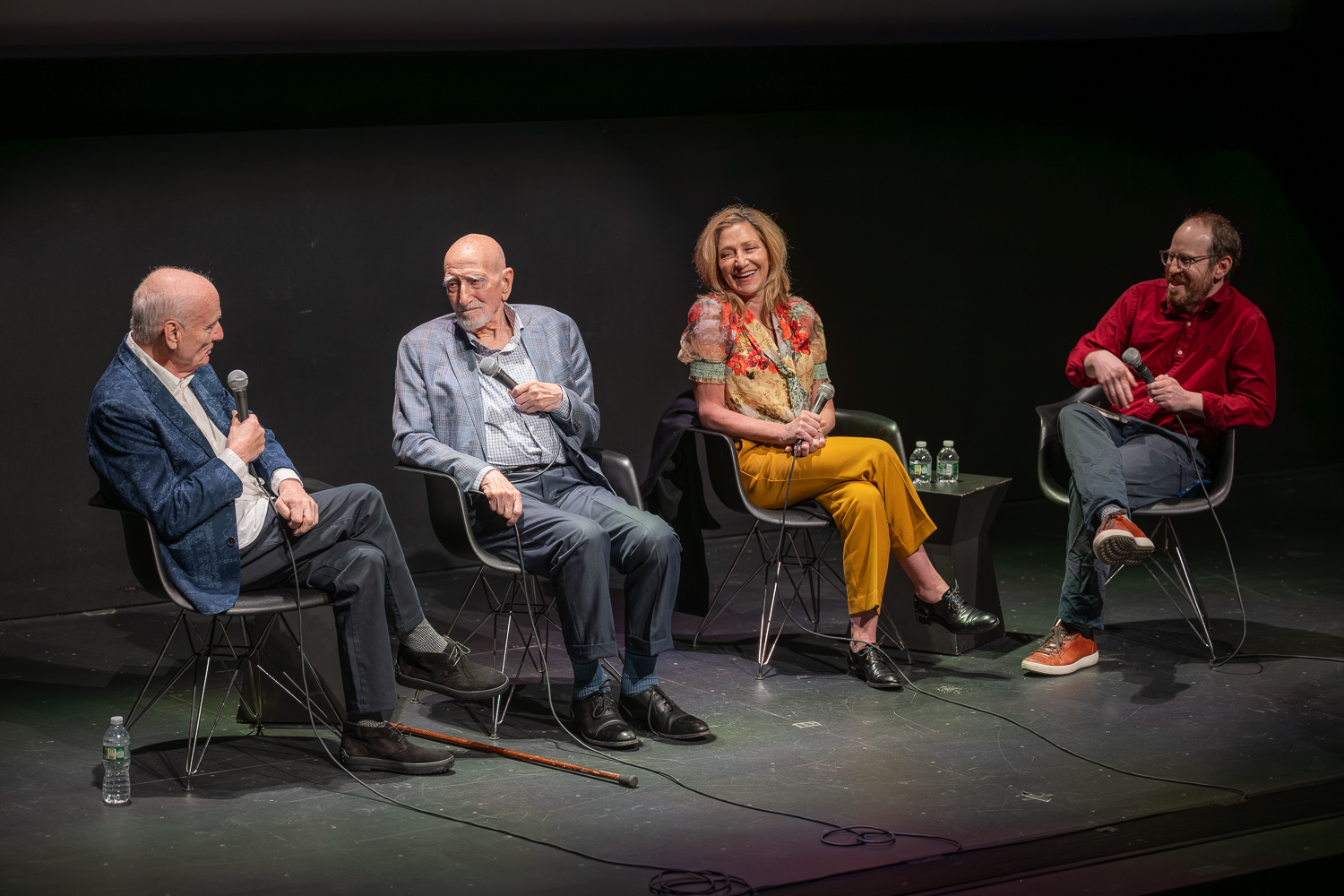
Various cast members reunited to reminisce about the show, remember cast members who died, such as James Gandolfini, and discuss how “The Sopranos” became a cultural phenomenon.
“As you guys are talking, it’s like, what happened?” Edie Falco, who played Carmela Soprano, Tony Soprano’s wife, asked. “What did we do? It’s a different part of my brain.”
Tom Eaton, a Queens resident who went to the exhibit and remembers watching the show in Albany, was touched by the characters.
“The first time I watched it was in high school,” he said. “At first, you’re in high school, you’re learning a lot about the world. You see a show about Italian gangsters. I grew up Italian, but not like that.”
Eaton said The Sopranos felt more real and personal, presenting human beings with families, frailties and lives and not cardboard cut-out criminals.
“This show gave a little more realism than ‘Goodfellas’ and ‘The Godfather,’” Eaton said. “It made it feel like it could be happening down the block from you.”
The exhibit, “Stories and Set Designs for The Sopranos,” opened Feb 14 and runs through May 31 in the museum’s Amphitheater Gallery.
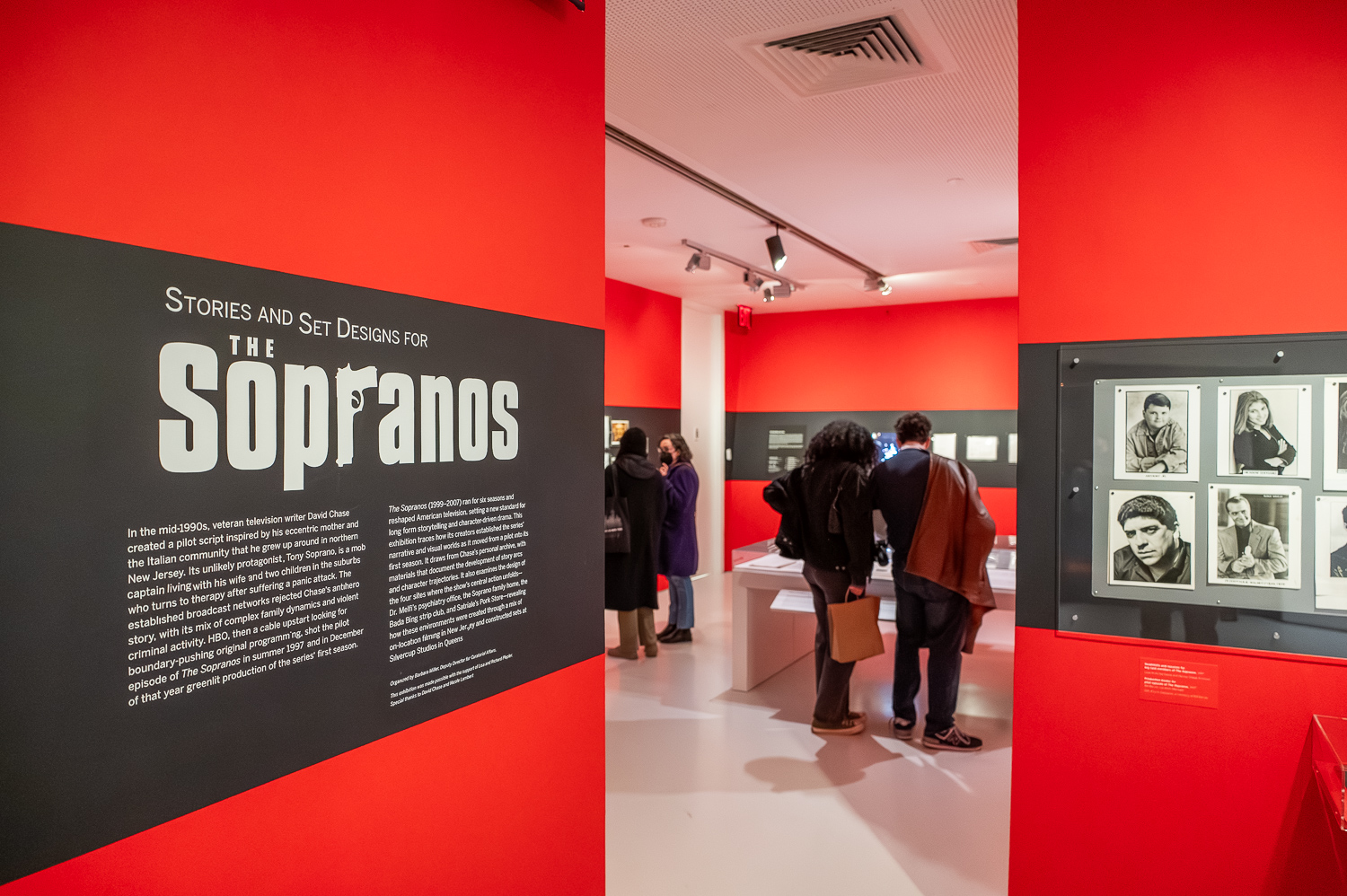
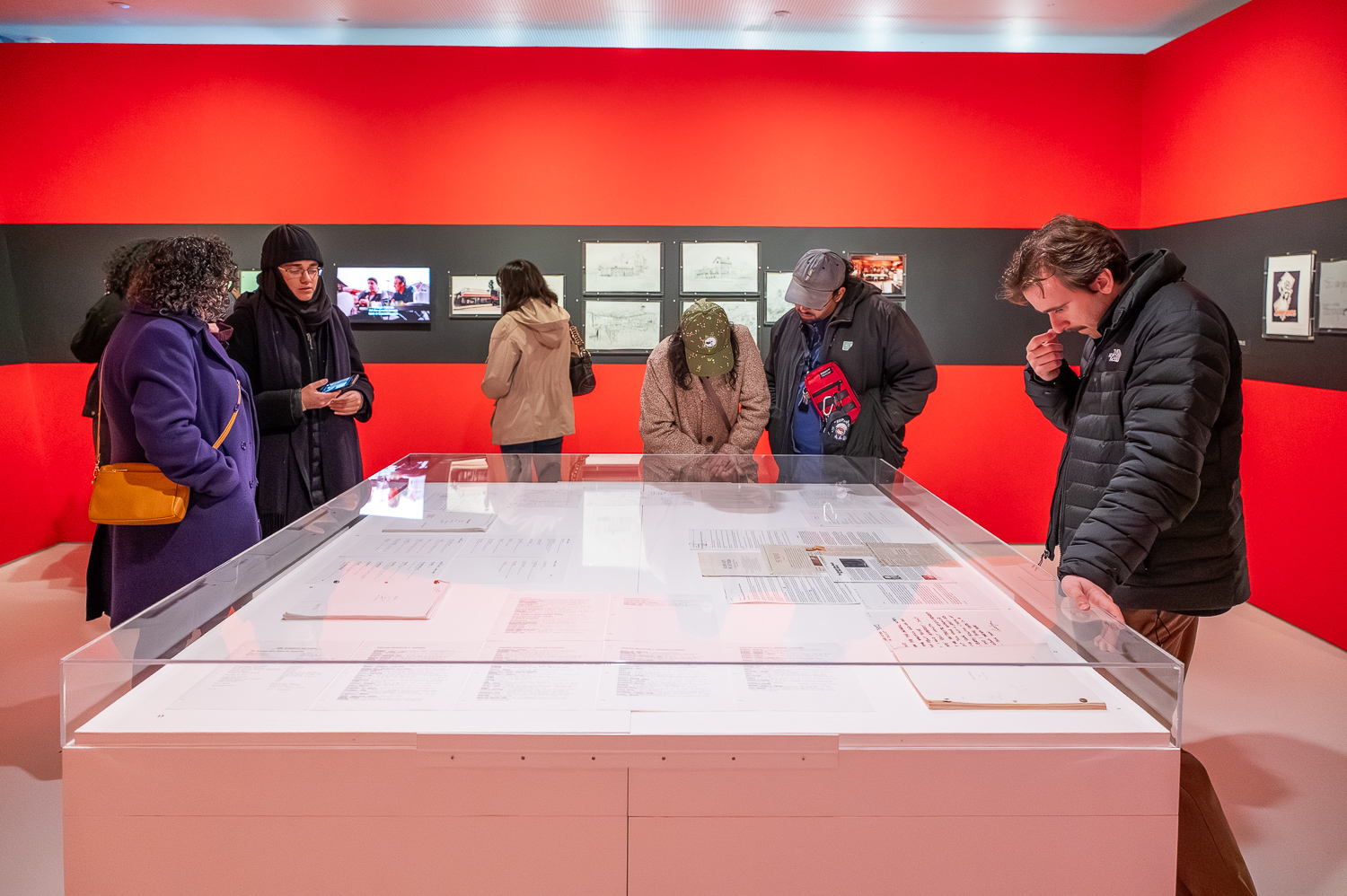
Created with David Chase’s personal archives, it presents scripts, notes and research material from the pilot into the first season. Visitors see images of the four principal sets where the series unfolds including Dr. Melfi’s office, the Soprano home, Bada Bing strip club and Satriale’s Pork Store, built at Silvercup Studios.
“The exteriors were in New Jersey,” said Deputy Director for Curatorial Affairs Barbara Miller. “(Chase is) from New Jersey.”
The exterior of the house where the Sopranos lived was 14 Aspen Dr., in North Caldwell, NJ, a six-bedroom, six-bath, 6,100-square-foot building that Zillow estimates is worth $2,206,100. But its and other principal interiors were shot at Silvercup Studios, where shows and movies such as “Succession,” “Sex and the City,” “Gossip Girl,” “30 Rock,” “The Devil Wears Prada” and “When Harry Met Sally” came to life.
The exhibit includes images of sketches of the sets, as well as video of scenes beside an earlier version of the script, so actors say lines similar to, but not identical to, the script. “From what I hear, they stuck to the script,” Miller said.
Chianese said he enjoyed doing the show, working with a talented cast and strong scripts. “The timing,” he said. “I just loved being in that show. I felt like I was married to it.”
He talked about how he joked with Gandolfini, whose comments almost seem in character. “I’ll see you in the neighborhood, Tony,” Chianese told him. “Not if I see you first. He was that kind of guy.”
Chase said he signed on to do a show about organized crime before the Sopranos were born, but found himself writing Italian-American characters.
“That was Italian American. So I just went there automatically, because I had a wealth of knowledge,” he said. “I started using this Neapolitan patois. That’s how my family spoke. I just did what seemed real to me for an Italian American family in New Jersey.”
The exhibit includes a page from an early version of the pilot, when the character was still named Tommy, named for James Cagney’s character Tom Powers in “The Public Enemy.” It sounded too Irish.
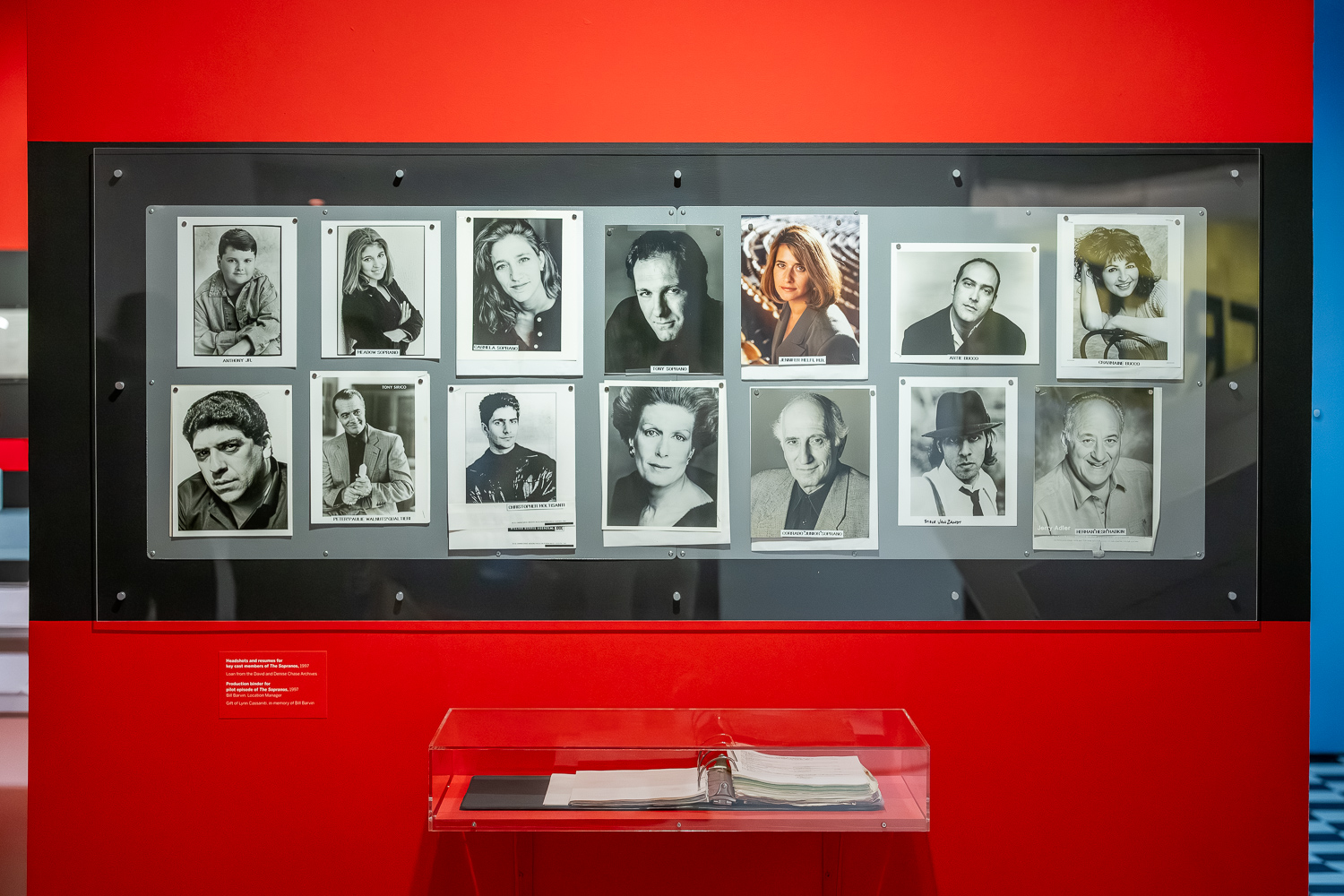
Chase named the character “Tony Soprano,” a variation on the name of one of his friends Toby Soprano.
“Tony’s a good choice,” Eaton said. “You get a deep insight in someone who’s supposed to be a high ranking mobster.
Chase sees Tony Soprano as a searcher, seeking money but also moral justification to soothe himself.
“Tony never stopped looking,” Chase said. “He was always looking for redemption, but he never made it. He was trying, trying, trying.”
Someone asked Chase whether Tony had class issues, feeling inferior to people with more education or perceived status in society.
“That’s his job. That’s how he was brought up. He’s a criminal,” Chase replied. “He didn’t care about class. He wants money.”
The museum was surprised by the sheer scale and passion of the reaction. “A new generation is discovering it,” Miller said.
Chase believes casting Italian Americans in roles improved the show, although he believes fewer Italian Americans pursue acting today.
“Now there are no Italian American actors,” Chase said. “I think they all went to medical school.”
The show, meanwhile, feels fresh as people rediscover it. “I rewatched it a couple of years ago,” Eaton said. “We’re rewatching it now.”
Museum of the Moving Image is located at 36-01 35 Ave. in Astoria. For more information on the Stories and Set Designs for The Sopranos exhibit, visit movingimage.org/event/stories-and-sets-for-the-sopranos.