
Legislation requiring general hospitals across the state to develop a language assistance program was officially signed by Gov. Kathy Hochul on Dec. 11. This legislation ensures timely identification and ongoing access for patients in need of language assistance services.
The bill, S6288B/A387B, was introduced in January and sponsored by Assemblywoman Nily Rozic and state Sen. John Liu.
According to a news release from Liu’s office, the bill builds on New York’s role as a national leader in breaking down barriers to quality health care and resources.
“Every patient who walks through a hospital’s doors should have the ability to communicate clearly and confidently with their doctor — especially during emergencies when time is of the essence,” Liu said. “This bill will make sure in-language isn’t just an afterthought, but a requirement for all of New York’s hospitals so all New Yorkers can have confidence that their healthcare is in good hands.”
“Everyone deserves the right to accessible health care, free from language barriers that prevent them from accessing the services they need,” Hochul added. “Signing this legislation ensures that all New Yorkers, regardless of their primary language, are treated with dignity and care.”
Language assistance elements required by the bill include the following:
- Designation of a language assistance coordinator
- Policies and procedures ensuring timely identification and ongoing access for patients in need of language assistance services
- Ongoing education and training for hospital staff
- Appropriate signage
- Documentation of language preference in medical records
- Provision of skilled interpreters and other staff skilled in communication with vision and/or hearing-impaired individuals to patients requiring such services
Praise from Queens officials, community organizations
Over 20 officials and community organizations in Queens praised the life-saving bill and Hochul for signing it into law. Councilwoman Mercedes Narcisse, chair of the City Council’s Committee on Hospitals, was among elected officials who have personally been impacted by lack of language access in hospitals as an immigrant in the United States.
“I know all too well how frightening it is to navigate a complex healthcare system without being able to properly communicate,” she said. “No one should ever feel confused, afraid, or powerless when seeking medical care.”
According to Daphne Thammasila, associate director of programs at Asian American Federation, nearly half of Asian New Yorkers — and 70 percent of its seniors — face serious barriers to care because of language access gaps.
“No one should struggle to get medical help simply because an interpreter isn’t available,” Thammasila said. “All New Yorkers deserve quality healthcare, regardless of the language they speak.”
While the AAF has been advancing innovative solutions to expand high-quality services across the city, including a first-of-its-kind Asian language interpretation worker cooperative, the problem is far too large for local organizations to solve on its own.
Yoon Ji Kim, interim executive director of the MinKwon Center for Community Action, said the organization has supported the immigrant community for 41 years, but no matter how much assistance it offered to residents it still cannot not fix the systemic crisis of widespread language barriers and miscommunication.
The organization even conducted a health survey that confirmed language access is one of the top three barriers to healthcare, and 87 percent of those MinKwon enrolled in insurance this year don’t speak English as their first language. “This is a denial of fundamental human rights with potentially deadly consequences,” she said.
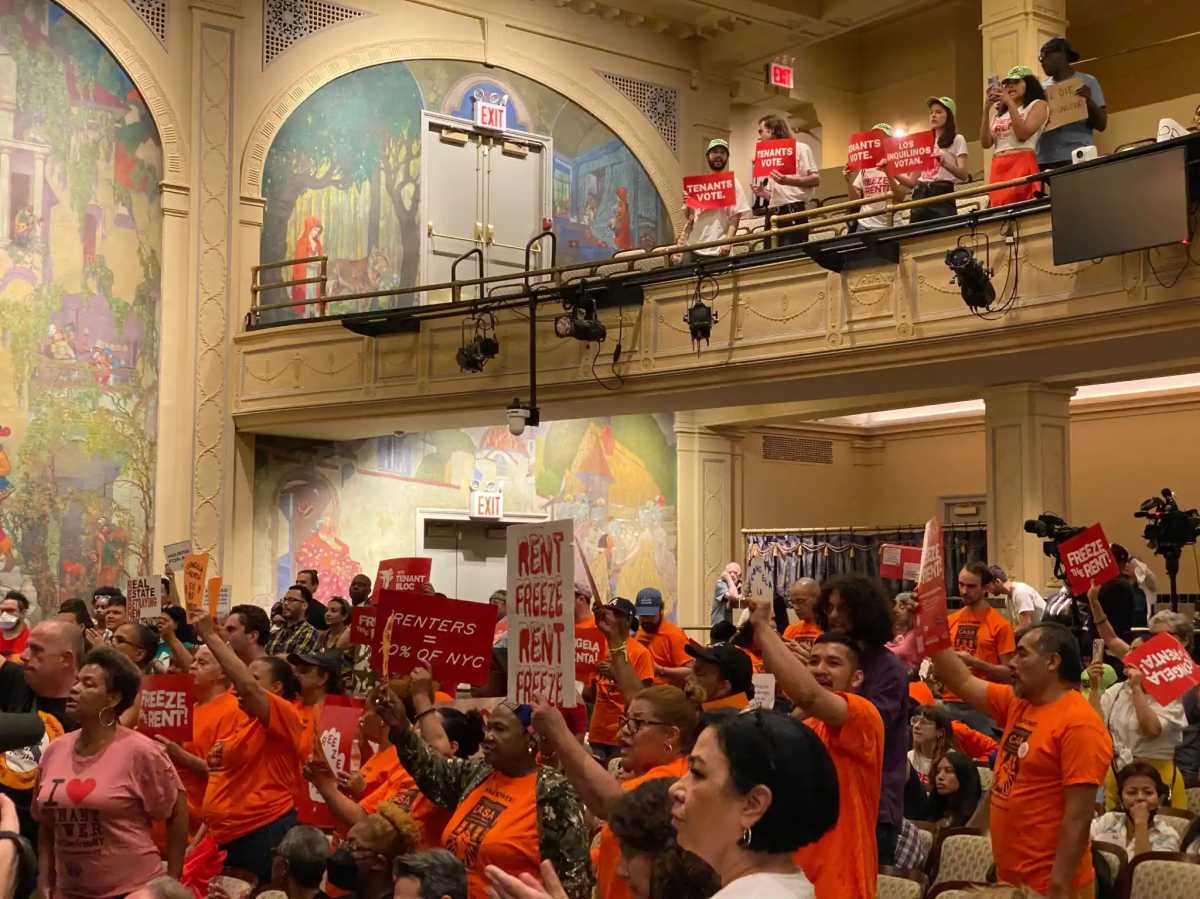
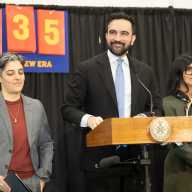
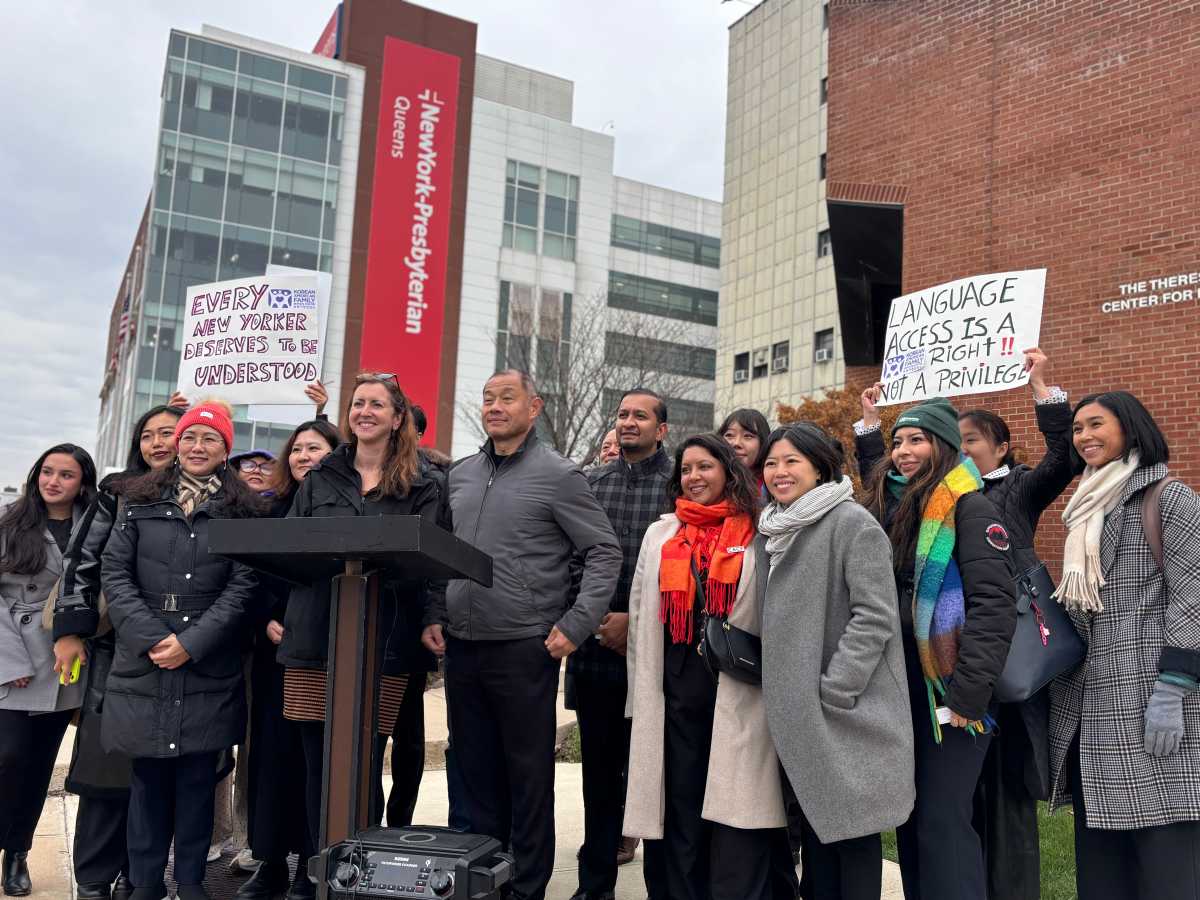
Community leaders and Queens officials — including Liu, Rozic and Councilwoman Linda Lee — hosted a rally last month in front of NewYork-Presbyterian Hospital, in Flushing, demanding the crucial bill be signed before the end of the year.
Local organizations such as the Coalition for Asian American Children and Families, Asian Americans for Equality, the Korean American Family Service Center and the South Asian Council for Social Services, shared personal testimony and experiences conveyed by community members of the fear and trauma language barriers cause in medical settings.
Many children of immigrants are forced to be language interpreters for their family in sensitive medical matters, leading to miscommunication and immense pressure on young children to take responsibility for their family members’ lives.
“When the system fails, some of their families — especially their children — are forced to step in, often being relied on to translate complex medical information,” said Sherry Chen, the health policy coordinator at the CACF, during last month’s rally. “Children can feel as if the sole responsibility of a parent’s life is placed in their hands.”
Both Rozic and Liu recalled being interpreters for their parents when they immigrated to the United States as young children, saying they often navigated tricky medical situations that made them fearful for their families’ health.
Jeehae Fischer, executive director of KAFSC, said children are also forced to interpret traumatizing experiences suffered by their family members, including gender-based violence. “No children should bear that kind of burden,” she said.
According to Rehan Mehmood, director of health services at the SACSS, comprehensive language services could be the difference between life and death. He shared a story during last month’s rally of a patient seeking medical care for a head injury. After many attempts to get medical assistance for his worsening symptoms, Mehmood explained, the man did not know how to seek help without health insurance.
The patient became suicidal, Mehmood continued, eventually walking along 45th Avenue in Flushing and thinking about ending his life. But, once the man passed the SACSS office that had a sign written in Hindi and Urdu, he walked in and finally got the care he needed with the help of someone who could help him accurately interpret the complexities of healthcare and insurance.
Stories like these are why, many officials said, the language services bill was a major win for the Queens community, which represents the most linguistically diverse population in the world.
“Today’s signing of A387B is a major win for New Yorkers who deserve clear, accessible communication when seeking hospital care,” said Assemblymember Jessica González-Rojas. “As someone who represents one of the most culturally and linguistically diverse communities in the state, I know how transformative — even life-saving — this bill can be for families like mine.”
“I am deeply grateful to Governor Hochul for recognizing the urgency of this issue and to Senator John Liu for his steadfast partnership in getting this done,” Rozic added. “Together, we are making our hospitals more reflective of the communities they serve.”
While the language services bill is a major step in the right direction, officials said there is still much more work to be done to ensure equal access to healthcare, particularly in immigrant communities across Queens.
“New York must continue to champion language access to assist New Yorkers in accessing public service and care,” said Councilwoman Alexa Avilés. “This is an excellent initiative that will improve our public health.”
For more information about the bill, visit For more information about the bill, visit NYSenate.gov or Assembly.State.NY.us.