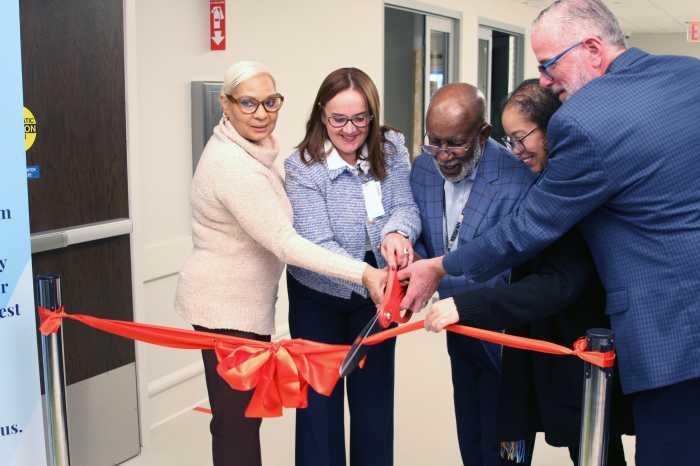

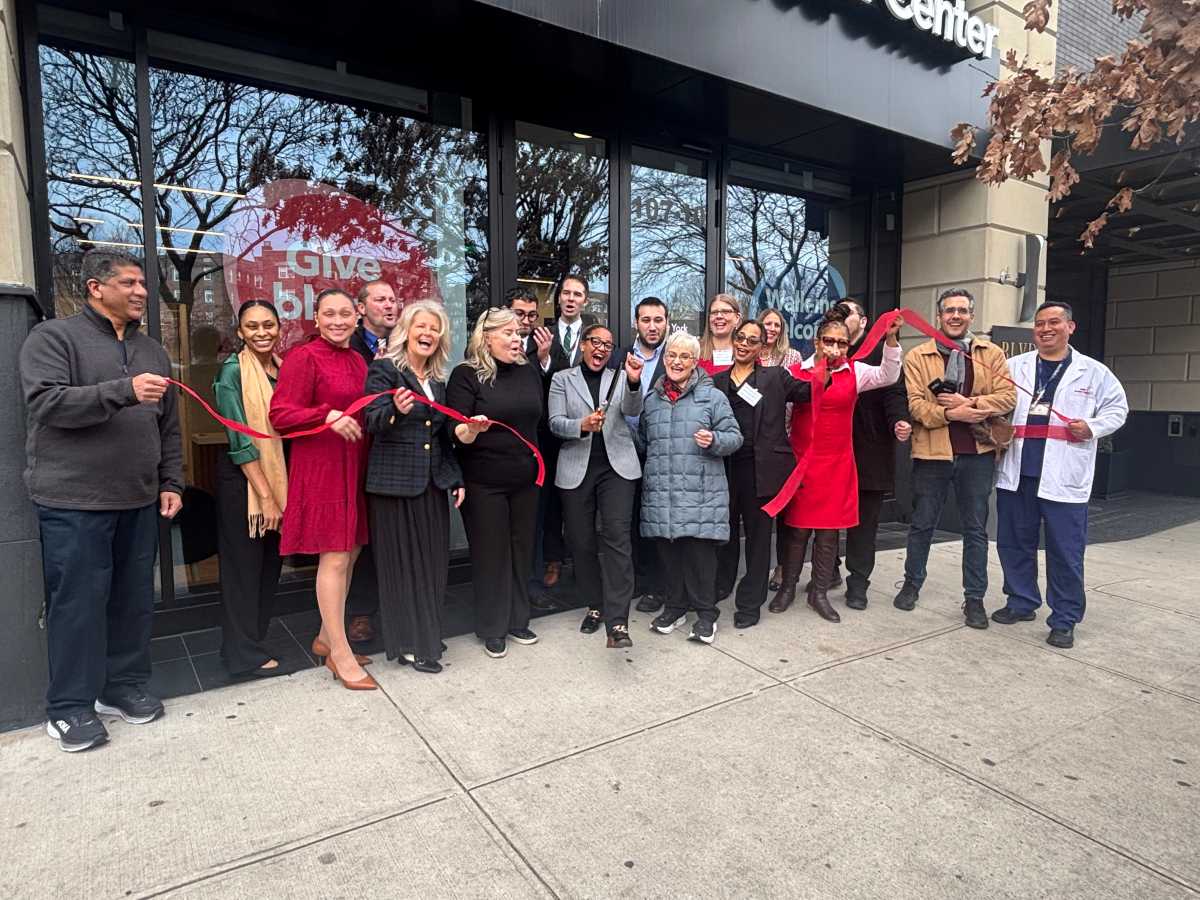
The New York Blood Center (NYBC) opened its first-ever donor center based in Queens, marking a milestone for the organization and making blood transfusions more accessible to patients in need. Public officials and NYBC staff celebrated the grand opening of the new center, located on Queens Boulevard in Forest Hills, during a ribbon-cutting ceremony on Dec. 10.
In attendance was Deputy Queens Borough President Ebony Young; Council Member Lynn Schulman; Toni Eyssallenne, deputy chief medical officer of the NYC Department of Health and Mental Hygiene; and other community partners who delivered speeches about the new, state-of-the-art facility and its importance to the community.
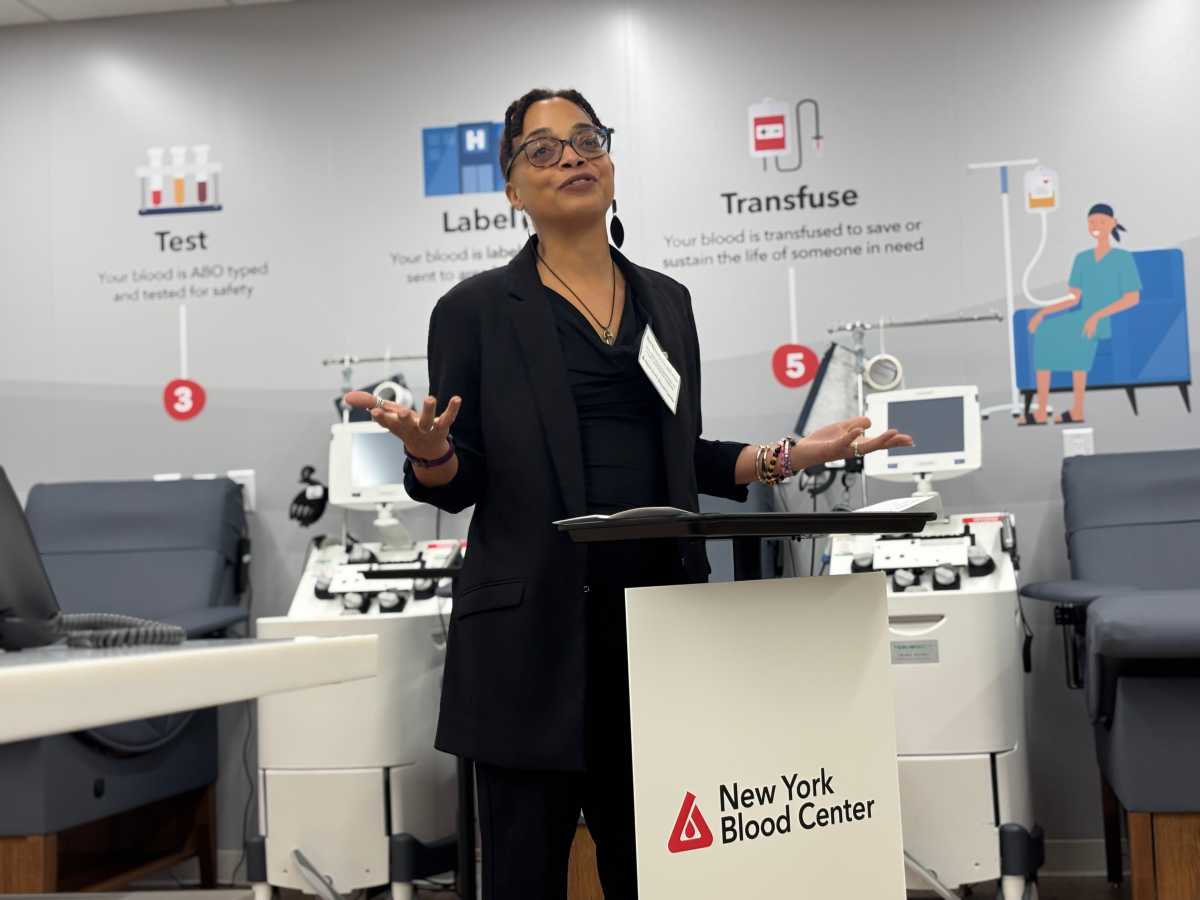
Yadira Navarro, the director of community and stakeholder relations for the NYBC, opened the ceremony welcoming guests to the center and emphasizing the life-saving resources provided through the organization.
“I am incredibly proud that NYBC has brought this life-saving resource to the most diverse community in Queens,” Navarro said. “It’s a place where people show up for each other each and every day, so this center represents expanded access. It also represents stronger health equity and a more resilient blood supply.”
The Queens-based center is the sixth location in New York City to date, the other five collectively accumulating over 500,000 lifesaving blood products annually. According to a news release from the NYBC, the new location helps make blood donations more convenient for residents, which in turn helps increase the blood supply.
According to Jeannie Mascolino, vice president of operations for the NYBC, Queens is a crossroads of cultures, languages and communities. In the world of blood donation, she explained, this diversity can widen the pool of participants with different blood types and save even more lives.
However, she pointed out that the NYBC is not just a place where people can donate blood, but also a place that conducts cutting-edge research in cell- and gene-therapy programs.
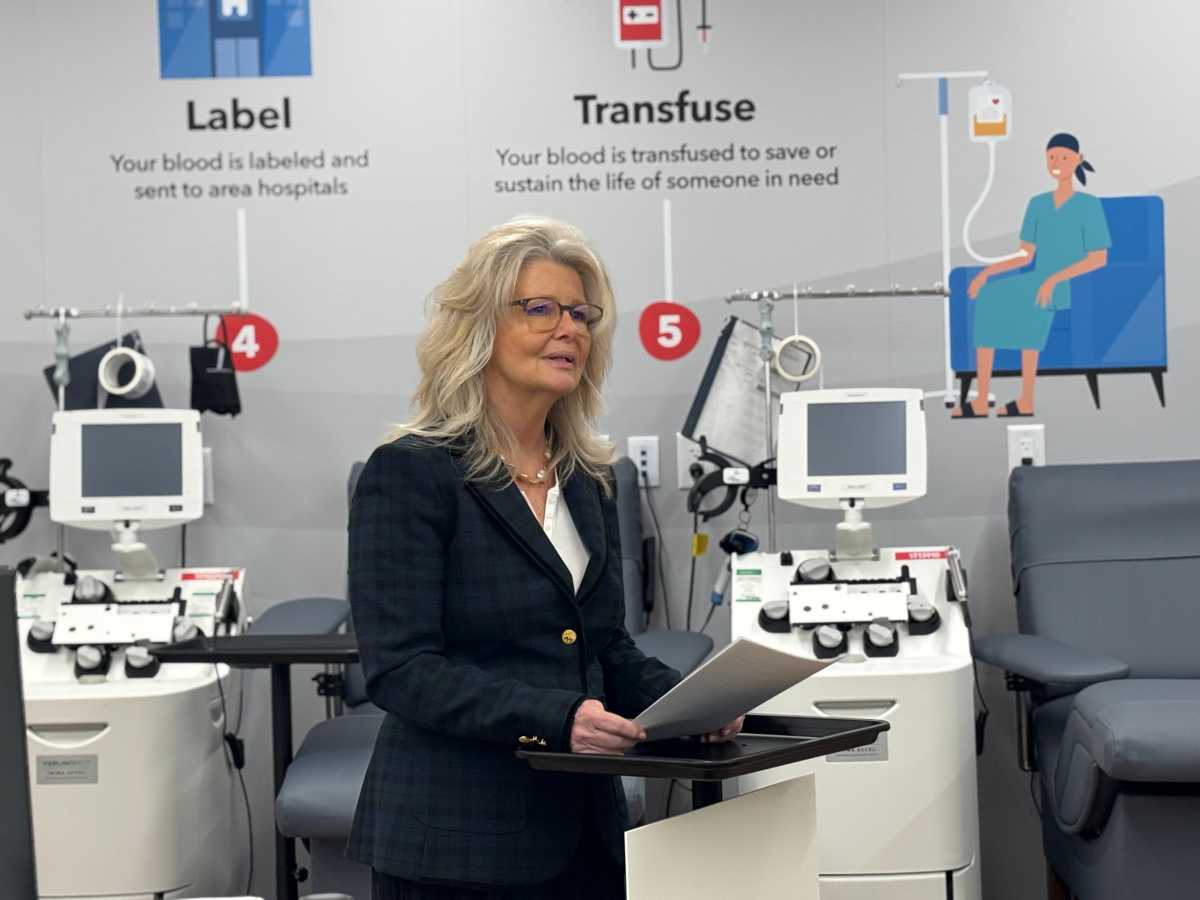
Mascolino said the work the NYBC conducts in their research labs, the thousands of blood drive sponsors across the region, and the partnerships it builds with hospitals, elected officials and community leaders is what contributes to a strong, diverse and reliable blood supply.
“Donor centers like this one in Queens are essential to that ecosystem,” Mascolino said. “Every donor who walks through these doors plays a direct and irreplaceable role in our mission to improve and save lives.”
According to the American Red Cross, someone in the U.S. needs blood every two seconds. However, it states that only 3 percent of eligible donors actually donate blood each year — about 6.8 million.
Young said it’s important to advocate and improve messaging around donating blood as a way of improving health equity, especially for individuals like her who have rare blood types. “Bottom line — blood saves lives,” she said. “I have a very rare blood type. If anything ever happened to me and I didn’t have someone supplying it for me, I’m gone.”
Schulman said she was grateful to the NYBC for investing in the Queens community and recognizing that health equity begins with access to resources. She’s been working with the NYBC since she was first elected in 2021, she noted, spending much of her professional life advocating for equitable and accessible healthcare.
“I know how vital a diverse blood supply is for the people of Queens,” she said. “Blood is one of the few medical necessities that must come from people — generous neighbors who choose to give.”
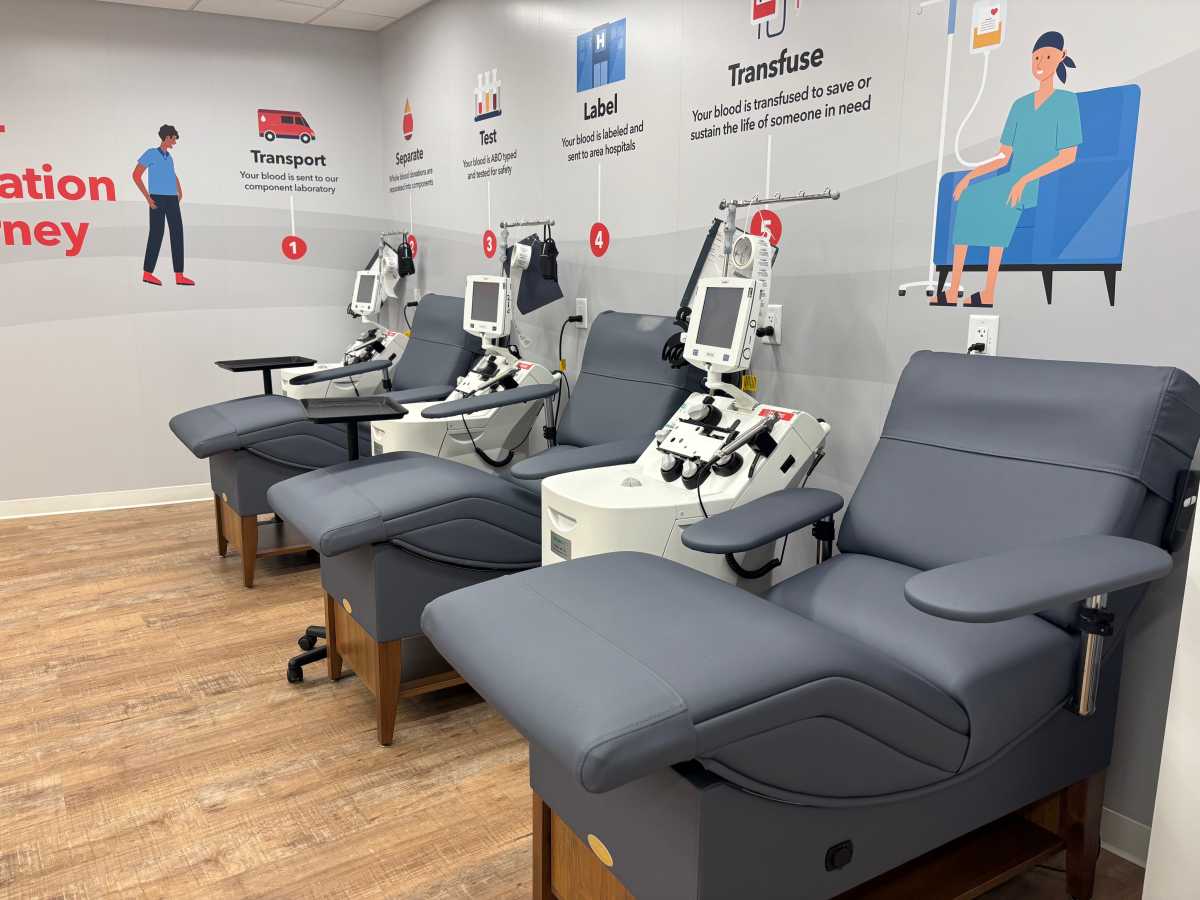
When donors arrive at the facility for their appointments they will first enter one of several screening rooms where staff members will determine whether the participant is eligible to donate blood. After approval, patients will be seated on a chair where a phlebotomist will begin drawing blood or platelets.
Once donors are done giving blood, which generally takes one hour to collect 1 pint of blood, they will be escorted to a small kitchen area in the front of the facility and choose a drink, such as water or juice, and sweet or salty snacks to help them replenish fluids and boost blood sugar.
Donated blood is processed and prepared for blood transfusions to treat a range of patients, including those with cancer or chronic illnesses, premature babies, patients undergoing surgery, or trauma patients that experienced a high volume of blood loss.
Blood is then transported to a component laboratory where it is placed in a centrifuge that separates components including platelets, plasma and red blood cells. It is then tested for type — A, B or O — and labeled to ensure it can be safely administered to a patient with compatible blood type. Patients with type O-negative blood are universal donors, meaning there is a higher demand for donations from this blood type since it is compatible with anyone’s blood type.
Plasma, red blood cells and platelets also have shelf lives — meaning once they’re donated they must be used within a certain time frame — which are one year, 42 days and five days, respectively.
While the NYBC is excited for the new facility, a news release from the organization said, it continues to face significant blood supply challenges. The region’s current blood supply can only serve around half the number of patients in need of blood transfusions. Critical blood types, O-positive and O-negative, are reportedly down to just a one-day supply.
The organization is urging people to donate blood after it saw a 20 percent drop in donations during the week of Thanksgiving. Donors can give blood every 56 days, the NYBC noted, and platelet donors can give twice per month. As the holiday season approaches in particular, the organization is facing challenges collecting blood donations due to harsh winter weather, school breaks, seasonal illness and busy schedules.
Eyssallenne said because of these seasonal challenges, the center’s opening could not be more timely. She explained that blood supply is a cornerstone of public health, ensuring hospitals can respond to emergencies and provide lifesaving care to patients in need. She said matching a blood donor to a patient is the difference between life and death.
“Promoting the health of all New Yorkers is our highest priority,” Eyssallenne said, adding that the state’s life expectancy rate is at its highest level in recorded history at 83.2 years. “While we are making progress in some areas, we remember that gains are not spread equally or equitably. We have a lot to do at the health department.”
Recent updates to the U.S. Food and Drug Administration blood donation guidelines, which now allow sexually active gay and bisexual men to donate blood, mean more people than ever may be eligible to give. As of 2023, eligibility questions are no longer identity-based, meaning all donors are asked the same questions for an individual risk assessment.
To view current eligibility guidelines, or to make an appointment to donate, visit NYBC.org or call (800) 933-2566.
The NYBC said those unable to donate blood, as well as current blood donors who want to do even more, can support NYBC’s End of Year Campaign, which raises critical funds to strengthen and ensure a safe and reliable blood supply. Every contribution supports lifesaving research, donor center upgrades, mobile blood drives, and education programs that inspire the next generation of blood donors.
“I’m so glad to see New York Blood Center has opened a new permanent Queens Donor Center in Forest Hills,” said Queens Borough President Donovan Richards in the news release. “We’ve happily hosted NYBC at Queens Borough Hall in the past, and now they have a permanent location in our borough for all to use. I encourage everyone to pay them a visit and give the gift of life this holiday season.”