
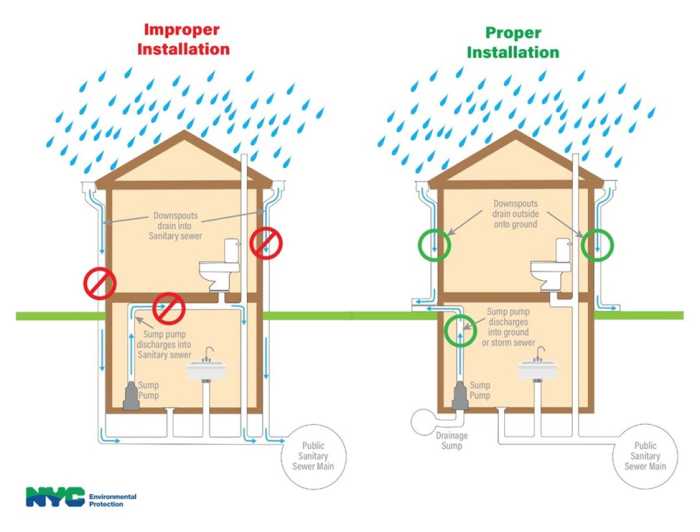
The Department of Environmental Protection (DEP) has begun asking residents to disconnect illegal downspouts within Queens’ District 30 to reduce overload on the sewer system, leading to fears of homes flooding amongst residents who received letters in the mail alerting them to impending disconnections. However, a spokesperson for the DEP said that the goal of the new operation is to actually mitigate neighborhood flooding by ensuring that sewers don’t back up, with gutters and downspouts linking directly with the system.
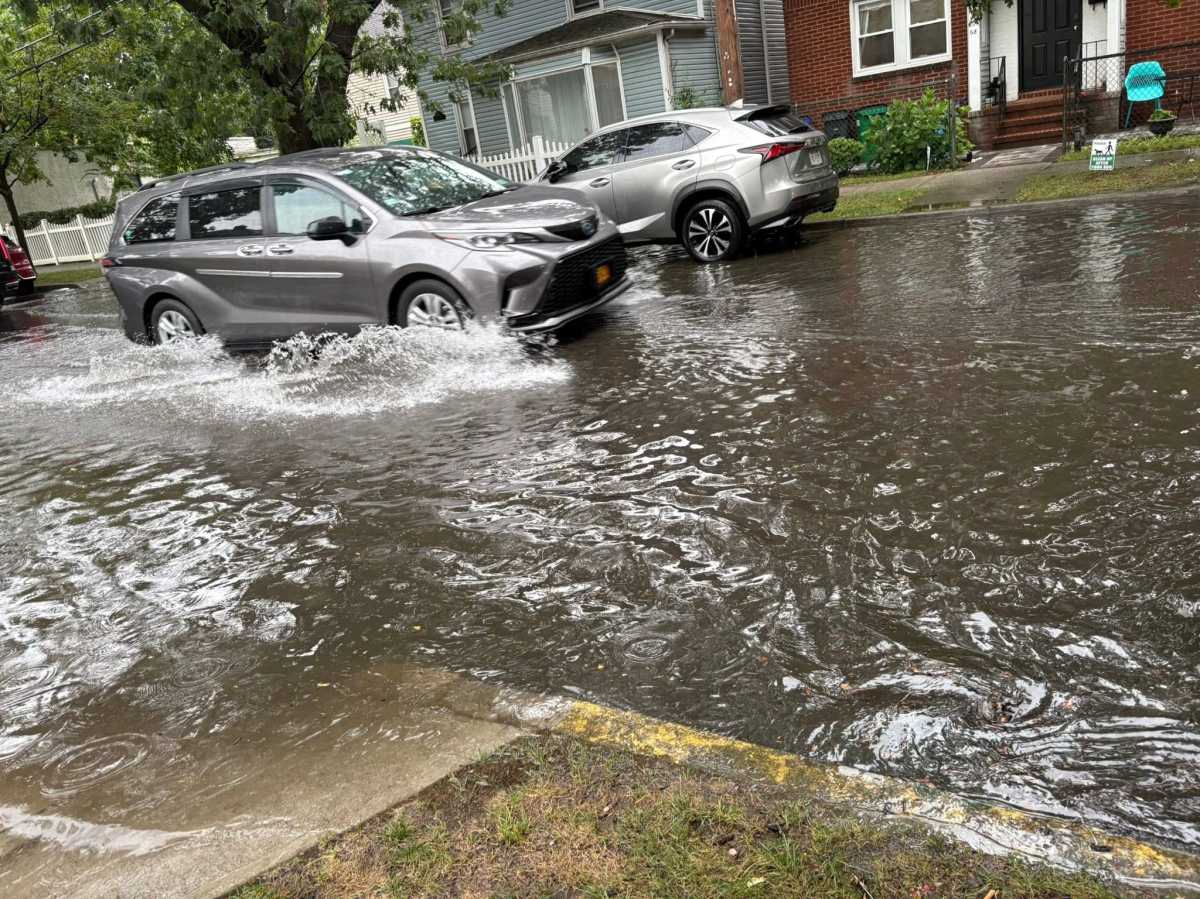
On Oct. 30, the evening before Halloween, almost the entirety of New York City flooded when a storm brought record-breaking rainfall across every borough, causing damage to plenty of homes and businesses and leading to the deaths of two men who became trapped within basements. The increase in flooding around the city due to the changing climate has brought the need for more flood mitigation efforts, such as rain gardens, green space and modern infrastructure like the cloudburst technology.
Cloudburst technology, spearheaded by the DEP, means using porous pavement, instead of traditional concrete, in public areas that allows for drainage into underground storage areas and the sewer system. Within Queens and Brooklyn, the City is also working on a combined sewer overflow (CSO) project at Newtown Creek that will help manage millions of gallons of rainwater during these floods. However, the CSO is still undergoing ULERP and is not slated to be finished until 2040.
The city passed a local law that went into effect in 2018 that made direct connections from downspouts to the sanitary sewer system illegal, as they send large amounts of rainwater into sewers that are only designed to handle wastewater from homes and businesses. The overload can cause backups and flooding in basements and around neighborhood streets and can impact the DEP’s wastewater treatment, leading to fines for environmental violations and requiring the “targeted enforcement” to disconnect them. Property owners are responsible for the cost of the disconnections, and can hire a contractor or do it themselves before the DEP intervenes.
“As New York City sees more frequent heavy rain events, these types of connections increasingly put homes and neighborhoods at greater risk. We are urging homeowners to disconnect any gutters that drain directly into the sanitary sewer system,” said a DEP spokesperson. “Addressing these illegal connections is a simple, inexpensive step that protects both individual properties and the environment – and makes New York City more resilient to climate change.”
The spokesperson noted that homeowners who connected their gutters to the system with the goal of reducing flooding on their property likely caused it. Stormwater sewers carry the rainwater directly to bodies of water around New York, while sanitary sewers take the water to be treated at wastewater plants. While each municipality in Queens contains both, they aren’t connected and mixing the two has caused a burden on the DEP’s treatment process, which in turn affects family homes incorrectly connected to the system.
“Many of our neighborhoods are made up of long-established homes, and for some residents, being told to keep water on their property raises real fears about basement flooding, foundation damage, and long-term structural issues. In some cases, there simply are not realistic or affordable alternatives,” said Council Member Phil Wong. “I told DEP that a one-size-fits-all approach does not work here and that homeowners should not be put at risk because of long-standing infrastructure conditions. We have flagged these concerns and will continue working with DEP to push for practical, common-sense solutions in combined sewer areas.”
Wong’s office has received concerns from residents from those worried that leaving the water on their property will cause more flooding during storms, especially those in areas already prone to it. However, the DEP spokesperson stated that the recent crackdown will alleviate it and other measures specifically for stormwater will need to be taken. Those with additional concerns on their specific property may contact Wong’s office or view the DEP’s website for more information.