

Numerous elected officials in Queens have signed a letter calling on NYU Langone to reverse a decision to halt its Transgender Youth Health Program after the Trump Administration threatened to withhold federal funding for any hospital that offered gender-affirming care to youths.
The letter, addressed to NYU Langone CEO Robert Grossman, has been signed by 73 elected officials across New York State, including State Senators Kristen Gonzalez, Mike Gianaris, Leroy Comrie, John Liu and Jessica Ramos.
Assembly Members Catalina Cruz, Diana Moreno, Claire Valdez, Jessica González-Rojas and Steven Raga also signed onto the letter after NYU Langone announced the “difficult decision” to discontinue its Transgender Youth Health Program last week.
Queens Council Members Tiffany Cabán, Shekar Krishnan and Lynn Schulman have also signed the letter.
NYU’s decision to halt gender-affirming care for minors comes after intense pressure from the Trump Administration. President Donald Trump signed an executive order declaring that the federal government would not “fund, sponsor, promote, assist or support the so‑called ‘transition’ of a child from one sex to another.”
NYU Langone faced criticism for reportedly canceling appointments for youths shortly after Trump issued the order, with Attorney General Letitia James directing the hospital to resume care and warning that it was violating anti-discrimination laws. A federal judge later issued a temporary restraining order against the executive order.
However, the Department of Health and Human Services proposed a rule in December that would withhold Medicare and Medicaid funding from hospitals providing “sex‑rejecting procedures for children under 18.”
Citing the “current regulatory environment” and the departure of NYU’s medical director, NYU Steve Ritea said last week that the hospital would discontinue its Transgender Youth Health Program.
In a letter to Grossman on Friday, 73 elected officials called on NYU to “immediately” reverse the decision.
“We urge you to reconsider NYU Langone’s recent decision to discontinue the Transgender Youth Health Program,” elected officials said in a letter to Grossman. “Gender affirming care is essential healthcare, and disruption to treatment can have dangerous effects on patients, including higher rates of depression and increased attempts at self-harm.”
Officials said they appreciated that “attacks” from the federal government had created a confusing regulatory environment, but said NYU cannot allow young people to “bear the brunt of this confusion.”
Doing so, they wrote, would deny young people access to lifesaving healthcare services.
“Your decision is not only harmful to New York families, it may be in violation of New York City and New York State Human Rights Laws,” elected officials continued. “In a letter sent to hospitals last year, Attorney General Letitia James has made it clear that refusing services based on a protected status, such as gender identity or a diagnosis of gender dysphoria, is considered discrimination under New York law.”
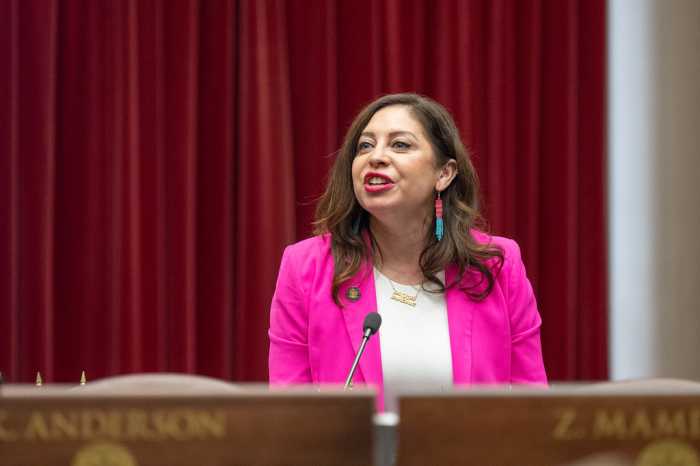
Gonzalez, who signed the letter, accused NYU of “capitulating” to the Trump Administration’s “anti-trans agenda.”
“NYU Langone’s decision to capitulate to the Trump Administration puts young people in need of life-saving care at risk,” Gonzalez said in a statement. “It’s not only irresponsible, it helps the Trump Administration’s anti-trans agenda at the expense of NYU Langone’s own patients.”
Cabán, on the other hand, accused NYU Langone of violating the Hippocratic Oath by halting gender-affirming care.
“All major medical associations agree: gender affirming care is lifesaving healthcare that improves the mental health and well-being of transgender youth,” Cabán said in a statement. “Removing access to gender affirming care leads to higher rates of anxiety, depression and suicide attempts among transgender youth.”
NYU Langone has not yet returned a request for comment.
The American Academy of Pediatrics (AAP) strongly supports gender-affirming care for youths, noting its potential to improve mental health and well-being for transgender youths. The AAP also notes that puberty blockers are reversible and that surgeries on minors are rare.