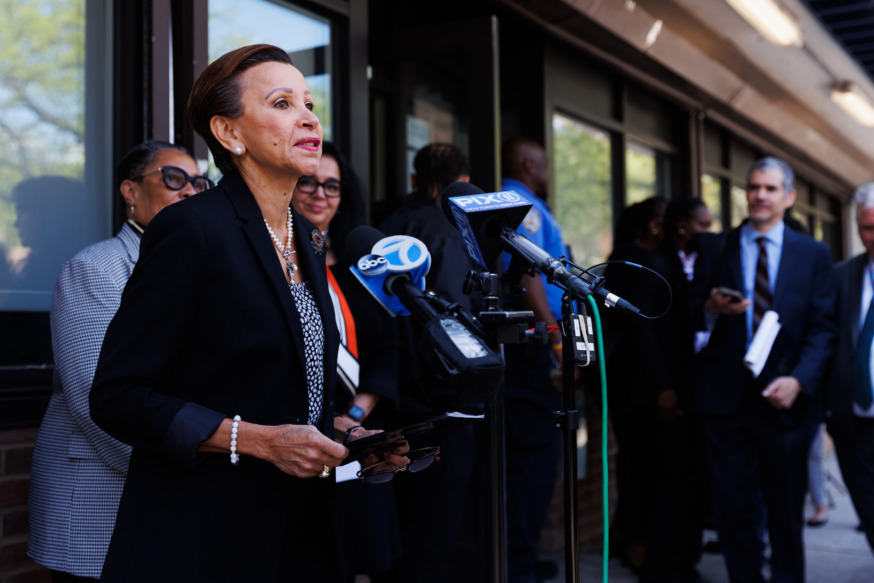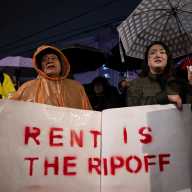

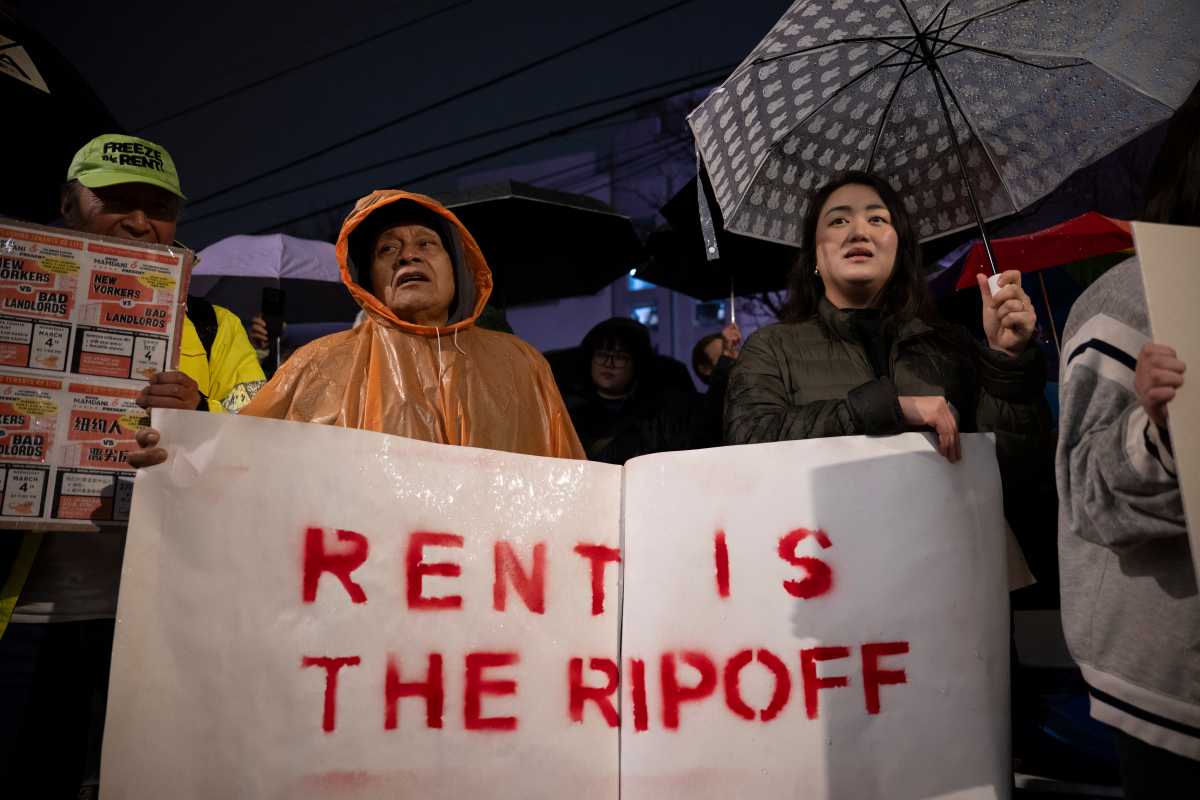
Over 200 New York City tenants attended the second installment of the Rental Ripoff hearings, hosted by the Office of Mayor Zohran Mamdani in Queens on March 5, to give testimony about injustices they’ve faced with landlords and other governing entities in providing affordable, safe housing to residents.
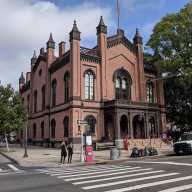
The hearing took place at the Academy of American Studies in Long Island City, where frustrated tenants had the opportunity to share testimony and speak with government authorities about issues and concerns they are currently experiencing as a result of poor landlordship.
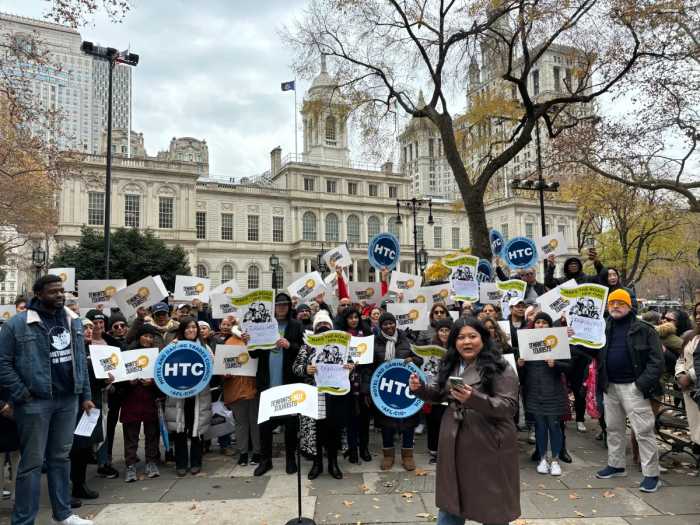
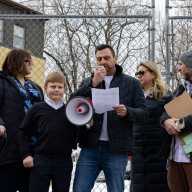
More tenants later rallied outside of the venue to continue voicing concerns and demanding solutions, such as rent rollbacks, the decommodification of housing, strict landlord oversight and investments in public housing.
Tenants both inside and outside the hearing said they are forced to endure inhumane living conditions, such as leaking ceilings, black mold, malfunctioning appliances, cockroach and rat infestations and flooding, as well as lack of heat, gas and cold water during the year’s coldest months.
“It is unacceptable,” said Jeanette Rodriguez, an A&E Real Estate tenant. “I work in health care, and these are the kind of things that put people in the hospital sick.”
Tenant testimony

Three Spanish-speaking tenants from the Mesa Verde apartment complex — Helen, Ivonne and Ursulina, who declined to give their last names out of fear of retaliation — said their building has been ravaged by black mold, cockroaches, rats and leaks for decades.
Mesa Verde consists of six detached apartment buildings located between 90th and 91st streets and 34th and 35th avenues in Jackson Heights.
Victoria, who attended the Thursday evening hearing with them, translated for the three tenants.
Helen, who has lived in the building for over three decades, said her son, who is now 25, began suffering from asthma when he was 5 years old. She said she noticed black mold on the walls and asked the landlords to clean the apartment, but all they did was paint over the mold.
Every three to four months, Helen continued, the problem returned.
“[Helen] had to fix the room on her own dime because her son has had chronic issues,” Victoria translated. “Recently, [the landlords] offered to paint the bathroom because the walls are falling apart and coming off. But overall, their demands are not being heard.”
Not only has Helen had to use her own money for temporary fixes to address mold, but she has had to spend $1,200 on a brand new refrigerator because her old one was filled with grease and cockroaches, and she’s had to build her own cabinets using planks of wood.
Ivonne said she, Helen and Ursulina have always paid their rent on time. However, she and her neighbors barely hear from their landlord despite their constant calls and attempts to get in contact.
“The sink isn’t working in [Ivonne’s] apartment,” Victoria translated. “They have to brush their teeth in the tub.”
Ivonne said the front door to the building also doesn’t lock properly, so anyone could enter the building at any time.
Many packages are stolen, she continued, and there are no cameras installed to monitor the building and potentially track down thieves.
“The entire building on 91st street didn’t even have heat when all the snow was happening,” Victoria translated. “It was really, really cold and there was no heat.”
The woman said one of the elevators isn’t working, as well, meaning anyone living in that particular building must walk up to six flights of stairs to access their apartments.
Many seniors live in the building, Ivonne said, carrying large carts of groceries up to their apartments with no help.
According to previous reporting by QNS, A&E, which took ownership over Mesa Verde in 2016, said it had worked “diligently” and has invested $13 million to address issues on the property.
A&E said it replaced the broken elevators, although tenants said it quickly broke down again.
The privately-owned real estate investment and management firm also said it replaced the roof and windows, enclosed previously exposed stairwells in order to reduce the risk of leaks and mold, and hired an exterminator to visit the complex twice a month to deal with any rodent or cockroach infestations.
However, Ursulina, who said her ceiling is still leaking in her bathroom and there are still rats all over her apartment, emphasized that she attended the hearing not just to speak up for herself, but for all her neighbors suffering as a result of poor landlordship.
Munira, 41, said she’s currently in a dispute with her landlord, who she said initially promised to keep her rent at a stable rate in 2021.
She said her landlord has since denied the conversation ever happened and is raising her rent 13%.
“I’m going through medical difficulties,” Munira stressed. “It’s been tough because now he’s basically ending my tenancy.”

Red flags started appearing when she first went to tour the apartment, Munira recounted, explaining that the landlord expressed confusion at the price Munira told him it was listed at online.
He proceeded to bargain with her, she said, and met her at a rate that was still slightly higher than the listing price.
Nonetheless, Munira said she agreed because she figured as long as the rate remained steady, it would become more affordable over time.
Years later, however, she said her landlord began telling her he had to raise the rent, which she argued, bringing up the conversation they had when she first signed her lease.
“He said it was out of his hands,” Munira said.
She said her landlord has since issued a 90-day ending notice for her tenancy and is now pursuing legal action to enforce an eviction.
“I feel betrayed,” she said. “I don’t want anyone else to have to deal with this.”
Adrian Singleton, 32, is a tenant at Hayes Court in Jackson Heights, said his landlord has harassed tenants amid gas, heat and hot water outages.
Problems have since worsened when two of the property’s managers were sent to Rikers Island for defrauding the government.
According to reporting by Communities Resist last month, Hayes Court building managers Mark Anthony and Marilyn Peter stole $2.2 million in COVID-19 relief funds from federal and state agencies and were indicted in November.
Since then, Singleton said the building has been effectively abandoned, and the tenants have resorted to a rent strike until the ongoing issues in the building are resolved.
He said not only have many of the apartment units been taken off rent stabilization, but there are many urgent repairs that need to be done to address issues, such as the lack of heat in the building this winter amid some of the season’s coldest and snowiest days.
“I have neighbors who are elderly and neighbors who are young — it’s really dangerous,” Singleton said. “We have no Super, and HPD does all the repairs, so we only have ourselves as tenants and HPD to turn to and make sure those basic living conditions are met.”
That is why, Singleton said, the Hayes Court Tenants Association has filed for 7A Financial Assistance, which, according to NYC.gov, means “administrators are appointed by the Court (pursuant to New York State Law) to operate privately owned buildings that have conditions that are dangerous to the tenants’ life, health and safety.”
Suggested solutions
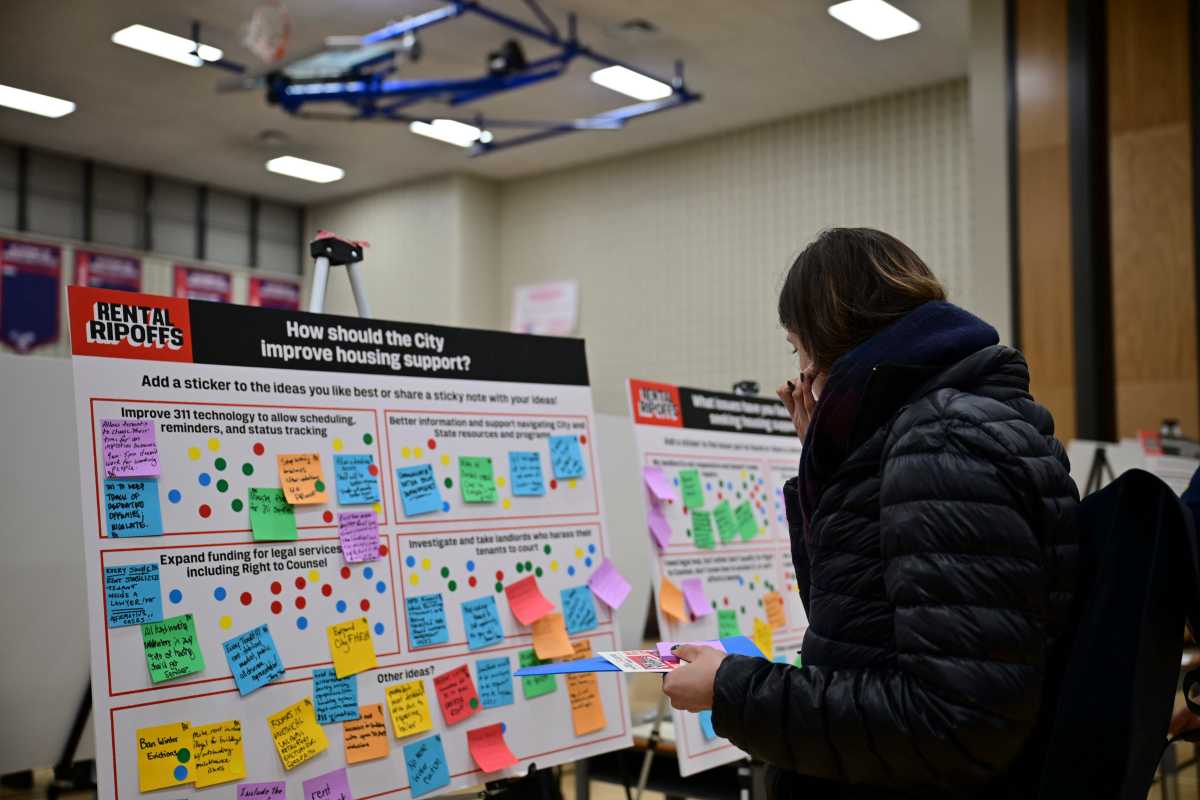
According to Shifa, 23, a member of the Committee Against Anti-Asian Violence, she and other tenants would benefit from more forums like the Rental Ripoff hearing hosted by Mamdani in which they can speak up about the injustices inflicted by landlords.
“I believe this platform is bringing change,” Shifa said. “We need more of these. My demand is I need more meetups — more platforms for tenants to speak up.”
Beyond the ability to openly express these tenant concerns, she said she wants government agencies to be more active and follow up with complaints to assure change is made.
She said organizations like CAAAV are also great advocates for tenants who are enduring unlivable conditions.
For example, Shifa continued, the organization helped her advocate for the landlords to replace her broken stove after months of being forced to use an infrared stove.
Munira suggested more legal support for tenants in disputes with landlords, such as her situation, in which an eviction is demanded.
“It’s really hard to figure all this out,” she said. “I’m not really in a financial position to afford legal representation.”
While Munira has been able to get advice and tips from lawyers as a result of the tenant right to counsel, which she said she was grateful for, those offices are inundated with tenants who need help and it’s difficult to secure actual representation.
She also said she’d like the city to expand the Good Cause Eviction Law Notice — which requires landlords to provide a written notice of the exact reason for an eviction — to smaller landlords that own less than 10 units, who are currently exempt.
“There should be more progress,” she said. “With the affordability crisis, there should be a full moratorium on any rent increases and evictions. If folks have Medicaid or SNAP or DBT or medical issues, it would be very helpful to put a pause on evicting or raising the rent. It’s just evil.”
Singleton said he believes the city needs an expedited process for interventions in situations where basic habitability is being impeded and urgent needs — such as gas, heat and hot water.
“We need protection as tenants from harassment from landowners,” he said. “We need to have better mechanisms for investigating buildings that have been taken off rent stabilization, especially if they’ve been destabilized illegally.”
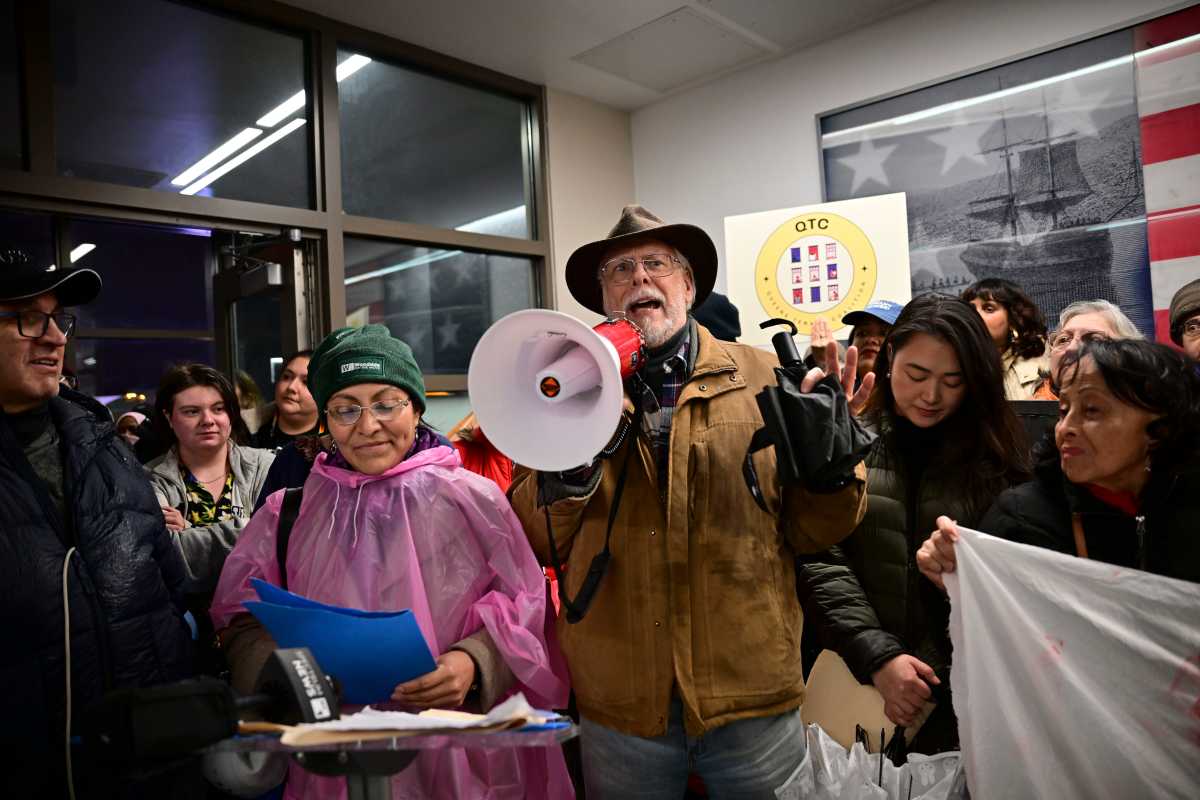
According to Rob, a member of the Astoria Tenant’s Union who spoke outside the venue during the rally following the hearing, privatization of public housing is one of the main barriers for tenants struggling to afford homes.
He pointed out that in the past 30 years, landlords have consistently reported profits in NYC.
The Community Service Society of New York reported that collected rents rose over 250% between 1990 and 2023, and Net Operating Incomes rose 48%.
Not only are tenants demanding a rent rollback, Rob said, but they are demanding the decommodification of all housing in NYC.
“More public housing, less privatization,” he chanted.
Christina, a member of the Justice For All Coalition and the Ravenswood Resident Association, referenced a March 3 New York City Department of Investigation report that shows nearly 7,000 NYCHA apartments are vacant.
“We have people dying on the streets in the cold because they have nowhere to go,” she said during the rally. “[The city] is too busy trying to privatize and demolish public housing instead of investing in and expanding it, when that’s what we need.”
Christina, a New York City Housing Authority resident for nearly 30 years, questioned why NYCHA housing, North America’s largest public housing system, is so denigrated in the media when the concerns faced by NYCHA residents resemble the same problems faced by tenants of private real estate companies.
She said investing in public housing is a “common sense” solution to the housing crisis, noting that resources are available to build over 20,000 more units than Mamdani’s plan currently proposes.
“Housing is a right,” she said, “so we must fight.”
More Rental Ripoff hearings are scheduled for the Bronx, Manhattan and Staten Island in the coming weeks. For more information, visit NYC.gov.