
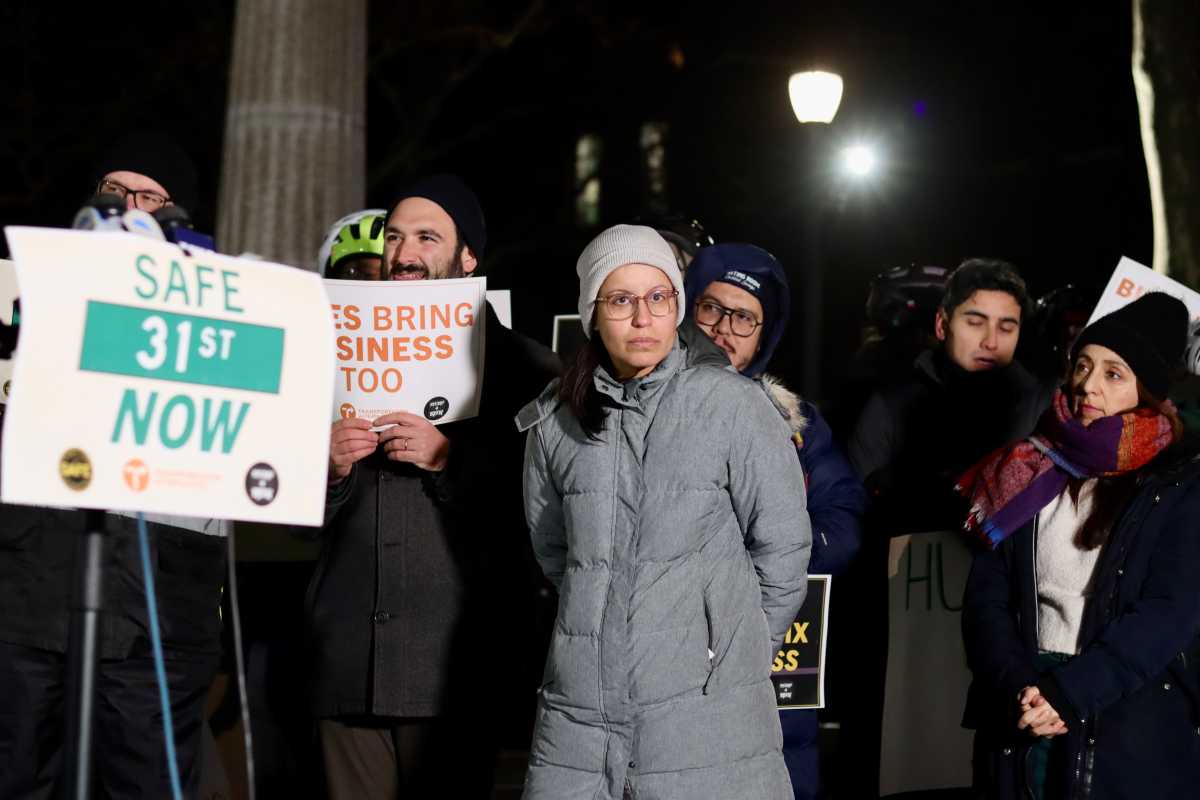
Council Member Tiffany Cabán joined a number of transit advocacy groups in Astoria Tuesday night to protest against a Queens Supreme Court ruling ordering the Department of Transportation to halt plans for a protected bike lane along 31st Street.
Cabán joined representatives from Transportation Alternatives (TA), Families for Safe Streets and NYC Bike and Brew Dec. 9 for an emergency rally and protest ride, ending with a “die-in” protest on the mile-long stretch of 31st Street that had been earmarked for a protected bike lane.
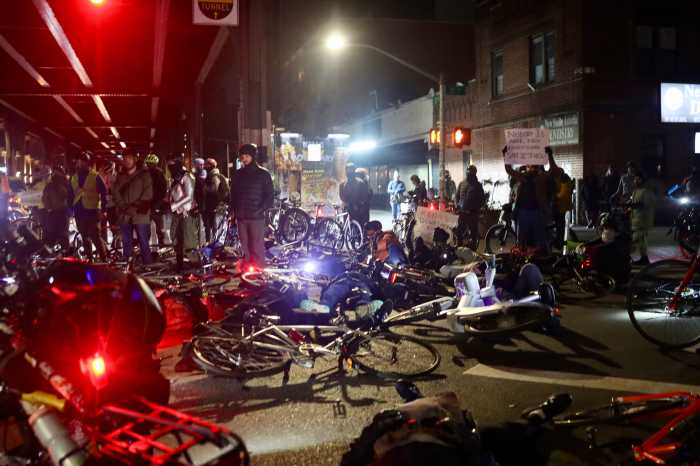
Protesters cast their bikes onto the street at the end of the protest ride and lay on the concrete surface to simulate death and highlight the dangers that cyclists face along the corridor.
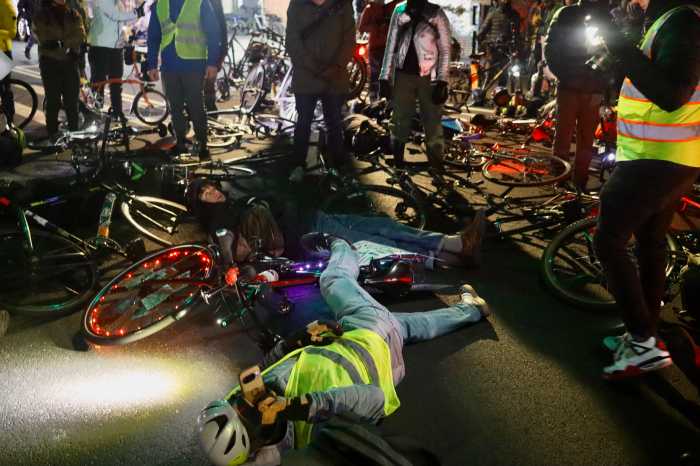
Others spray-painted red chalk outlines on the pavement to highlight safety issues for cyclists on 31st Street.
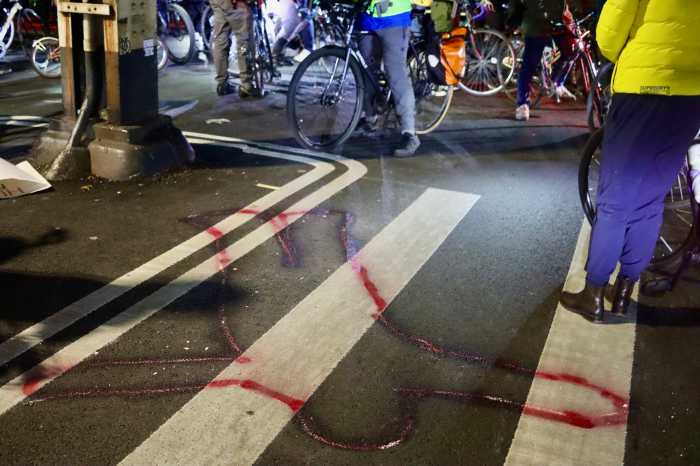
According to DOT data, there have been almost 200 injuries along the stretch of 31st Street covered by the street safety project in the last five years. The agency had called for protected bike lanes on both sides of 31st Street from Newtown Avenue to 36th Avenue in a bid to improve street safety along the corridor, pointing to two fatalities and 11 serious injuries that took place between 2020 and 2024.
However, Queens Supreme Court Justice Chereé Buggs ordered the agency to halt its plans for the protected bike lane in a ruling issue Dec. 5, additionally ordering the DOT to remove a section of the bike lane that it had installed between 31st Avenue and Broadway within 30 days.
Buggs sided with the 31st Street Business Association and other local resident who filed a lawsuit against the DOT, arguing that the bike lanes would negatively impact local businesses, prevent emergency services from responding to emergencies and endanger children at the St. Demetrios Greek-American School, who are regularly dropped off along the planned bike lane route.
School representatives had stated that the proposed bike lanes would run directly through drop-off and pick-up zones used by parents and students, adding that the bike lanes would create “unacceptable risks.” Buggs ruled that the DOT’s response to those concerns was “insufficient.”
Buggs also cited concerns raised by the FDNY after the Fire Department informed the DOT in July that the street redesign would not permit it to operate at “full capacity.”
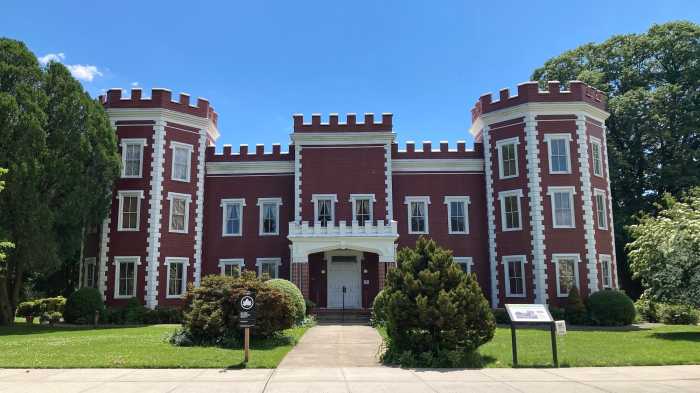
However, a number of transit advocates gathered at Astoria’s Athens Square Park Dec. 9 to protest the ruling, expressing concerns that the ruling would threaten road safety while also setting a legal precedent that would undermine future projects.
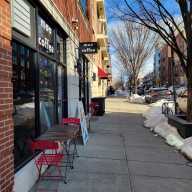
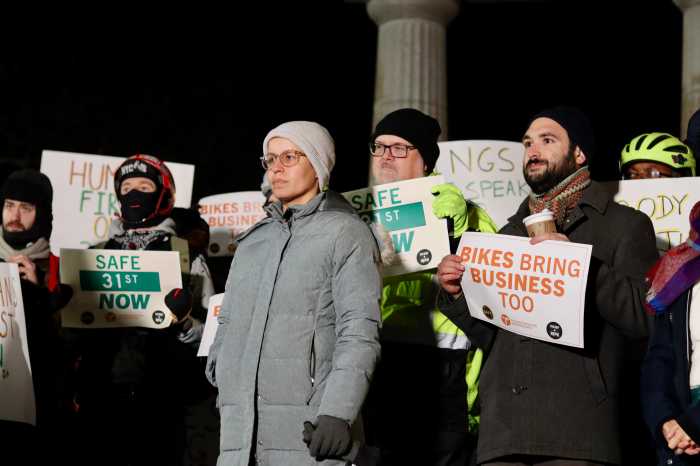
Protesters also carried placards arguing that cyclists bring business to the local community, responding to concerns raised by local businesses that a bike lane would negatively impact foot traffic.
Transportation Alternatives Executive Director Ben Furnas argued that there is a “crisis” in Queens regarding safety for cyclists, adding that the city needs “every tool at its disposal.”
“Removing life-saving improvements now could undermine decades of legal precedent affirming the City’s authority to redesign streets for safety,” Furnas said in a statement. “We have a crisis in Queens, and the City needs every tool at its disposal to save lives and prevent crashes.
“We won’t back down until the street safety project is finished and protected on 31st Street and every New Yorker across the five boroughs has the safe streets we deserve.”
Julie Huntington, a member of Families for Safe Streets whose father Kim was killed by a truck driver while cycling in 2019, said she was advocating for “life-saving traffic measures” so that no family would have to suffer as she did.
“My dad, Kim Huntington, was senselessly killed by a reckless truck driver in 2019,” Huntington said. “I bear the pain of his loss every day. I was also hit by a car on this very street by a southbound motorist making a left turn on 31st Street from 31st Avenue.”
Huntington’s father was killed by falling debris after an illegally over-height commercial truck sheared off the underdressing of a bridge construction project.
Cabán, on the other hand, said Buggs’ ruling “puts lives at risk” by slashing “proven safety measures.” Cabán, along with Assembly Member Jessica González-Rojas, State Sen. Kristen Gonzalez and Mayor-elect Zohran Mamdani, had outlined the Western Queens Street Safety Plan in 2023, which included plans for a protected bike lane along 31st street.
“This project would save lives,” Cabán said in a statement. “It would make our neighborhood safer for every person who walks, bikes, takes the bus, or drives. Astoria has waited too long for basic protections. My office will continue to fight for street safety on 31st Street and every street.”
González-Rojas described the ruling as “profoundly disappointing” and “terrible news” for cyclists, pedestrians and motorists alike.
“This ruling is profoundly disappointing and deeply dangerous for our community,” González-Rojas said in a statement. “I look forward to working with the City, local businesses, and residents to find a path forward that prioritizes safety for everyone.”
However, a number of local residents also celebrated the ruling, including the 31st Street Business Association, which held a rally earlier on Dec. 9 welcoming the decision.
Association President Joseph Mirabella described the judgment as a win for local residents and businesses, also describing the ruling as a “victory for commonsense.”
Mirabella accused the DOT of making “unilateral, ill-advised” decisions that impact the local community. He called for “true collaboration” between the DOT and the local community going forward.
He added that the association had asked the DOT to implement alternative measures to make the corridor safer for all road users, stating that the association had asked the agency to install more speed cameras and reduce the road’s speed limit to 20 mph. He said the association did not receive an adequate response from the DOT.
Buggs noted the allegations in her Dec. 5 ruling.
The organization has also asked the DOT to install a protected bike lane on a residential corridor running parallel to 31st Street such as 33rd Street, where there are fewer storefronts and less traffic, Mirabella added.
Council Member Joann Ariola, minority leader of the NYC Council Republican Delegation and chair of the Council Committee on Fire and Emergency Management, stated that the street safety plan did not adhere to Local Law 6, which mandates that the DOT must consult with local firehouses before implementing street design changes.
Ariola said Local Law 6 had helped protect local residents and ensure that emergency services could do their jobs.
“The DOT did not comply with the law as written, which meant that had to go to local firehouses and do outreach and get input from those firehouses,” Ariola said.
Separately, Richard Khuzami, president of the Old Astoria Neighborhood Association (OANA), said the organization agreed with the judge’s ruling only because plans for a protected bike lane did “not go for enough to ensure safety and functionality.”
He said OANA had called for a full set of safety elements, including traffic controls, loading zones, enforcement and pedestrian protections if the agency was going to install a bike lane on 31st Street. The neighborhood group had also called for a designated school safety zone in front of St. Demetrios, Khuzami added.
“A bike lane must be done correctly or not at all,” Khuzami said. “From the start, our primary concern has been the lack of proper traffic controls for all users. Any redesign of 31st Street should include timed signals and dedicated phases that recognize how pedestrians, automobiles and bike-lane users actually move..”
He added that a north-south bike route already exists on Crescent Street, stating that this offers the DOT time to create a comprehensive plan for 31st Street.
Buggs’ decision was not a ruling against bike lanes, Khuzami said, but a recognition that the planning process was “incomplete.”
“We see it as an opportunity to reset and produce a comprehensive plan. If DOT returns with a proposal that addresses traffic flow, timed and dedicated signals for all users, realistic loading access, a school safety zone at St. Demetrios and consistent enforcement, then it can improve 31st Street for everyone.”