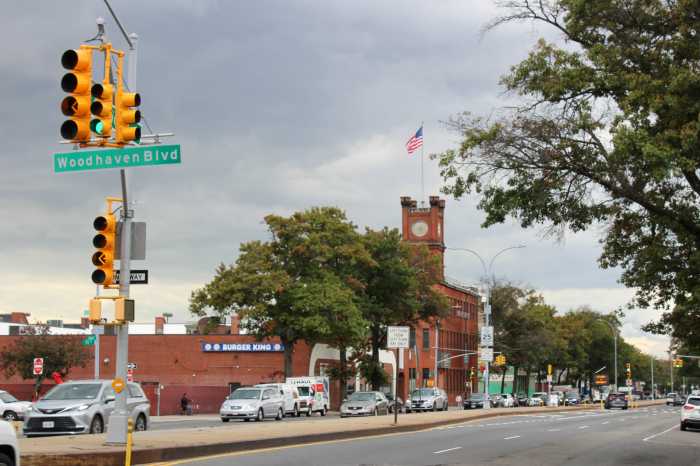

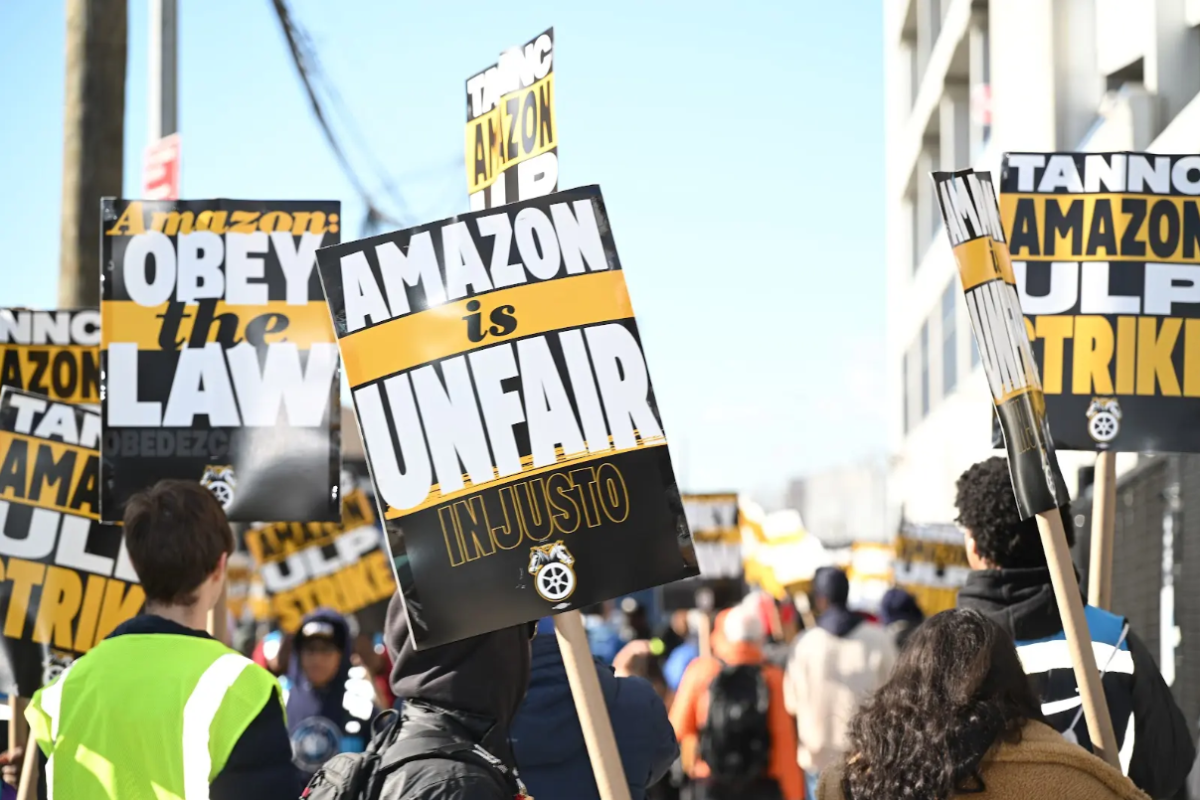
More than 200 drivers at an Amazon facility in Woodside have announced that they are unionizing with Teamsters Local 804 as part of efforts to secure better working conditions.
Drivers at Amazon’s DBK1 warehouse in Woodside marched to the facility Dec. 9 to deliver the news to management, joining almost 10,000 Amazon workers across five states who have outlined plans to join the union, according to Teamsters.
The move comes a year after workers at Amazon’s DBK4 warehouse in Maspeth helped launch the largest strike ever against the multi-trillion dollar corporation as part of a fight for unionized contract negotiations. Amazon officials said it was unfair to categorize that dispute as a strike, accusing Teamsters of bringing in “outsiders” to bolster protest numbers.
Drivers at the DBK1 facility all work for third-party Delivery Service Partners (DSP), delivering packages on behalf of Amazon. Although not directly employed by Amazon, workers often drive trucks and wear uniforms emblazoned with the company logo.
Amazon has stated that it does not consider drivers at the DBK1 facility to be company employees, adding that DSPs are independent businesses free to make their own operational decisions. Amazon officials added that DSPs can choose between their own vehicles or Amazon-brand vans.
Teamsters, however, has described the DSP model as “abusive” because it allows multinational corporations to distance themselves from workers, often threatening workplace safety and making it harder for employees to report poor conditions.
Workers in a ‘constant state of fear’
Matt Multari, who has worked in the DBK1 facility for about a year, said the arrangement creates job insecurity, leaving workers in a “constant state of fear” because the job is at-will employment.
“People are terrified that they could lose their job even if they did nothing wrong as an individual,” Multari said.
He argued that the DSP model was “holding people hostage” by making it almost impossible for workers to fight for better conditions.
“Basically, it’s holding people hostage by saying, ‘if you want to fight for better conditions, then you’re going to risk us just wiping out the jobs of 100 or 200 people overnight.'”
He said drivers sought to unionize because conditions at the Woodside warehouse had created uncertainty, with workers often faced with inconsistent scheduling.
“There are parts of the year where we’re actually getting our days cut,” he said. “Sometimes they’ll take off the day and then be asked to call in on another day. It makes it really hard to have a second job or plan your life around it, and also you’re losing income from that.”
He added that the company’s high daily quotas place a lot of pressure on drivers, alleging that such pressure undermines safety and incentivizes workers to not take breaks throughout the day.
Amazon responds
Amazon spokesperson Eileen Hands said the company does not recognize DBK1 drivers as its employees and accused Teamsters of “deliberately” misleading the public for the past two years by misrepresenting third-party workers as company employees.
“For over two years, the Teamsters have deliberately misled the public by claiming that employees of independently owned delivery businesses are Amazon employees,” Hands said in a statement. “The truth is, the employees of these Delivery Service Partners aren’t employed by Amazon, and today’s press release is just another repeat of their false claims.”
Multari described the company’s response as disingenuous and said DBK1 drivers are company employees in everything but name.
“They set the routing, they even set the discipline,” he said. “We need to wear their uniforms and drive their vans. If the DSP veers a little bit away from what Amazon is doing, they’re at risk of getting instantly cut. So Amazon can claim whatever it wants, but at the end of the day, we know what’s true.”
Teamsters, meanwhile, pointed to a National Labor Relations Board (NLRB) ruling in 2024 describing Amazon as a joint-employer of DSP drivers with a legal duty to bargain with Teamsters. Amazon officials, meanwhile, said the NLRB had found merit in the Teamsters complaint but added that the ruling did not represent a final decision.
Hand also took aim at Teamsters over the 2024 strike, accusing the union of lying about the total number of Amazon employees that took part in the dispute.
“The truth is that they were unable to get enough support from our employees and partners and brought in outsiders to harass and intimidate our team, which is inappropriate and dangerous,” Hand said.
But Teamsters has welcomed news that 200 drivers at the DBK1 facility have announced their intention to join the union. The union stated that the Woodside drivers bolster the roughly 10,000 Amazon workers who have already outlined such ambitions.
Randy Korgan, director of the Teamsters Amazon Division, said workers at DBK1 will be “crucial voices” as the union seeks to expand its reach across Amazon facilities throughout the U.S. He added that Amazon provides some of the worst conditions in the nation for its employees.
“Amazon already has some of the worst working conditions in the country, but workers go through hell in order to deliver the holidays to millions of Americans,” Korgan said in a statement. “Every day, Amazon workers across the country are exercising their power by joining the Teamsters. Our new members at DBK1 will be crucial voices as we continue this fight nationwide.”
Multari said Amazon has been cordial since drivers went public on Tuesday, stating that management has already taken steps to address worker’s demands for winter coats.
“They’re trying to put out the fire, but the first shot has already rung out and it’s going to keep spreading,” he added.
He said workers at the DBK1 warehouse were inspired by last year’s strike, stating that it felt like “the first time that the movement had a chance.”
“Drivers were aware that, because of the nationwide pressure, Amazon was starting to concede.”
José Huerta, a driver at the DBK1 facility, said it was a “wake-up call” to see workers strike across New York City last December.
“If we want a better future at Amazon, we have to be willing to fight for it,” Huerta said. “After months of painstaking work, I’m proud to say that my co-workers and I are finally Teamsters. We are ready to bring the fight directly to Amazon to get the respect and dignity we deserve.”
Political efforts to change DSP model
Council Member Tiffany Cabán, whose district covers the DBK1 warehouse, congratulated drivers for joining the union. Cabán had joined DBK4 workers on the picket lines during their strike last December.
“I call on Amazon to respect the organizing rights of their workers and to engage respectfully and in good faith with the union,” Cabán said in a statement.
Mayor-elect Zohran Mamdani also praised workers for organizing at the Woodside facility.
“Congratulations to the more than 200 Amazon drivers at the DBK1 facility in Queens for joining the Teamsters,” Mamdani said in a post on X. “When working people come together and organize, they can take on even the most powerful corporations. I stand with them.”
Cabán and Teamsters also called on Council Speaker Adrienne Adams to hold a hearing on the Delivery Protection Act, which would end the DSP model by requiring delivery companies to directly hire their drivers.
“As the proud lead sponsor of the Delivery Protection Act, I organize in solidarity with Amazon delivery drivers and warehouse workers as they fight for safe workplaces and safe streets.”
The bill boasts a super-majority of sponsors but has not yet come to a hearing or a Council vote.
Multari said the legislation would be transformative for delivery drivers by “eliminating excuses” that they are third-party employees.
“Adrienne Adams, if you’re listening, get this bill through. We need it,” Multari said.
Amazon launched its DSP program in 2018 to “connect with aspiring entrepreneurs and enable them to build and scale their own business with Amazon.” The company has defended the DSP model by stating that it helps support small and independent businesses.
The arrangement also shields the company from many costs and liabilities associated with deliveries. Critics of DSP have argued that the model allows corporations to skirt obligations to their workers and remove power from their employees.