
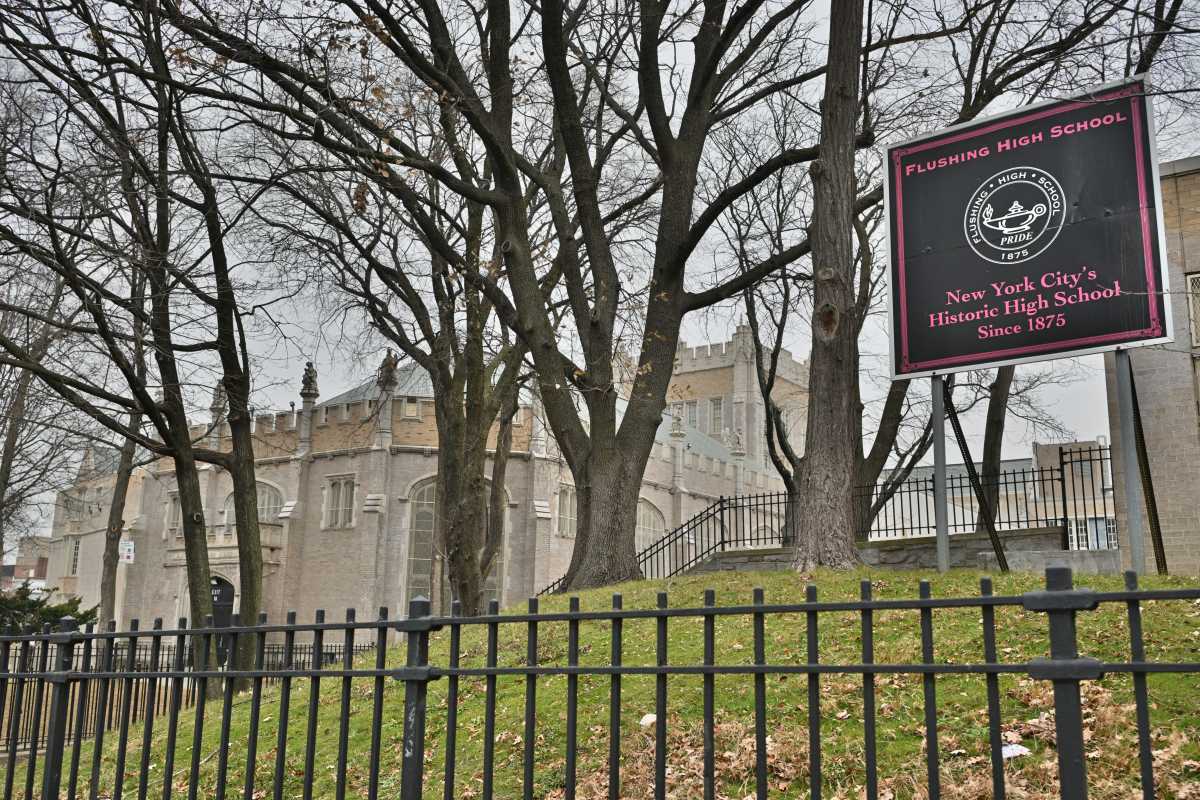
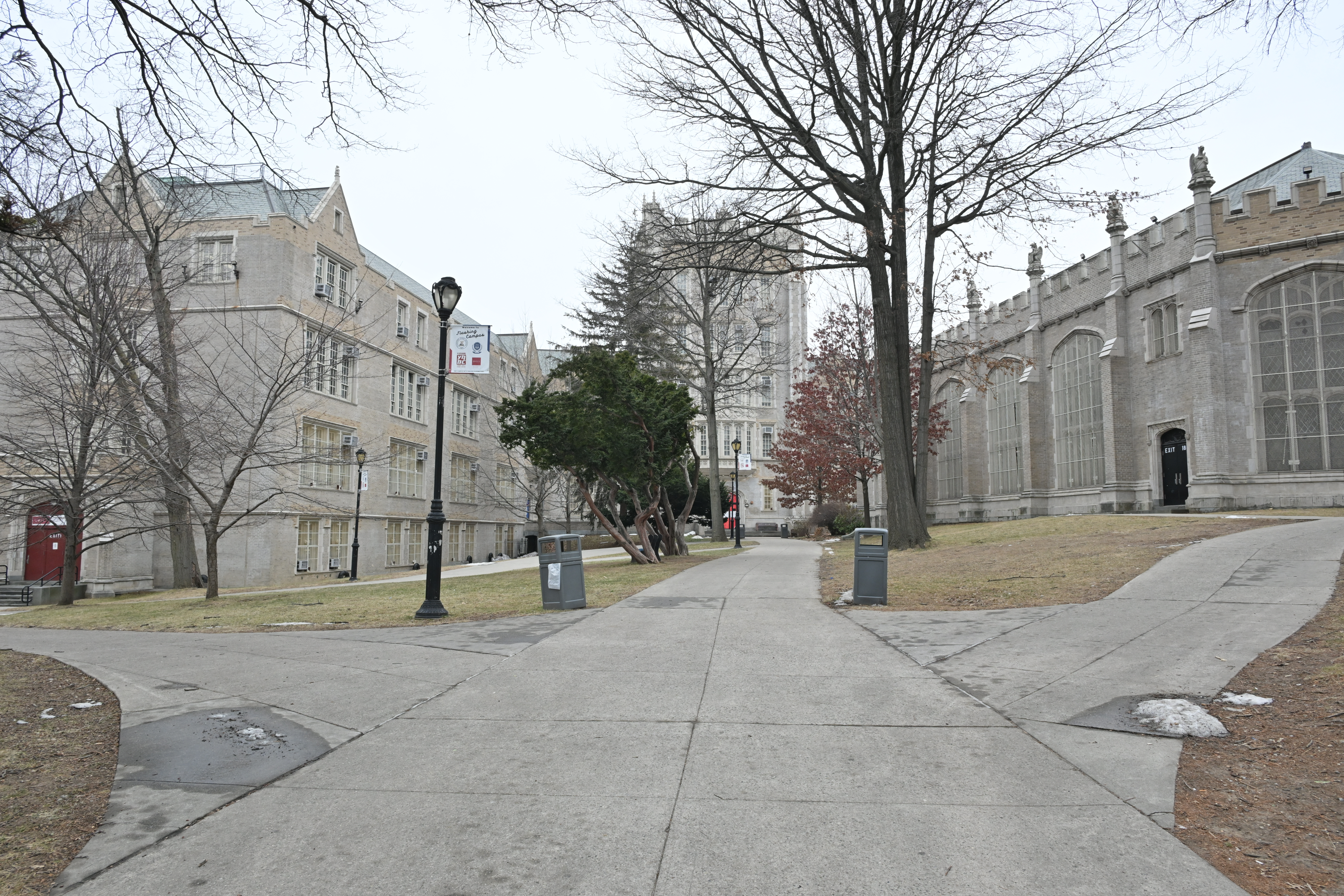
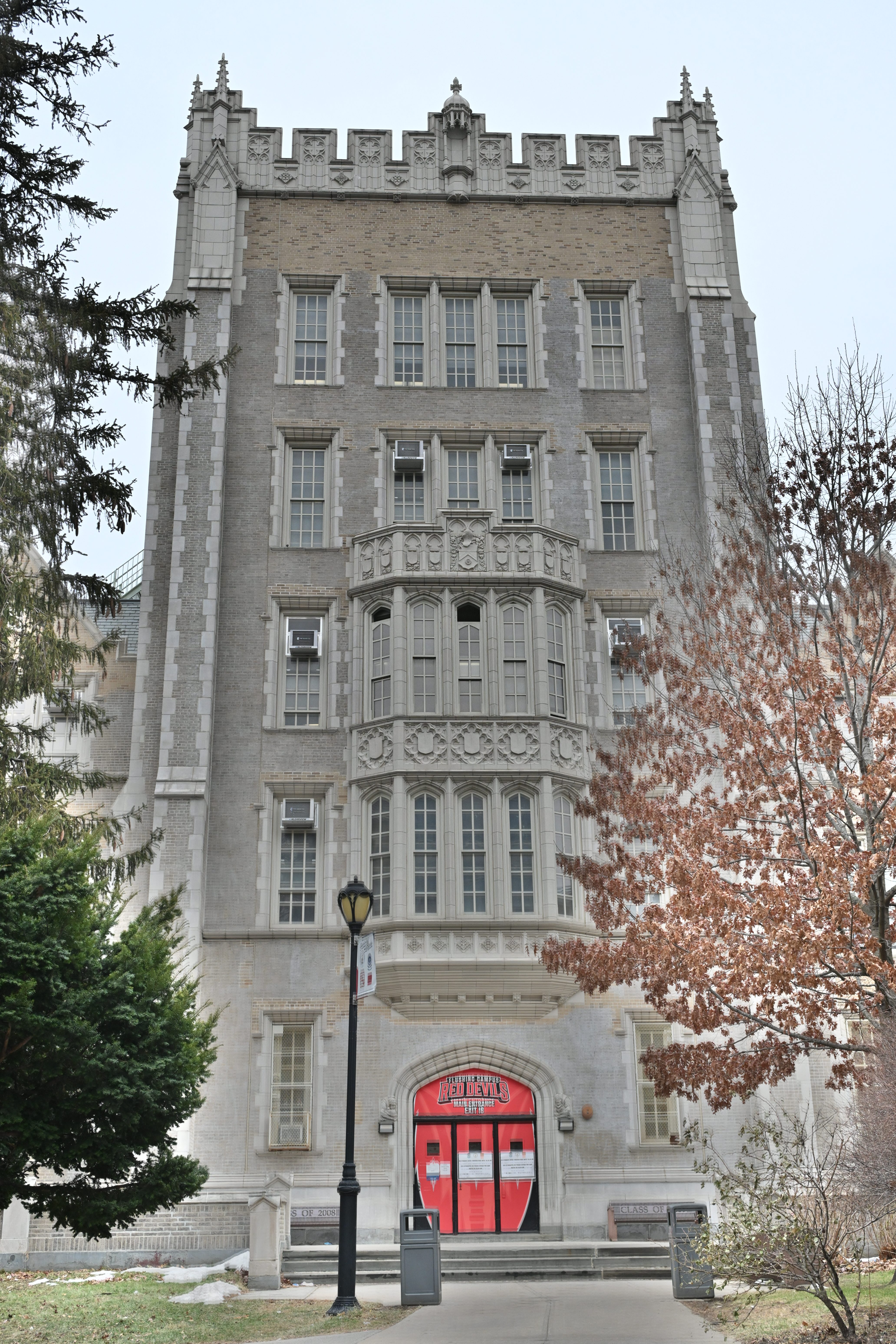
Teachers at Flushing High School claim the school’s grading system is forcing them to pass students who are actually failing their math classes.
According to three Flushing High School teachers who spoke to QNS on the condition of anonymity, they have made several attempts to bring their concerns to the attention of the math department’s assistant principal, as well as the principal of the school.
Not only are students chronically absent from classes, Flushing teachers claimed, but many students who do attend class don’t participate in classwork or complete homework assignments. Students regularly fail tests and other assignments, teachers continued, but still receive passing grades even if they fail the New York State Regents Exams.
“It just seems like expectations have become lower,” one teacher told QNS. “It’s becoming easier to get a passing grade just based on what the administration expects teachers to be doing.”
According to the teachers, the passing rate for their classes last year was around 70%, but only 30% of those students passed the Regents. “It’s a huge disparity,” another teacher said.
In an email sent to QNS on Jan. 5, the New York City Public Schools Form said it was “actively investigating this specific math grading issue.”
“At New York City Public Schools, rigorous academic instruction is a top priority,” a spokesperson for the NYCPS wrote. “To support this, we have a robust, publicly available grading toolkit that schools use to create their individual grading policy.”
As of press time, neither Flushing High School Principal Jassica Lee nor Math Assistant Principal Chaunte Thompson responded for comment.
Flushing High students see through the system
Students who do make an effort in classes are often discouraged, some teachers pointed out, because they know their peers who aren’t putting in the work are still passing the classes.
Teachers said they are worried that the grading system sets a bad precedent for students, suggesting that minimal effort will be rewarded.
“Students have mentioned that it’s not fair that they’re trying and then they see classmates show up half the time and have nearly an equivalent grade,” the teacher said. “They get frustrated, which will then demotivate them from doing work because they think it’s an unfair policy.”
Another teacher said some freshmen show effort in their first year of high school, but by the time they’re juniors, they’ve given up. When they talk to students, the teacher said, they often say “I don’t care,” or “What’s the point?”
Even if a student says they will try harder, the teacher continued, the student is often saying it just to appease them.
Grading policy
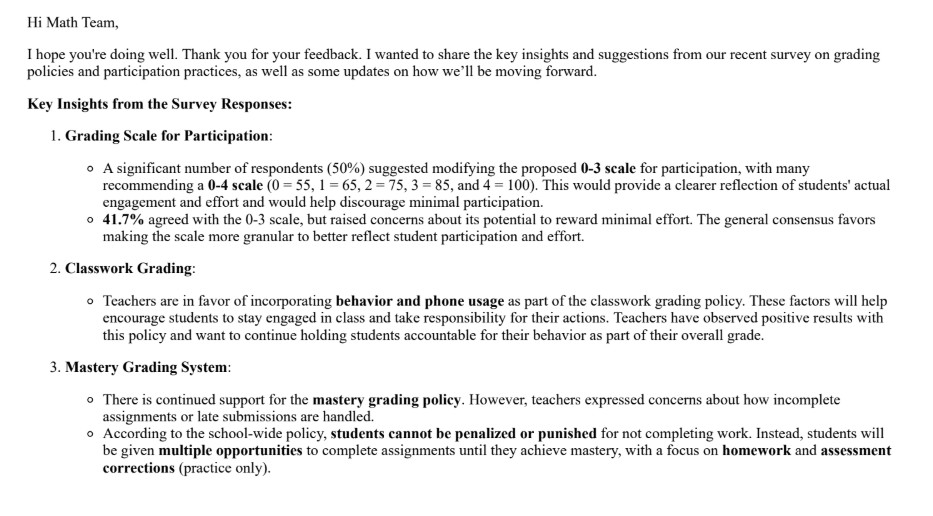
In December 2024, the grading policy detailed by Math AP Thompson was dictated in an email to the Flushing High math department. QNS obtained copies of the email.
It showed that class participation, which accounted for 35% of students’ final grades, was evaluated on a scale from 0-4.
Students who received a 1 on a class assignment would still receive a 65, which is a passing grade. Students who earned a 0, which means they attended class but did not participate, still received a 55. Students who did not attend class got a 45.
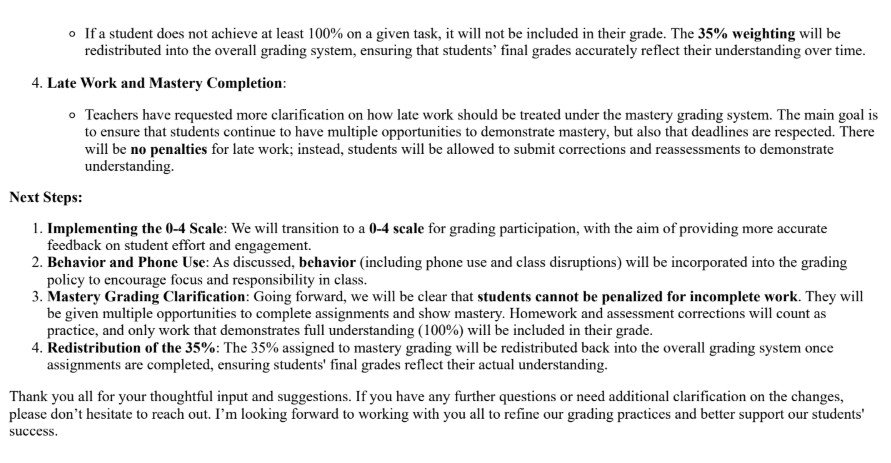
Last year’s mastery grading policy stated that students would be given multiple opportunities to complete assignments until they achieve mastery, with a focus on homework and assessment corrections. It also stated that any grades a student receives that are not 100 would not be included in their grade.
Teachers argued that the mastery grading policy meant students only have to receive one grade of 100 in order to pass that portion of the class, which many students achieve through test corrections that are completed in class. The mastery grading system was removed from this year’s policy.
In October, however, Thompson emailed staff detailing a grading structure for a 26-point assessment scale. Students who answered 13, or half, of the questions correctly would still receive a passing grade, while any student who got 12 questions or fewer correct would still receive a 55. It did not specify grades for students who did not get any questions correct or did not take the assessment.
Classwork policy remained the same but included a few more task-driven evaluations, although quizzes are now graded on a scale of 1-3, with 0 still representing a 55 and 1 representing a 65, and homework is now graded on a scale of 1-5, with 0 representing a 55 and 1 representing a 60.
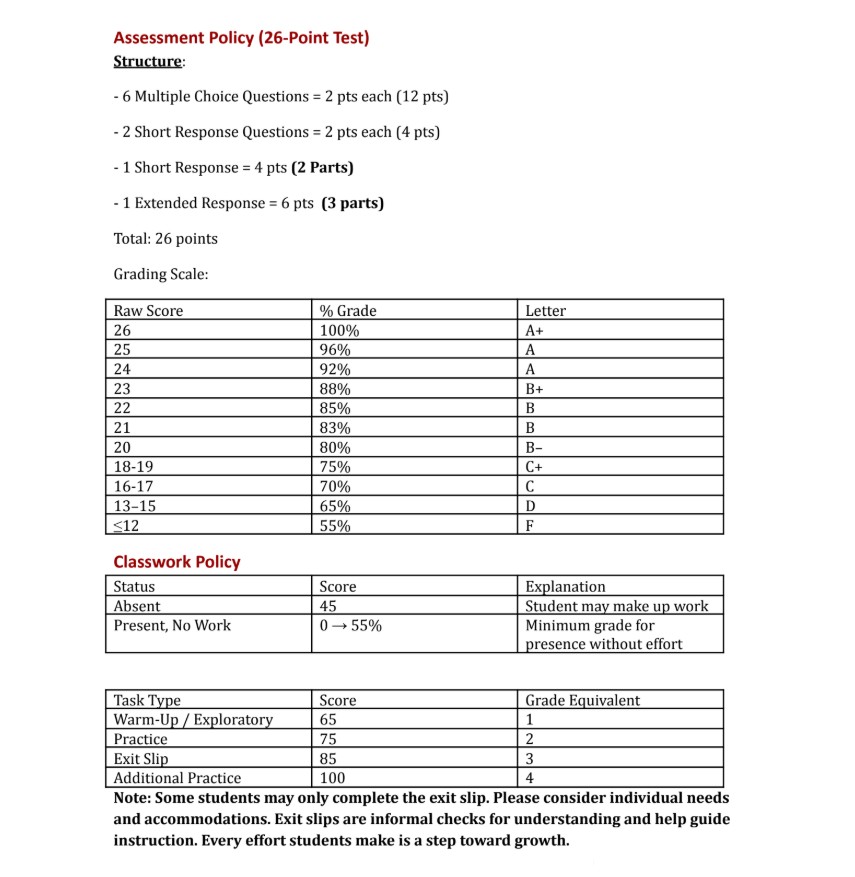
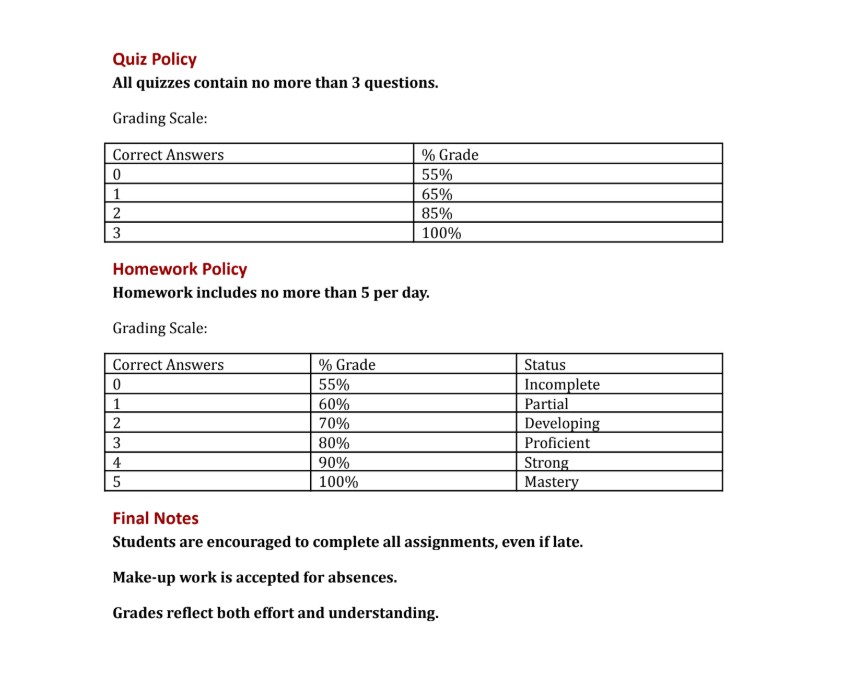
One teacher said that when they first encountered the grading policy outlined by Thompson, who stepped into the role in September 2024, they immediately felt the instructions were vague and unclear.
While teachers maintain the ability to draft their own syllabi, they said that many teachers have been forced to adjust their expectations over time due to the current school administration. “I was guided in trying to avoid failing students,” the teacher said.
Thompson’s guidelines also changed frequently, another teacher claimed, making it difficult to implement her strategies into the classroom in a meaningful way.
“It doesn’t sound like a big thing, but it starts to seep into teacher observations,” they said. “When you mess with observations, you mess with our livelihood.”
When teachers got low scores on observations, the teacher continued, they would be put on Teacher Improvement Plans, which adds more work to the teacher’s load. Teachers would also be asked to fill out trackers for failing students, including detailed steps taken to handle the issue, on top of their existing 55 minutes of parent outreach per week.
“It’s often seen as a punishment,” one teacher said. “Administration is more worried about numbers than actual teaching accountability. They make claims they want students to be college-ready, but when we try to do that, they chastise, penalize, and make teachers’ lives miserable.”
The teacher also said that if they did not reach a certain percentage of students passing the class — 80% — they would be called into a meeting with the administration to discuss how they could improve the grades of students.
“All I know is I have kids that I’ve had to pass — and they had no chance of passing the Regents — because I’ve been given very vague guidelines about how I should be trying to promote kids to pass in general,” the teacher said.
The teachers said they approached Thompson, but she told them to keep passing the students. According to one teacher, Thompson has told staff that as long as a student shows up to class, they should be passing — even if they don’t do the work.
The teachers have escalated the issue further in the past, as well, notifying the teachers’ union and other school officials of their concerns over the grading policy.
One teacher said they’ve taken all proper steps to escalate the issue to parents, guidance counselors, the assistant principal and the dean, but it has still resulted in no action.
The teacher has even reached out to coaches of student-athletes who are absent from class but still show up to practice. “There really isn’t anything holding the kids to come to class,” they said.
Chronic absences
In addition to students failing to participate in class, teachers said that Flushing has suffered from students’ chronic absences for years — and not just in math classes.
One teacher said out of around 100 students, they haven’t seen over 20 of them all school year. If they must pass 80% of the students, that means anyone who shows up to class must pass in order to achieve that goal, regardless of whether the students do any work.
“I have no flexibility in terms of passing or failing students now,” they said. “I can’t as a teacher focus on getting students to do well if I’m being told that I just need the students to pass.”
When students don’t show up to class, teachers said they are forced to call their homes and speak with parents about their children’s absences. As a result, the teachers generate paperwork and documentation that must be completed after school hours.
Nevertheless, many teachers said this often does not result in any changes in the students’ behavior — and they still do not show up to class.
One teacher suggested one of the reasons why parents struggle to ensure their kids are attending class is that the parents work evenings, meaning they could be asleep during the time their children are supposed to be going to school.
Another teacher suggested it was because there is a language and cultural barrier that causes misunderstandings regarding student expectations. According to U.S. News and World Report, 67.7% of students at Flushing High School are Hispanic, which the teacher said could contribute to miscommunication if parents’ first language is not English.
The teacher said that sometimes immigrant parents express that their child told them there was no school on a particular day. Because school systems in their home countries might have operated differently, the teacher said parents don’t always realize that school is regularly in session according to pre-determined calendars released at the beginning of the school year.
Teachers said the extra work of wrangling absent students, such as holding one-on-one meetings and maintaining constant documentation, results in 12-hour workdays and pulls their focus away from the students who actually attend class. “The expectation is pretty much solely on us,” one teacher said.
Student impact
The teachers said their goal in changing grading policy is not meant to serve as a punishment for students, but for students to improve learning outcomes and be more successful in the future.
“I’ve tried to have conversations with my students and explain to them the benefits of trying to pass all three math Regents in terms of college preparation,” the teacher said. “But they’re pretty much being told it doesn’t matter.”
For the students who put in minimal effort, the teachers say they’ve tried to ensure they don’t get a “free pass” and truly reflect the work they put into the class. Teachers said they rewarded behavior for the students who do put in the work and attempt to learn.
“I’m just trying to get the kids to learn at this point rather than trying to fight the school,” one teacher said. “I’m more worried about my students’ performance overall because I want to see these students succeed long-term instead of just graduating.”
One teacher said that staff are always understanding of language barriers and learning disabilities, so it’s rare a student will fail when they’re giving full effort and attention to their schoolwork.
They said the real reason they are worried about the students who don’t show up to class or try is because they don’t want to see them unable to live up to their potential.
Students will often drop out of college after their first semester of college, the teacher explained, because they are not ready for the workload and hard deadlines. After they drop out, they continued, the kids won’t have certain professional skills and end up jumping from job to job, sometimes getting fired because they don’t show up on time.
“It’s disheartening,” they said. “We put a lot of work into our profession. We plan, we try to make things creative. You really try to form relationships with kids to hope they don’t fall through the cracks. A lot of teachers are leaving the profession within three years because of this entire situation.”
Regardless of administration, another teacher said, the students are mostly respectful and pleasant to talk to. Even if kids give them attitudes, the teacher said they never feel threatened and after talking further often finds that they’re good kids.
“We have good students overall,” the teacher emphasized. “They’re good-hearted and very nice. I think they would be more motivated if the administration treated them like they should be so they can reach their full potential.”
The teacher said they don’t blame students for having poor attitudes toward their education, however, because they’re young and don’t understand the impact it has on their future. It’s up to the administration to set a positive example, the teacher explained.
“We want them to be proactive and take a role in their education,” they said. “I feel like it’s going to be a complete disaster in the future when these same students act like this in the real world.”