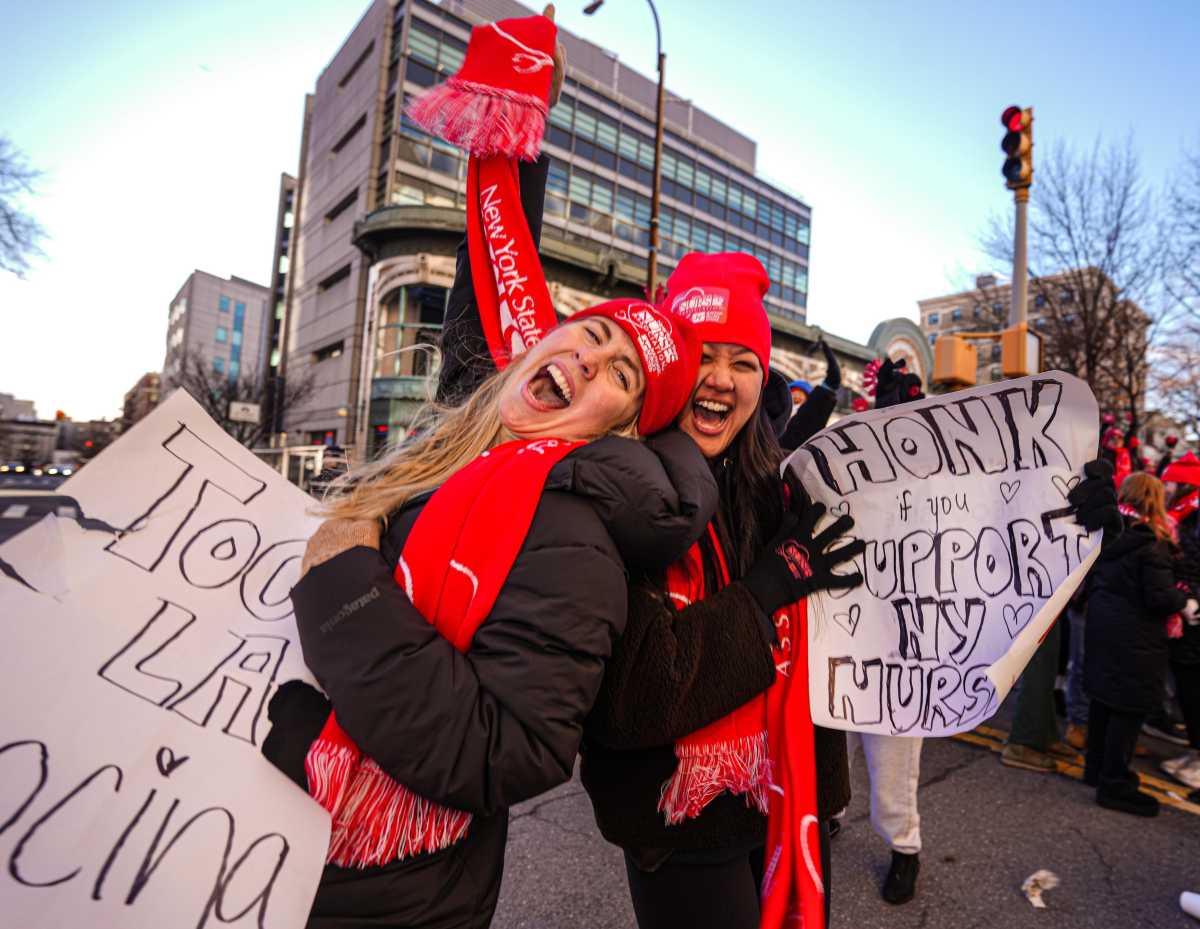

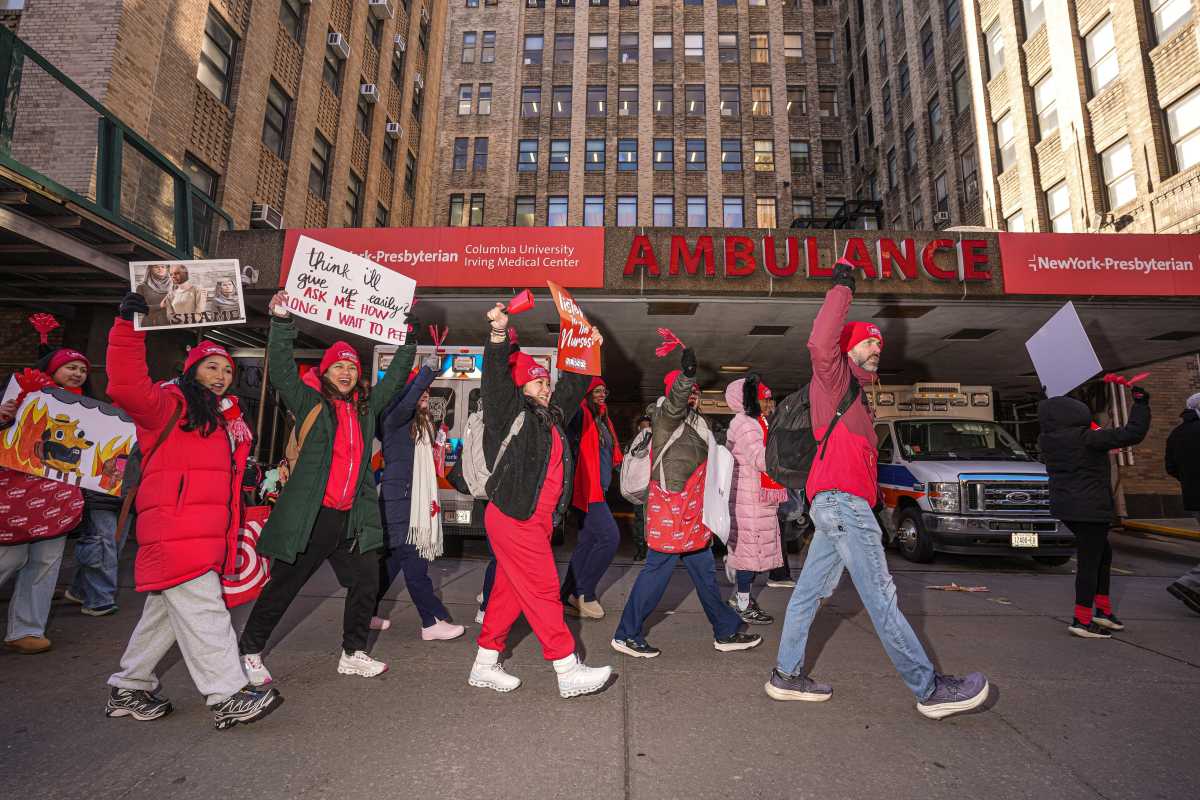
Over 16,000 nurses are officially marching on picket lines as of Monday morning after their 10-day strike notice, issued Jan. 2, went into effect. Nurses said the action was a result of “greedy” hospitals refusing to implement safe staffing, safety protocols, wage increases and full health benefits.
According to a press release from the New York State Nurses Association, impacted hospitals include three Mount Sinai locations in Manhattan, four Montefiore locations in the Bronx, and three NewYork-Presbyterian locations in Manhattan.
As of Monday afternoon, no Queens locations in any of the hospital systems have been listed as part of the strike. A full list of hospitals can be found here.
Regardless, nurses urged sick patients not to delay seeking medical care during the strike.
NYSNA, which represents over 42,000 nurses citywide, hosted a press conference on Monday morning at NewYork-Presbyterian Milstein, located on Fort Washington Avenue in Manhattan, rallying for its nurses.
“Unfortunately, greedy hospital executives have decided to put profits above safe patient care and force nurses out on strike when we would rather be at the bedsides of our patients,” said NYSNA President Nancy Hagans on Monday. “It is shameful that the city’s richest hospitals refuse to continue healthcare benefits for frontline nurses, refuse to staff safely for our patients, and refuse to protect us from workplace violence.”
She emphasized that nurses did not want to go on strike, but they were “forced” to by hospital management. They claimed their bosses refused to address the union’s most important issues — patient and nurse safety. “It is deeply offensive that they would rather use their billions to fight against their own nurses than settle a fair contract,” Hagans continued.
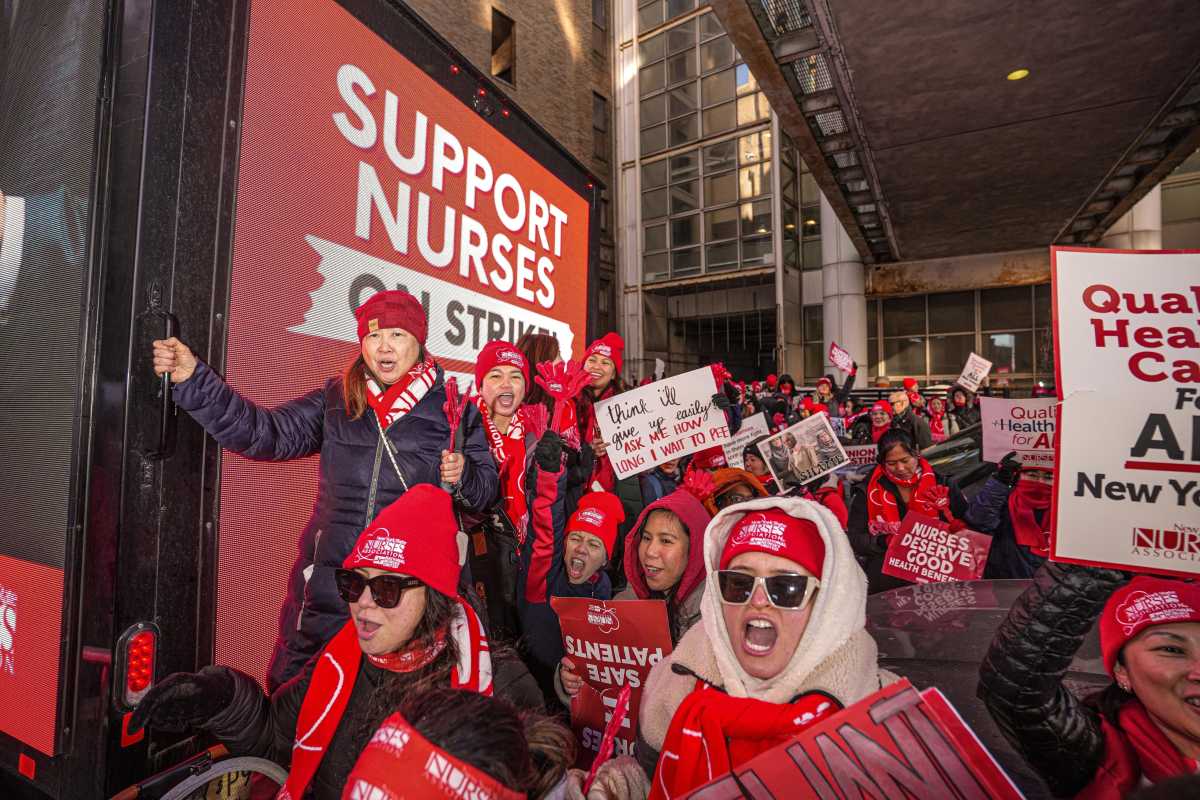
In attendance to support the nurses was Mayor Zohran Mamdani, New York Attorney General Letitia James, New York City Comptroller Mark Levine, as well as many public officials including Queens Borough President Donovan Richards Jr. and Councilwoman Lynn Schulman.
They all called on hospital management to agree to nurses’ demands and end the strike.
“Shame on anyone who has seemingly forgotten who got our city through the COVID pandemic,” Richards said. “Shame on anyone who knows the sacrifices our nurses make every single day and still denies them the pay and benefits they deserve. To our nurses taking this extraordinary step today, Queens salutes you for your service to our families and stands with you in your fight for fairness. In this city, the interests of working people will always come before those of private corporations.”
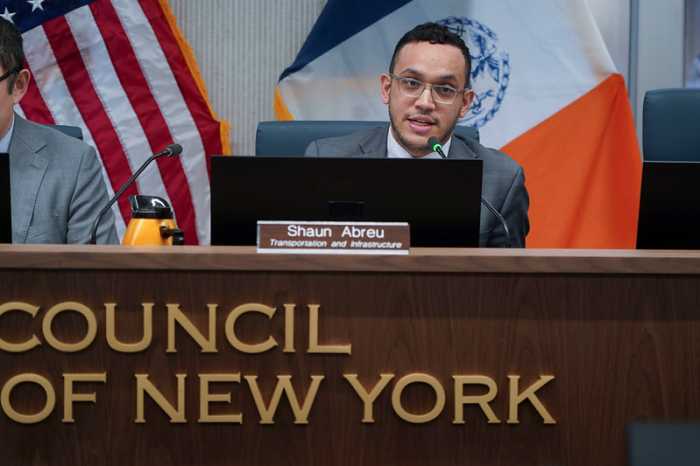
“When nurses are put at risk, patient care suffers,” added Councilwoman Schulman, who is chair of the Health Committee and represents Forest Hills, Rego Park and Richmond Hills in Queens. “I stand in solidarity with the nearly 16,000 nurses who are going on strike to demand real protections from workplace violence, truly safe staffing levels, fair health benefits and good wages. Our patients and communities deserve nothing less.”
NYSNA said the strike comes after months of bargaining with hospital management. Just last week, several safety-net hospitals, including Flushing Hospital Medical Center, reached a tentative agreement with the union to implement safe staffing practices, healthcare coverage and pensions for nurses, and safety protocols against workplace violence.
However, NewYork-Presbyterian and Mount Sinai, both with locations in Queens, were among the hospitals that refused to meet the union’s demands.
Representatives from both hospitals accused the union of “threatening patient safety” through their strike notice, claiming their demands were “unrealistic.” Mount Sinai detailed its proposed investment of over $27,000 in each nurse over the next three years, which includes wages and benefits, totalling over $105 million in wages.
On Monday morning, Mount Sinai emailed an additional statement to QNS in response to the strike.
“Unfortunately, NYSNA decided to move forward with its strike while refusing to move on from its extreme economic demands, which we cannot agree to,” the spokesperson wrote. “But we are ready with 1,400 qualified and specialized nurses — and prepared to continue to provide safe patient care for as long as this strike lasts.”
The union clapped back and pointed to NewYork-Presbyterian CEO Steve Corwin’s 2024 earnings, which was $26.3 million in total compensation.
“That’s over $2.1 million per month, and nearly $72,000 per day,” a news release from NYSNA said. “In just one day, NYP CEO Steve Corwin made more money than many New York City families make in an entire year.”
NYSNA claimed that the hospitals spent over $100 million on temporary replacements for striking nurses, which is the same amount hospital management promised to invest in the nurses over the course of the next three-year contract.
In addition, NYSNA claimed the hospitals had twice as much cash and cash equivalents on hand as they had in 2017 after adjusting for inflation, which means the hospitals have held onto over $1.6 billion dollars.
“While prices in healthcare go up, so does executive pay at the largest private sector hospitals,” the news release said. “The CEOs at Montefiore, Mount Sinai and NewYork-Presbyterian — the same ones who say they cannot afford to safely staff their hospitals — now make, on average, nearly 12,000 percent more than the registered nurses on the frontlines caring for patients.”
For updates about the strike, visit NYSNA.org.