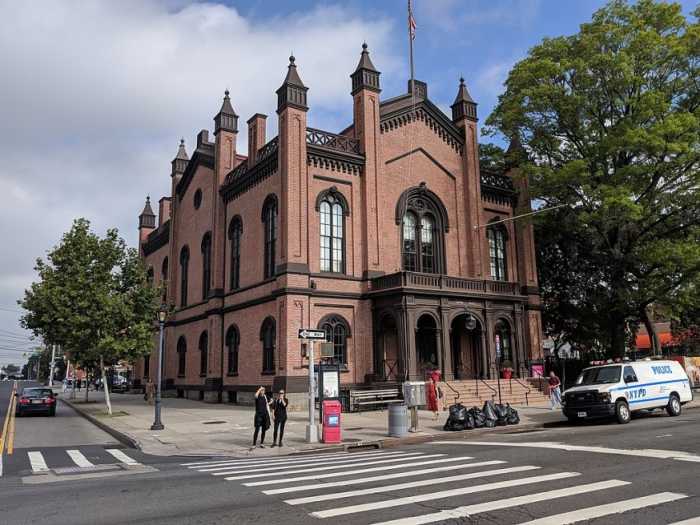

Tuvergen, a Mongolian folk fusion band, is galloping into Flushing Town Hall with a high-energy, horse-powered performance in honor of the Lunar New Year this Sunday, Feb. 22.
The Chicago-based band, whose music embodies the spirit and cadence of the horse, will be collaborating with the town hall’s teaching artist, Ling Tang, who will demonstrate Inner Mongolian dance movements such as horse-riding steps and the use of props such as chopsticks and wine cups.
Advanced general admission tickets for the performance, which starts at 2:15, are available at flushingtownhall.org for $15, and day-of general admission tickets will be $20.
Tickets for a 45-minute pre-performance educational program at 1 p.m. are also available for $5 and will include a close-up look at the instruments featured on stage, including the morin khuur, igil, doshpuluur, tovshuur and elements of a global percussion kit.
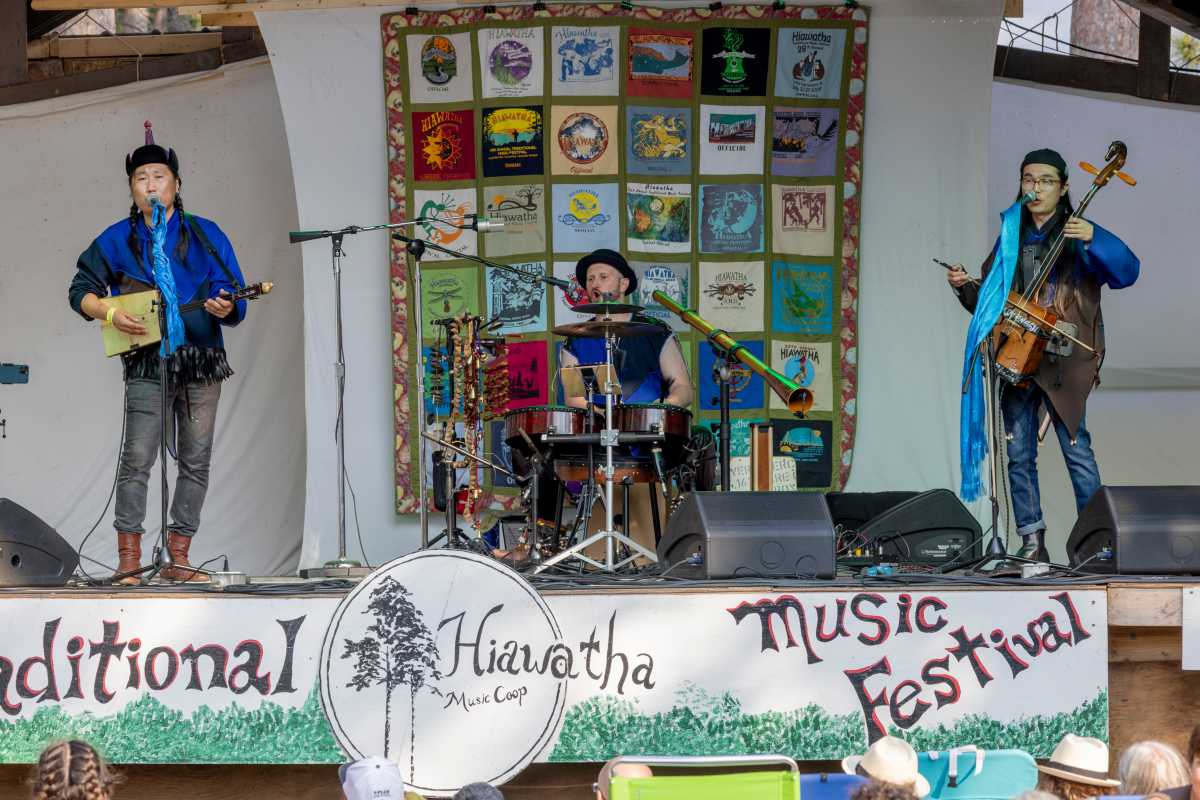
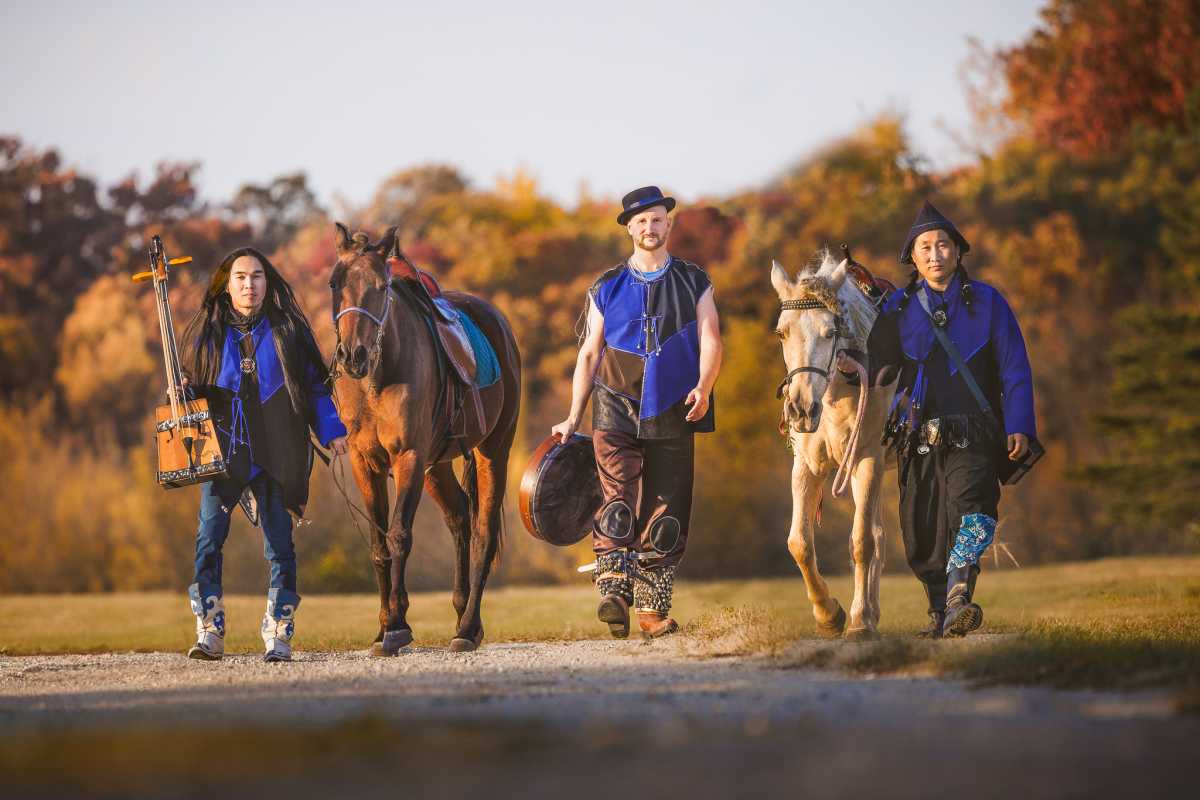
The band is composed of Tamir Hargana, who performs lead vocals and plays folklutes and the morin khuur, Naizal Hargana, who plays the morin khuur, and Brent Roman, who plays several percussion instruments, including the didgeridoo.
Tuvergen, which means “galloping” in Mongolian, performs modern nomadic music that blends elements from Eastern traditions, such as khoomii throat singing and folk songs, with Western traditions, such as bluegrass, blues and rock.
Tamir’s vocals create a low growling sound that combines a guttural hum with what he describes as a “secondary voice” he produces by squeezing and vibrating his throat while moving his tongue.
Naizal plays the morin khuur like a fiddle, utilizing the underhand bowing technique to generate the band’s recognizable galloping sound.
Roman plays on a custom hybrid drum kit consisting of twenty global percussion instruments, giving the band’s rhythm a distinct sound.
Tamir said the band always gets the audience dancing, performing dynamic beats that keep the energy high.
According to Naizal, their musical themes often revolve around animals, describing scenes almost like drawing a picture.
However, Roman said what’s great about live music is that everyone can interpret it differently. He said audiences have many different responses to their music, sometimes describing it as “weird and dark,” while others find it either energetic or calming.
“I think that’s all valid, whatever you take away,” Roman said. “Because of the culture, about 90% of our tunes are about horses. So you could explain us as horse culture music, folkloric, rhythmic, with imitation of horses like neighs and clapping of hooves.”
A color that comes to mind when thinking about Mongolian horse culture, Roman continued, is the color blue because the eternal blue sky is a large part of Mongolian iconography. The band wears blue clothing and hangs blue tassels from their microphone stands to help further paint the picture.
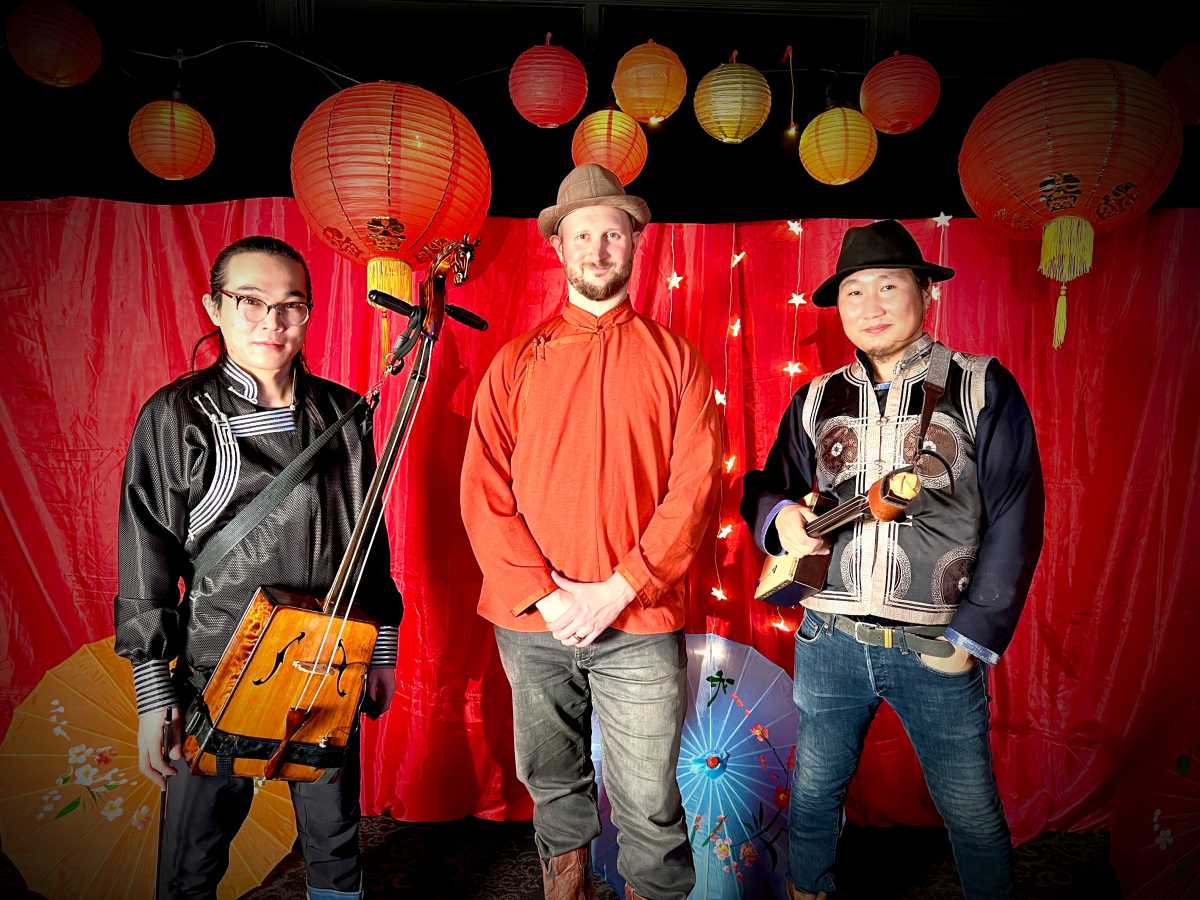
The band members were originally introduced through a mutual connection with a professor at Northern Illinois University, Han Kuo-Huang. While the three musicians attended the college at different times and lived in different states — Roman in Illinois, and Naizal and Tamir in Kentucky — they developed a relationship and began meeting when they were all in the Chicago area.
“We were just like, ‘Wow, we’re doing a lot of good music together — let’s form a band,’” Roman recalled.
The band first performed at an Apple Store in Chicago in 2020 before the COVID-19 pandemic, although the lockdown made it difficult for the band to perform together for a while.
Once the pandemic ended, however, Roman said he and his bandmates decided it was time to make things official. They began recording a full-length album, hired a booking agent and started touring.
Tamir said that when the audience is up and dancing, it gives their music more meaning because it’s exactly the energy the band is looking to bring to the stage.
He recalled that at their first performance, the audience gave them a warm welcome and were highly engaged, which boosted their confidence.
“It gave us the feeling that we could really do it,” he said. “We could make a living off these events with this new audience.”
Since then, the band has traveled across the country — Vermont, Maine, Missouri, Louisiana, Michigan, Pennsylvania and more — bringing their unique sound to stages and music festivals.
Tuvergen has headlined several of Chicago’s Lunar New Year events, the Chicago Cultural Center, the Field Museum, the Chicago World Music Festival, the Festival International de Louisiane, and Lincoln Center.
The band members are all professionally trained, growing up heavily influenced by their environments and education.
Roman said he began playing percussion on pots and pans as a baby and eventually learned to play actual instruments in middle school. He then continued his education at NIU, graduating in 2002.
Tamir, on the other hand, began learning traditional Mongolian long songs from his parents, who work professionally in a music group.
He eventually refined his craft at Hulunbuir University in Inner Mongolia, where he and Naizal are from, and the University of Kentucky.
“I was like, this is super fun,” Tamir said. “There’s so much improvised music that’s different from where I come from.”
Naizal said he grew up with many traditional songs and pieces, which are often played at special occasions such as weddings and summer festivals.
He began professionally studying music in 2008, he said, singing in the Mongolian Youth Choir as he minored in piano and music composition.
When he immigrated to the United States in 2014, he also attended the University of Kentucky, where he majored in piano and music composition. He explored the cello under the direction of his UKY music professor, Benjamin Karp, before receiving a master’s degree in World Music at NIU.
Naizal explained that his training had a huge impact on his technique, which blends Eastern and Western elements.
“There’s a lot of special ornamentations we use that you can’t find on Western string instruments,” Naizal said. “Even the left-hand technique is different, even though it looks the same. It’s completely new scales that I try to interpret into my instrument.”
As of now, Tamir said the band is seeking to build its followers and bring their sound to mainstream audiences. He noted that the band has collaborated with other musicians, recently bringing up a harmonica player and a guitar player at one of their shows.
“We’re getting new ideas and trying to reach all audiences of all ages,” he said.
Roman said he hopes to bring the band’s new album, which they are currently working on and mastering, to the world stage.
“Keep an eye out for the album,” he emphasized. “Outreach is very important. The more we can expose our music and culture to a greater American audience, then hopefully we’ll have more appreciation for Mongolian culture and can keep it alive.”
To find out more about Tuvergen and upcoming performances, visit TuvergenBand.com, or follow them on Facebook, Tuvergen Band, and Instagram, @tuvergen_band.