

A healthcare crisis looms in Queens and the rest of New York City according to elected leaders and health officials from the Chinese American Independent Practice Association, known as CAIPA, who rallied against the Trump Administration’s cuts to Medicare and Medicaid in the One Big Beautiful Bill Act — H.R. 1 — signed into law last July.
CAIPA officials said New York could see over a million residents lose access to health care coverage as a result of the bill, with a disproportionate impact occurring in immigrant communities and communities of color.
According to Jing Shui, chief operating officer of CAIPA, around 20% of its patients could lose health care coverage. The organization itself, he continued, could lose up to $135 million in funding.
And that’s just CAIPA alone, Shui stressed.
“If you look across the board for all community-based organizations, the overall impact is huge and devastating,” Shui said on Tuesday. “If patients lose their health insurance coverage, they have to pay out of pocket. These are low-income families.”
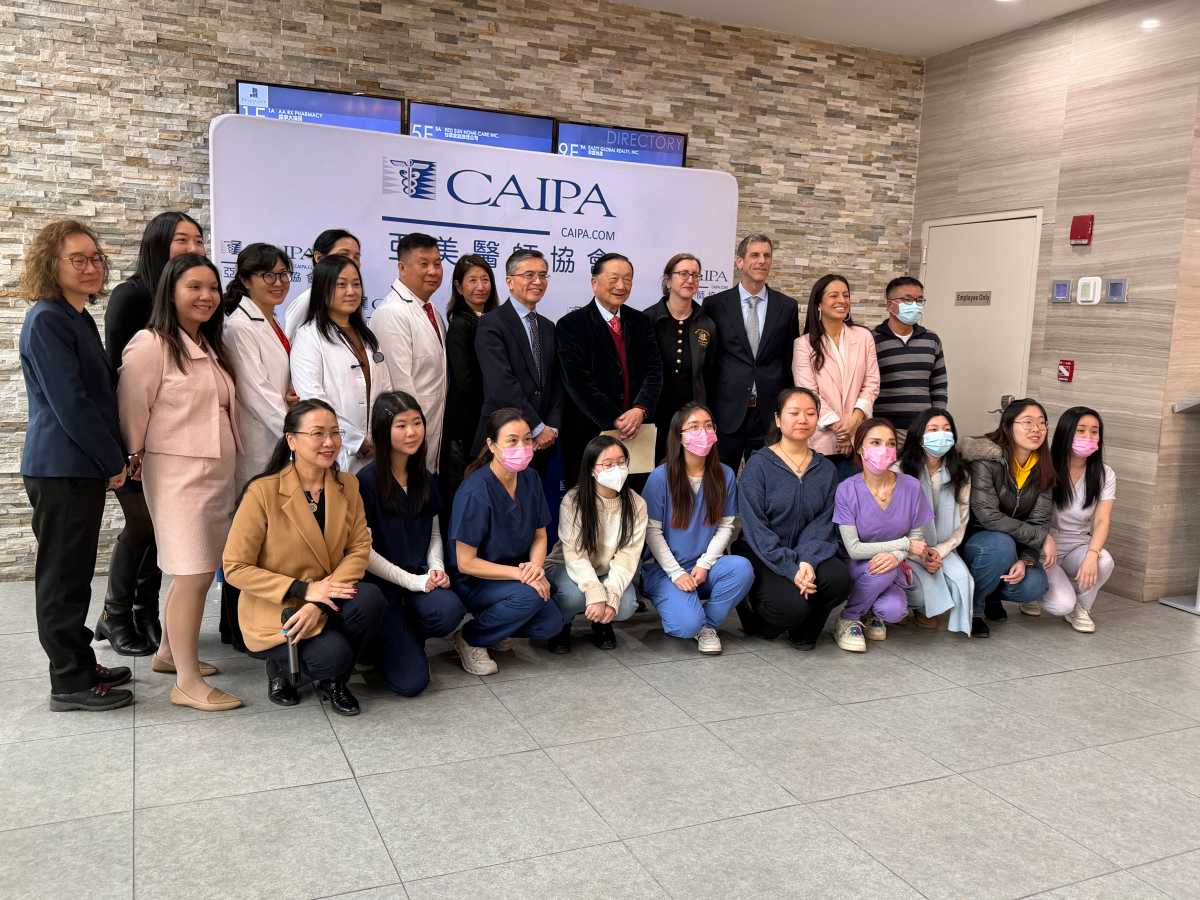
Queens officials stood with Asian-American community health care leaders on Tuesday at the CAIPA office in Flushing to raise the alarm on the impact of the federal rollbacks of health care coverage and funding.
CAIPA leadership demanded the state government restore the Quality Incentive/Vital Access Provider Pool program, expand the Value-Based Payment program, and create funding mechanisms to support community-based providers.
Speakers said it was crucial that the state step in to ensure vulnerable communities are protected in this critical time.
“We are witnessing first-hand the disruptive impact of recent federal health care changes to far too many members of the Asian-American community we primarily serve,” said Dr. George C.K. Liu, chairman and CEO of CAIPA. “Our CAIPA providers work tirelessly to provide the highest level of health care to the communities we serve, at a lower cost to New York State taxpayers.”

CAIPA, which has a membership of more than 1,400 physician members across more than 70 medical specialties, provides services that extend beyond preventative care.
The organization helps older adults safe-proof their homes to accommodate health complications, provides support for family members who serve as their loved one’s primary caregivers, manages medication and coordinated care, and addresses social isolation many older adults face when experiencing medical issues through day care centers.
“We focus on the whole person,” emphasized Dr. Eliza Ng, chief medical officer of CAIPA. “[Programs like these] were created specifically for our community because no one else is providing these services. We have to step in.”
Ng said CAIPA programs, staffed by highly trained bilingual and trilingual clinicians, help remove language barriers and other social determinants that prevent individuals from receiving proper health care.
The services, she continued, help reduce hospital visits and emergency room admissions, as well as prevent complications and allow people to age with dignity at home.
Without these services, CAIPA officials noted, New Yorkers will face delayed care, rely on emergency rooms and face worsening health outcomes and higher long-term costs.
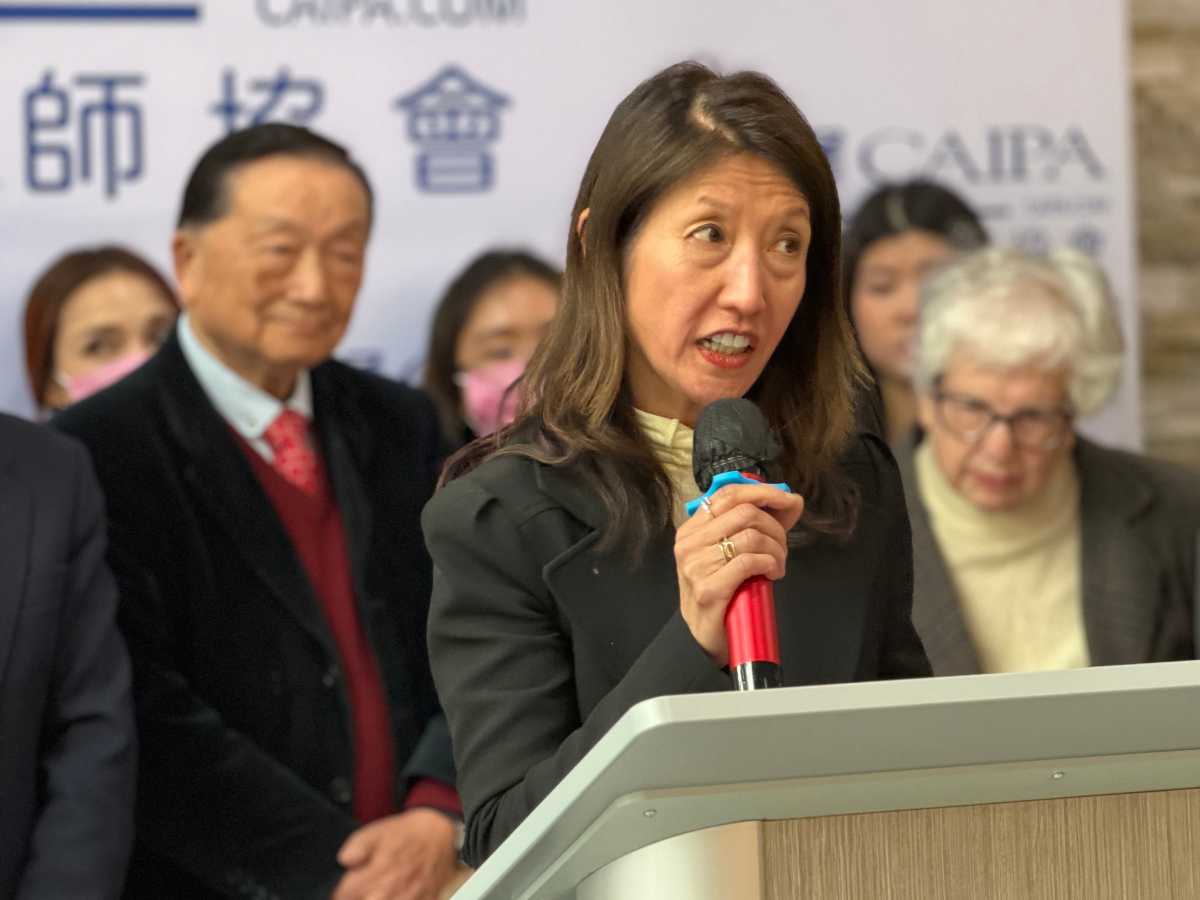
Looking to state leadership, they called on state Sen. Toby Ann Stavisky and Assemblymembers Grace Lee, Ed Braunstein, Nily Rozic and Catalina Cruz to enact solutions to the health care crisis caused by federal cuts.
Braunstein explained that taking away health insurance that covers preventative care only forces patients to seek care in emergency rooms, which is much more costly. Patients are often unable to afford these bills, he continued, placing financial strain on the institutions and the state itself.
Because of this, he said the One Big Beautiful Bill will have a “tremendous, detrimental” impact across the health care system.
“I will continue to work with my colleagues to direct state resources to organizations like CAIPA in order to lessen the impacts of these harmful cuts,” he said.
Stavisky, who noted that she represents one of the most diverse communities in Queens, rallied alongside her state colleagues to address the issue in New York, at the very least. She said officials are actively working to protect Medicaid and preserve essential coverage.
“In Albany, we are not waiting on Washington,” she said. “Providers like CAIPA are keeping the under-insured, seniors, and immigrant and working families healthier at a lower cost. We must stand with them and ensure our communities do not lose access to that care.”
Lee emphasized that AAPI New Yorkers are the fastest-growing demographic in the state and deserve high-quality, culturally competent care that providers like CAIPA are uniquely equipped for.
She said she is proud to sponsor legislation that would help ensure essential health care professionals have the resources necessary to maintain their vital role serving the communities.
Rozic echoed Lee’s sentiment and said many proposals are currently being debated in the state assembly to address the consequences of H.R. 1 and other federal cuts made to the budget.
“At a time when the federal government is inflicting deep cuts to New York’s health care safety net, it’s essential my colleagues in Albany and I champion these providers,” she said. “I’m proud to stand with CAIPA and the communities they serve.”