
Astoria and Long Island City are primed for a number of races between traditional progressives and candidates backed by the New York City chapter of the Democratic Socialists of America (DSA) following Mayor Zohran Mamdani’s success in the mayoral election last year.
The nature of Mamdani’s victory, particularly in Queens and Brooklyn, has given rise to a new wave of DSA challengers who are eyeing numerous seats across the two boroughs.
That is particularly evident in Astoria and LIC, which make up part of the so-called “Commie Corridor” in a reference to a stretch of western Queens and north Brooklyn that broke heavily for Mamdani during the 2025 mayoral election.
Astoria has also become known as the “People’s Republic of Astoria” due to the high success rate of the DSA in the neighborhood.
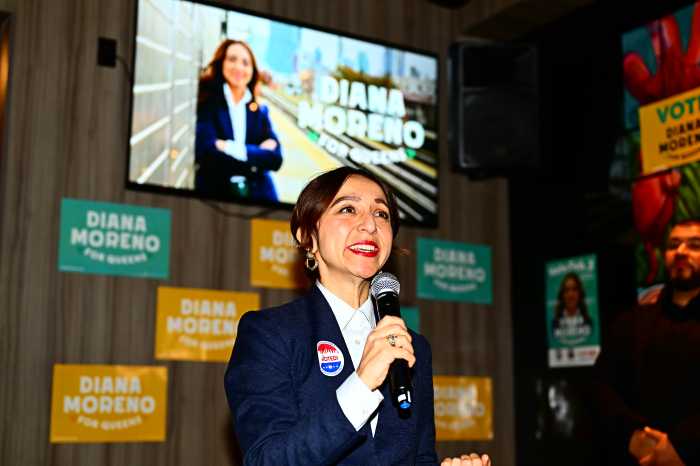
That DSA success was apparent in a special election to replace Mamdani in the state Legislature last month, with DSA candidate Diana Moreno emphatically defeating traditional progressives like Rana Abdelhamid and Mary Jobaida to win the race with over 75% of the vote.
Astoria and LIC are set to play host to several other races between traditional progressive and DSA-backed candidates during the Democratic primaries in June, most notably in the 7th Congressional District, where Brooklyn Borough President Antonio Reynoso, Council Member Julie Won and Assemblymember Claire Valdez have all launched campaigns to succeed veteran U.S. Rep. Nydia Velázquez.
Reynoso, a traditional progressive molded by Velázquez, has picked up a number of key endorsements since entering the race, including from Velázquez herself and Attorney General Letitia James. Make the Road Action, the New York Working Families Party and U.S. Rep. Jerry Nadler have also endorsed the Brooklyn Borough President.
Valdez, on the other hand, is a prominent DSA member and has scooped endorsements from Mamdani, the United Auto Workers and the DSA itself.
Won, a late entrant to the race, is also a traditional progressive and seemed to distance herself from the DSA when she described the organization as the “Democratic Socialists Club or whatever” during an interview with the New York Times shortly after launching her campaign.
In an interview with QNS, Won appeared to criticize DSA candidates for having fewer ties to their local communities.
“What I do know is that there are those who are parachuting in from God knows where, and there are those who are homegrown and who have long community ties,” Won told QNS.
Valdez, on the other hand, has touted her union background and her experience working minimum wage jobs, which she believes will resonate with voters more than any other campaign issue.
“I have the experience of having to pay rent every month, of having to work low-wage, minimum-wage jobs, of having to work multiple jobs at the same time and still overdrafting my bank account,” Valdez told QNS. “I come out of DSA, but truly my politics are that everyday working people can do incredible things when we organize together.”
Other races across the neighborhood are shaping up to be a battle between traditional progressives and DSA-backed candidates.
In the 12th Senate District, veteran State Sen. Michael Gianaris’ decision not to seek re-election has sparked a race between Assemblymember Steven Raga — a traditional progressive representing the 30th Assembly District — and Aber Kawas — a Palestinian-American organizer with the DSA.
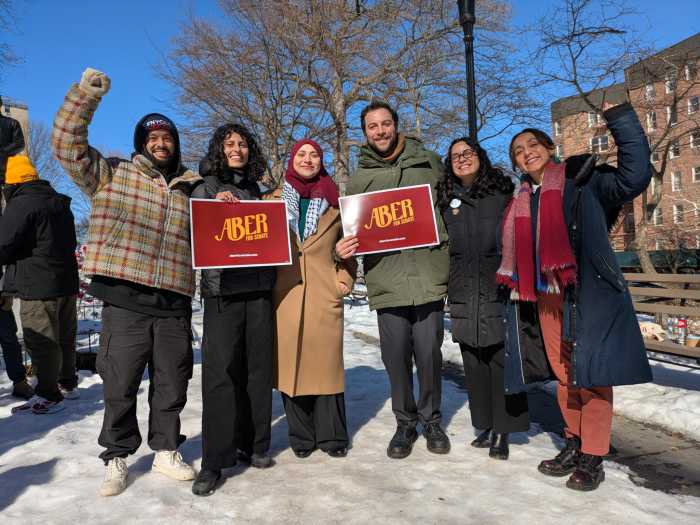
Raga is the first Filipino American to be elected to the New York state legislature and has represented the 30th District since 2023, including parts of Elmhurst, Maspeth, Jackson Heights and Woodside. Kawas, on the other hand, has no experience as an elected official but has received staunch support from the DSA since launching her campaign.
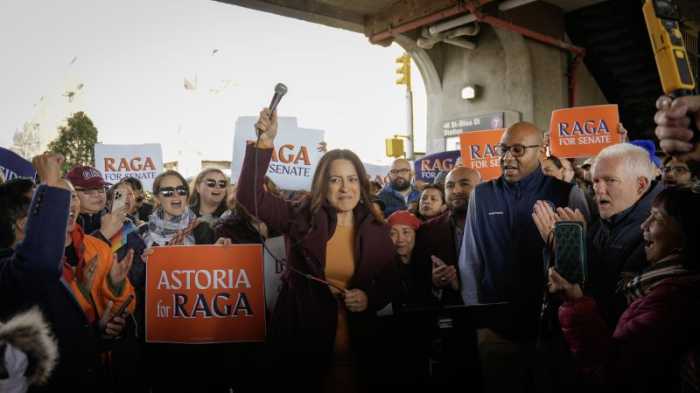
NYC DSA co-Chair Grace Mausser, for example, described Kawas as the “perfect candidate” to succeed Gianaris in the district.
Kawas had previously launched a campaign to succeed Assembly Member Jessica González-Rojas in the 34th Assembly District but pivoted to Gianaris’s district after fellow candidate Brian Romero amassed huge support in the race to succeed González-Rojas.
Romero, who previously served as González-Rojas’ chief-of-staff, now appears set to replace his old boss in the 34th District after fellow candidate Andreas Migias also dropped out of the race.
The nearby 37th Assembly District, which features parts of Sunnyside, Long Island City and Ridgewood, will also see a race between a traditional progressive and a DSA-backed candidate later this year.
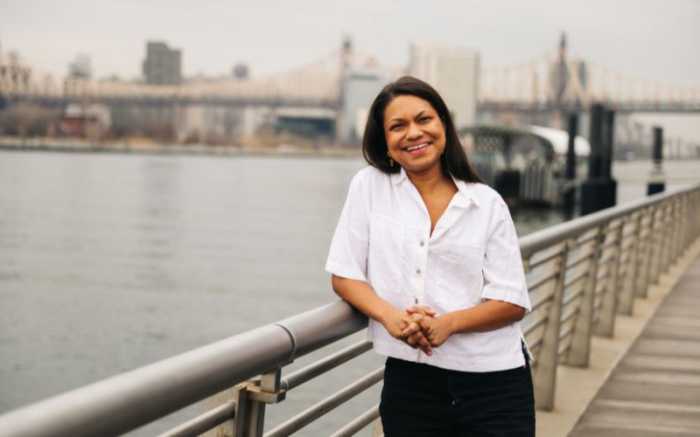
Samantha Kattan, a tenant organizer and prominent DSA member, and Pia Rahman, a member of Community Board 2 and a former campaign staffer for Romero, have both launched campaigns for the district, which is set to be vacated by Valdez at the end of the year.
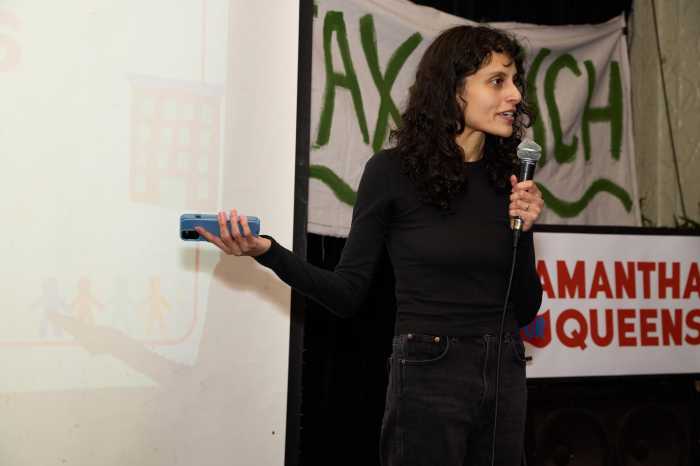
The district is one of the most liberal in the city and Kattan believes the results in the mayoral election demonstrate that people in Western Queens want “far-left representation,” adding that Mamdani’s affordability agenda has created a “lot of energy” in the district.
Kattan added that DSA candidates in each western Queens race would be in “lockstep” with the Mayor if they are elected this year.
Rahman, on the hand, has said her campaign will focus on housing stability, climate resilience and safe streets.
Several DSA candidates across multiple races in western Queens have stated that they differ from ideaologically similar candidates because they are loyal to the DSA movement.