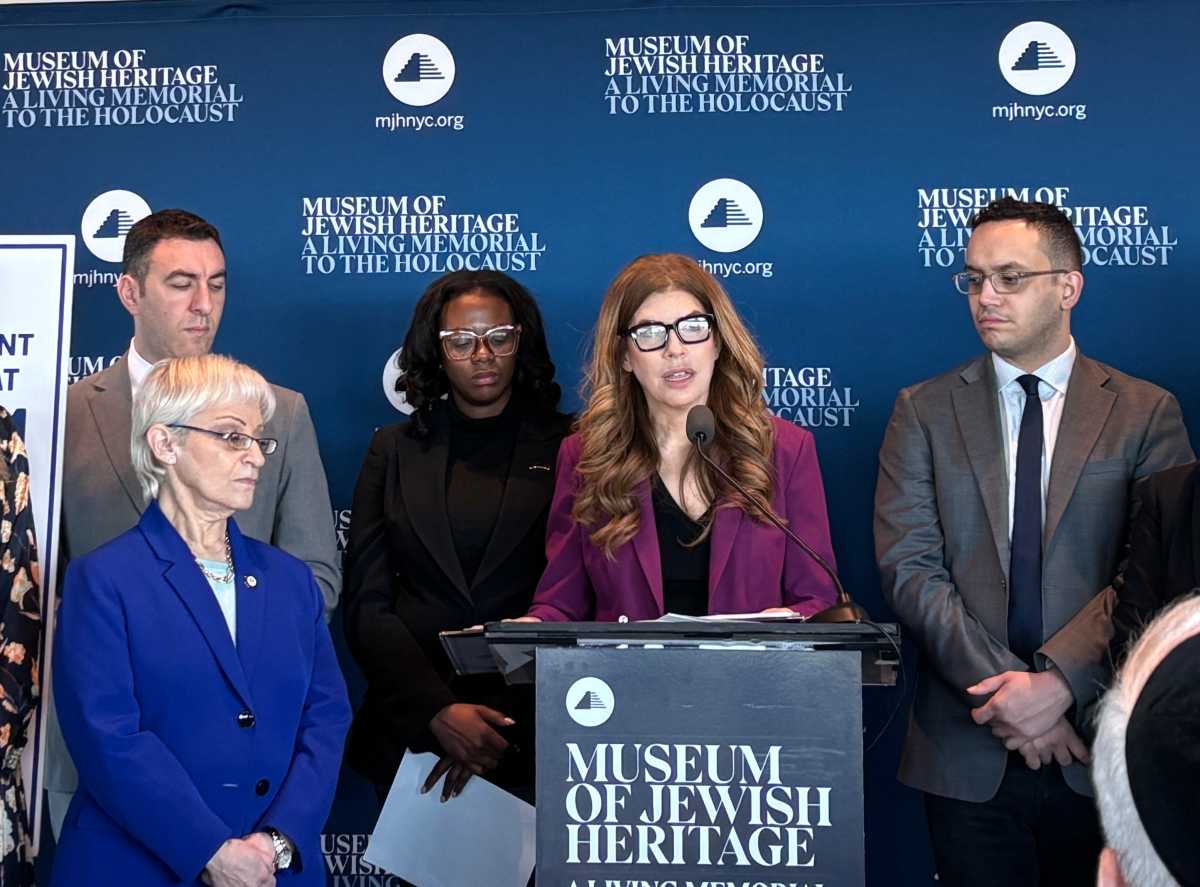
Council Speaker Corey Johnson and Council Member Jimmy Van Bramer at the Dec. 12 Amazon oversight hearing (via Council Member Jimmy Van Bramer)
Dec. 12, 2018 By Nathaly Pesantez
Amazon faced a litany of hard questions and criticism from the City Council during its first oversight hearing held earlier today that aimed to uncover how the tech giant’s controversial headquarters deal between the city and state came to be.
The hearing, attended by Amazon executives and representatives from the city and state, saw tense exchanges and fiery comments at times from legislators, who insisted that the campus project should be moving through the city’s land use review process as opposed to the state-run plan.
They also questioned the public gains that the company, along with city and state, is promoting as part of the deal, like improvements in area infrastructure and new initiatives to bolster local workforce development.
Most of the line of questioning came from Speaker Corey Johnson and Council Member Jimmy Van Bramer, who made no secret their disdain for the closed-door negotiations between the city’s Economic Development Corporation, Empire State Development and Amazon that led to the current deal on the table.
Van Bramer especially took the time to criticize Mayor Bill de Blasio and Governor Andrew Cuomo in his opening statements, and said that the two are directly responsible for the outrage felt after Amazon’s official headquarters announcement.
“We should all be concerned that [de Blasio and Cuomo] were eager to promise Amazon that they would bypass local land use review and agree to sign non-disclosure agreements while doing so,” Van Bramer said.
“The memorandum of understanding,” he added, “is shocking and shameful in how much it gave to Amazon and how little it extracted from them for the community.”
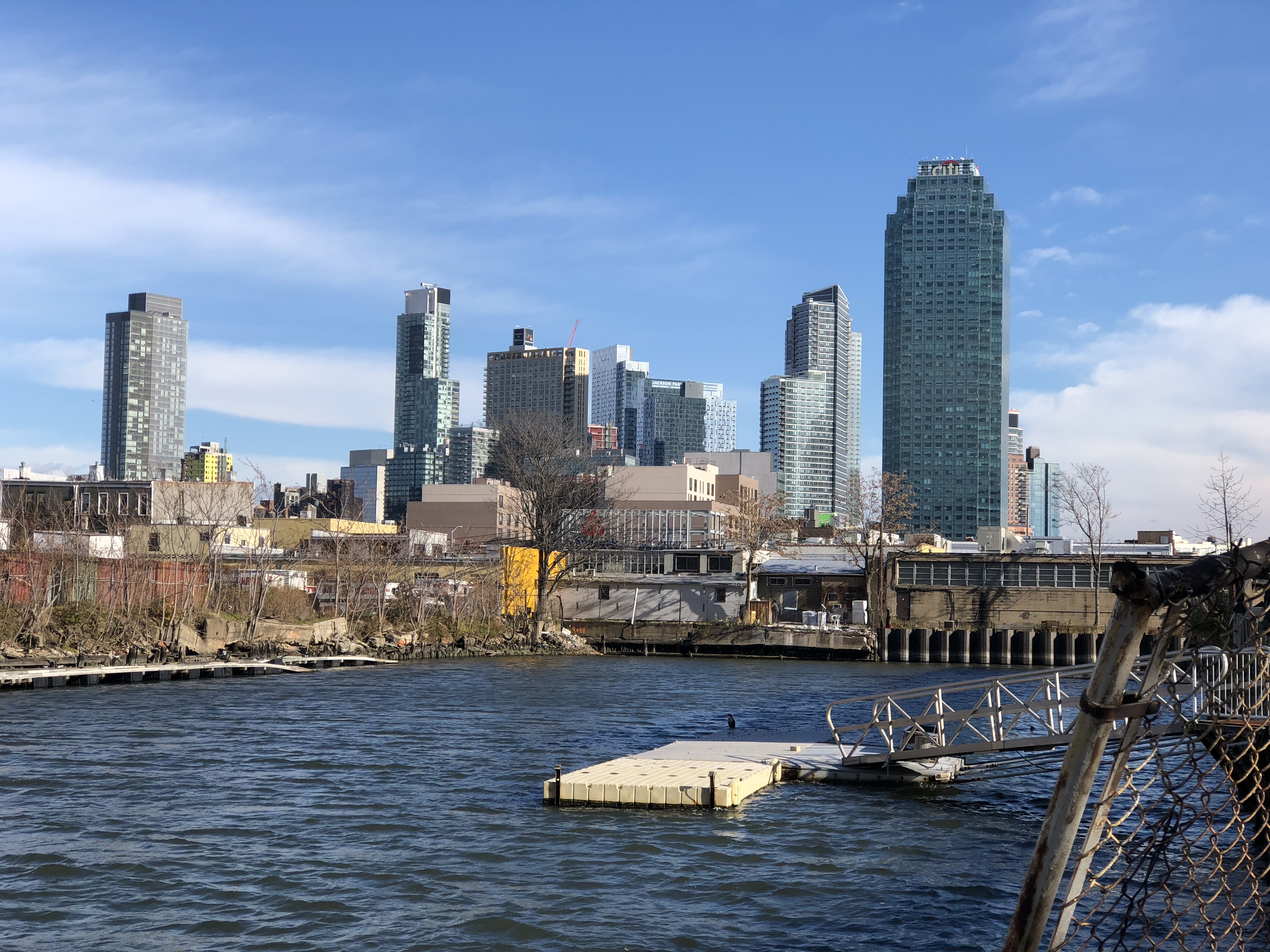
Anable Basin today, where Amazon will build its headquarters. (Photo: Nathaly Pesantez)
Johnson questioned the reasoning behind the headquarters plan moving through the state’s General Project Plan, and whether Amazon would have still wanted to come to New York City if it had to go through ULURP instead.
James Patchett, president of the EDC, said the state approvals process is a more powerful tool than the city’s, and that a project of this magnitude requires this method.
“What we are fundamentally focused on was getting the jobs here, I believe that it was necessary to achieve that and I believe it’s a totally appropriate tool,” Patchett said, who noted several times that he and the EDC are proud of the deal they reached with the company.
Amazon, meanwhile, did not directly say whether it would have avoided the city if it were forced to go through ULURP, but did say that the state process made the most sense for the company, given the scale of the project.
“Looking at the General Project Plan, that was the process that would actually be able to meet our timeline,” said Holly Sullivan, head of worldwide economic development for Amazon.
Sullivan, additionally, noted that the company has yet to come up with development plans for the Anable Basin campus.
Van Bramer’s questions focused on how the deal and eventual headquarters will impact Long Island City and the western Queens neighborhoods he represents, and on what he regards as a failure on behalf of government to strongly advocate for New Yorkers at the bargaining table.
He said, for instance, that the $5 million Amazon is putting toward funding workforce development initiatives is a dismal amount, and that New York officials should have pushed the trillion dollar company for more concessions.
He directly asked Amazon and the city, furthermore, if the company needs the $500 million grant it is set to receive as reimbursement for headquarters construction, and whether it would make the decision to direct those funds toward the four NYCHA projects in the district in need of an estimated $1 billion in repairs alone.
While both Patchett and Brian Huseman, vice president of public policy at Amazon, did not directly answer the question, they said the company’s incentives package is tied to performance metrics—if Amazon does not deliver on its job figures and other commitments, it will not receive the benefits.
Van Bramer also spoke about Plaxall, the owner of some of the waterfront properties Amazon will build its headquarters over, and its role in the GPP.
While there are several parcels of land that make up the Anable Basin area set to be rezoned under the state-run process, one of the parcels, belonging to Plaxall, will actually not form part of the company’s headquarters, and will instead likely be a private large-scale development.
The council member questioned why this parcel, belonging to a private developer, has been thrown into the GPP mix when it doesn’t make up part of Amazon’s campus, calling the decision to do this “fundamentally unethical.”
The roughly one-hour meeting wrapped up on a sour note after Johnson asked Amazon several times whether it would commit to showing up at future hearings.
Huseman said repeatedly that he would like to touch on that topic in conversations with Johnson, seemingly appearing to dodge the question.
The tense exchange, where Johnson said the City Council would work around Amazon’s schedule in arranging future hearings, resulted in Huseman at last directly agreeing to attend future hearings.
Johnson, however, said he was taken aback at how long it took Huseman to agree to a hearing, especially after sitting through one that touched on the company cooperating with the public on the process.
“It’s insulting. it’s unacceptable,” Johnson said. “It’s not how you be a good neighbor.”