

Red light therapy is definitely having a moment-from an unreal glow to clearer skin and smoothed-out fine lines, the results are hard to ignore.
If you’ve been eyeing an at-home LED mask but are wondering whether or not red light therapy is for you, here are some of the most common questions answered to help you make that decision, courtesy of Astoria-based esthetician Priscila Pantosin, owner of Cozy Studio. As an expert in Korean skincare and holistic wellness, Pantosin shares her professional take on whether this viral treatment belongs in your routine.

Q: If someone is deciding between salon sessions or buying an at-home mask, what’s your advice?
Pantosin: “I feel like you’ll probably get better results with a good at-home mask because you’re using it every single day. I love using red light in my sessions, but most people come in only once a month, so it’s unrealistic to have someone come in every week just for LED therapy. You will see a result, but not compared to someone using it every single day, so I think an at-home one would be a lot better.”
Q: Are there any particular at-home brands you really like or recommend?
Pantosin: “The only one that I’ve personally tried and have seen results has been the Omnilux, and I think they’re one of the few that are FDA cleared. They have a really nice one for the face, but they also have one for the undereye area and another for the scalp. I gave it to my mom because she found more benefits in it than I did. Acne-wise, I definitely saw a difference, but my mom uses it daily, and she has some sun exposure damage, and I feel like it’s helped a lot with that. But she’s also very into her skincare, so I feel like it’s been a combination of both.”
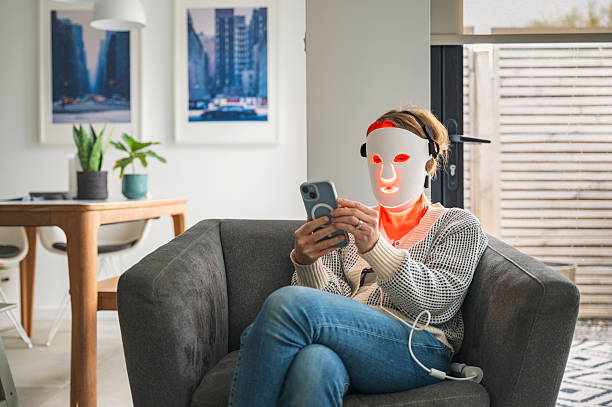
Q: Social media can tend to make LED masks look like a “fix-all” tool. What should people realistically expect?
Pantosin: “I feel like it is one of those things that if you’re consistent with one session a day, you’ll see good results, but it’s not like a one-size-fits-all; it won’t fix everything. It should be an addition to a healthy lifestyle—not a replacement for a good skincare routine, diet, or mental health.”
Q: Does it matter if you use a panel versus a mask? Is one necessarily better than the other?
Pantosin: “It really just depends on the quality of light because even the Omnilux mask that I was using specifically said it has to be directly on the face so that you’ll get more benefits., but the Celluma panels that are used in salons say it has to be two to three inches above the face, and you still get the same benefit, so I don’t think there’s one that’s better than the other. If I were given a choice, it would be the same thing to me, but at least with the Omnilux, it’s more convenient; I could be doing the dishes and have the mask on, but with the panel, you have to lie there and wait 30 or 40 minutes.”
Q: What about the little handheld wands?
Pantosin: “Maybe it’s a hot take, but I would always prefer people to buy either the mask or the panels and maybe leave the wand on the side. It’s too little to get the exact amount you need, unless you’re meticulously holding it per section. If you’re dealing with a pimple and you just want to cover that, I think it’s fine. But for the amount you’re investing in the little wand, I’d rather someone put that money towards a mask.”
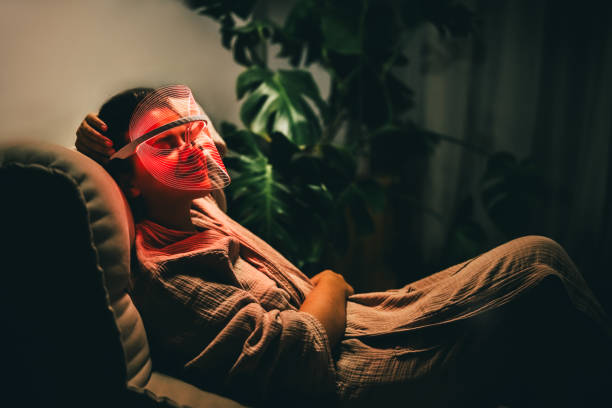
Q: Is there anyone who should avoid red light therapy?
Pantosin: “I won’t recommend it to people who have rosacea, but I feel like, with red light, there are a lot of studies published, but there’s still so much more research to be done. Sometimes, estheticians will say yes, it’ll work amazingly for rosacea, but others will say no. There are different levels, so if someone has very intense rosacea, I wouldn’t recommend it because you do feel a little bit of heat after you use it, and that can make it worse or cause it to flare up. Different things trigger rosacea, but heat is definitely one of them, so I can see why people would say it would make it worse. For intense rosacea, I would recommend blue light instead. If your Rosacea is level one, which is very low, then it’s okay. I also wouldn’t recommend red light if you’re on very high doses of tretinoin or benzoyl peroxide that dermatologists prescribe, because it makes the skin photosensitive, and you don’t want anything too hot on the skin when you’re using those very high doses of tretinoin or benzoyl peroxide.”