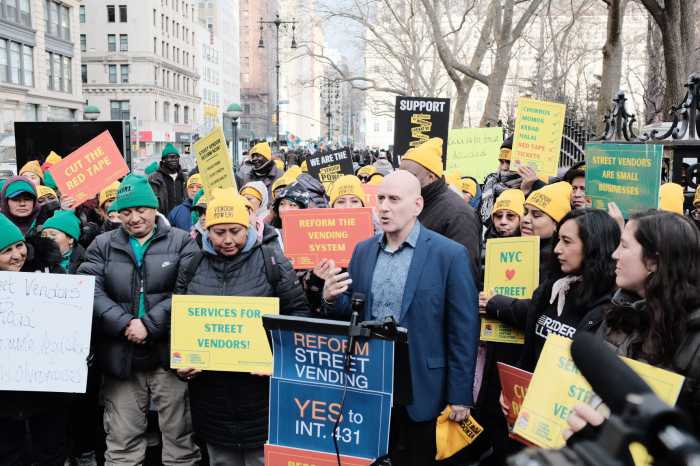

The City Council on Dec. 18 voted to raise the cap on the number of food vendor licenses in the city, allowing thousands of vendors to obtain licenses to operate legally across the five boroughs.
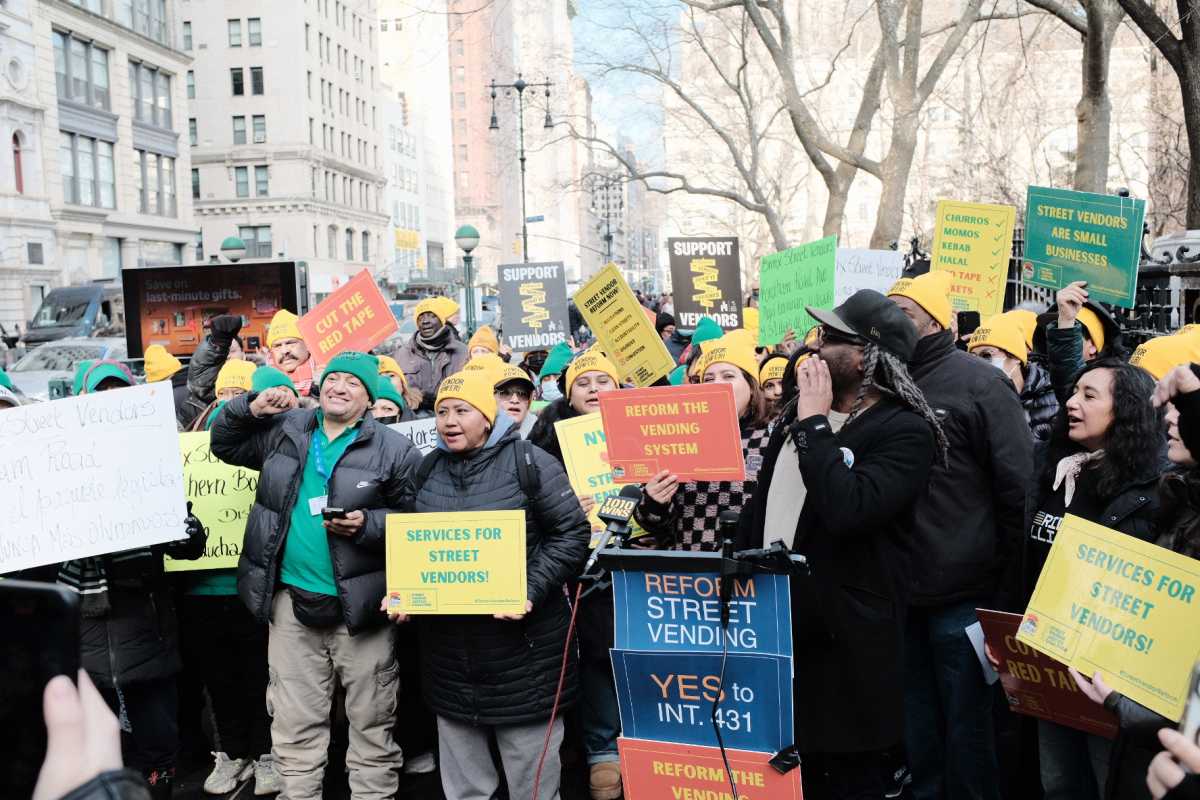
Intro 431-B, part of a series of bills known as the Street Vendor Reform Package, calls for an additional 2,100 food vendor licenses each year through 2031, creating an additional 10,500 licenses. The legislation, introduced by Bronx Council Member Pierina Ana Sanchez, also adds more than 10,000 licenses for general merchandise and passed with a supermajority of 39 votes during the final stated meeting of the 2025 legislative session on Thursday.
Advocates say the legislation would help combat a significant backlog that has forced vendors to “operate in the shadows” because they cannot legally obtain a license from the city.

Vendors have repeatedly stated that it is currently impossible to obtain a permit from the city because they cannot join the lengthy and closed waitlist to secure a permit. That backlog has made it impossible for new vendors to legally start a business, advocates say, leaving small business owners at risk of fines or of having their merchandise confiscated and destroyed.
The bill has been significantly altered since Sanchez first introduced it in order to address concerns raised in a marathon public hearing in May. Those concerns included fears that raising the cap would lead to congested sidewalks and have a negative impact on brick-and-mortar businesses.
The amended legislation now requires the city to increase the number of enforcement personnel to ensure that licensed street vendors are operating safely. Individuals and businesses found to be committing serious or persistent violations would risk losing their license under the terms of the legislation.
The legislation was also amended to cap the number of new licenses at 2,100 per year in order to ease the fears of brick-and-mortar businesses. Previous iterations of the bill contained no cap on new licenses.
Intro 1251-A, which aims to combat administrative delays in the licensing process, and Intro 408-A, which calls for the creation of a Division of Street Vendor Assistance within the Department of Small Business Services, also passed with supermajorities during Thursday’s stated meeting as part of the Street Vendor Reform Package. The Division will be responsible for providing training, outreach, and education to all food vendors and general vendors regarding entrepreneurship and compliance.
Street Vendor Project, which has long lobbied for the reform package, said the Division will ensure that street vendors have access to the same educational tools afforded to small businesses in the city.
The organization added that the importance of the reform package “cannot be overstated.” stating that only one-quarter of the city’s roughly 23,000 street vendors have been able to obtain a permit due to current regulations.
Sanchez, meanwhile, described passage of the reform package as a “historic vote” that reforms New York’s vending system.
“Implementation won’t be easy, but I am committed to staying the course, continuing to engage all stakeholders, and working with the incoming Administration to get this right for vendors, small businesses, and all New Yorkers,” Sanchez said in a statement.
Council Member Shekar Krishnan said street vendors “keep the city going every single day” and described Thursday’s vote as a “historic day for workers.”
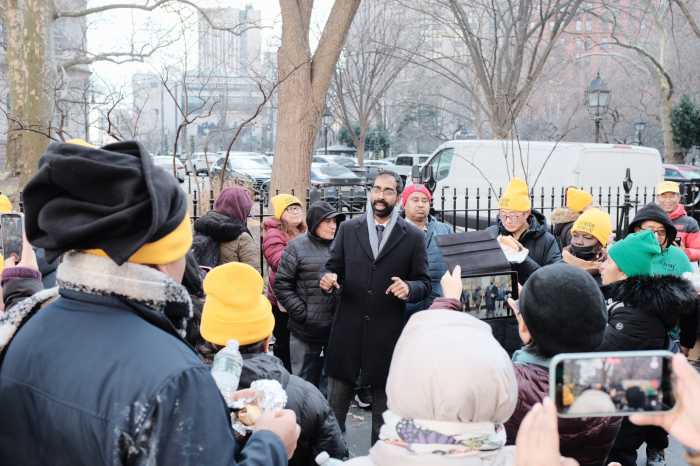
NYC Council Majority Leader Amanda Farias said the package will help deliver “economic justice” to vendors throughout the city, stating that the Council had voted to ensure that working-class entrepreneurs had “room to succeed.”
“This package reflects years of work convening vendors, small businesses, chambers, developers, BIDs, and city partners to build a system that works for everyone,” Farias said.
Public Advocate Jumaane Williams said the legislative package will help build a strong and safe street vending environment in neighborhoods throughout the city.
“Street vendors are New York City’s smallest businesses, and provide some of the most affordable options for New Yorkers facing an increasingly unaffordable city – yet they don’t have the support from the city they need to survive,” Williams said. “In speaking with vendors about the barriers they face, it’s clear we can do more, and an office dedicated to street vendor assistance will help these entrepreneurs navigate obstacles to licensing.”
Queens Council Member Sandra Ung, on the other hand, voted agianst Intro 431-B over concerns tied to unregulated street vending. Ung pointed to parts of Downtown Flushing, located within her Council District, that have become “severely congested” by unlicensed street vendors, creating “hazards” for seniors and other pedestrians.
She said unlicensed venidng has “continued unabated” even with increased enforcement from the NYPD and added that she is concerned that the legislation does not go far enough toward addressing unlicensed vending.
“I want to be very clear: I understand the rationale of Intro 431-B. That by expanding access to licenses, vendors will have an incentive to follow the rules, and that increased enforcement and higher penalties will deter illegal activity,” Ung said. “However, in my own district, we have seen that even with increased enforcement, illegal vending continues unabated. Expanding the total number of licenses does not address the fundamental issue of how to manage persistent unlicensed vending.
“My vote is not a rejection of the concerns this bill seeks to address, nor of the need to create pathways for vendors to participate in the regulated system. Rather, I am concerned that moving forward with this bill, without coupling it with a more comprehensive strategy, risks closing the door on the need to meaningfully address unlicensed vending.”
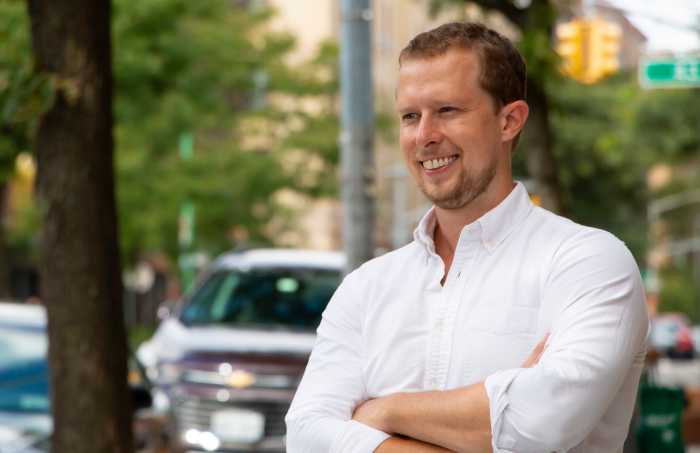
A number of small business advocates had touted the significance of Intro 431-B prior to Thursday’s vote, including Queens Economic Development Corporation Executive Director Ben Guttmann.
Guttmann told QNS on Dec. 5 that QEDC has surveyed vendors in Corona Plaza and the nearby Jackson Heights, reporting that 79% have lost revenue in the last year. Of those vendors, 84% have reported a loss of over $1,000, Guttmann added, pointing to uncertainty surrounding licenses and fears over ICE raids.
He said the legislation would remove some of the uncertainty facing vendors by addressing some of their fears. Although the legislation would not ease fears surrounding immigration enforcement, it would address concerns surrounding local law enforcement, Guttmann said, removing some uncertaintly.
He added vendors play an integral role in the Queens economy, making the borough’s food scene the envy of the rest of the city.
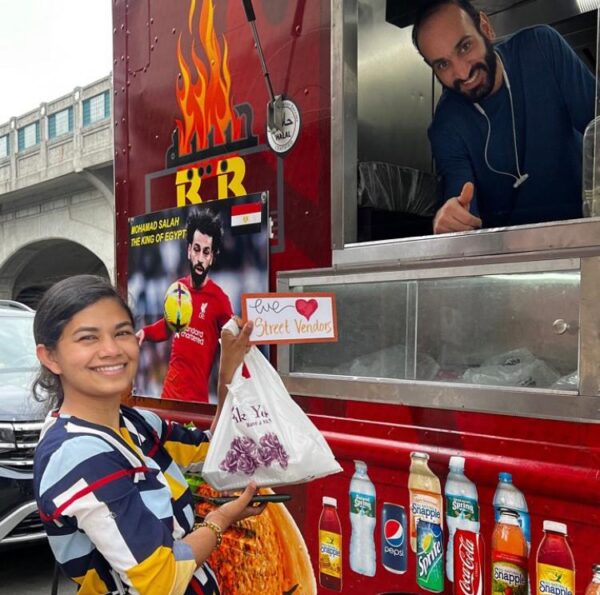
“There are thousands of street vendors who call Queens home, and they are the type of entrepreneurs that make our neighborhoods the envy of the world,” Guttmann said. “They add eyes on the street, which make it a safer and more family friendly place to be. They make some of the most delicious, amazing food, which makes our neighborhoods the world class tourist destinations.
“These proposed reforms are the kind of things that will help them fully realize the American dream.”
Guttmann described the legislation as a “win-win” for vendors and brick-and-mortar businesses by placing vendors in a more regulated environment while also providing more access to licenses.