
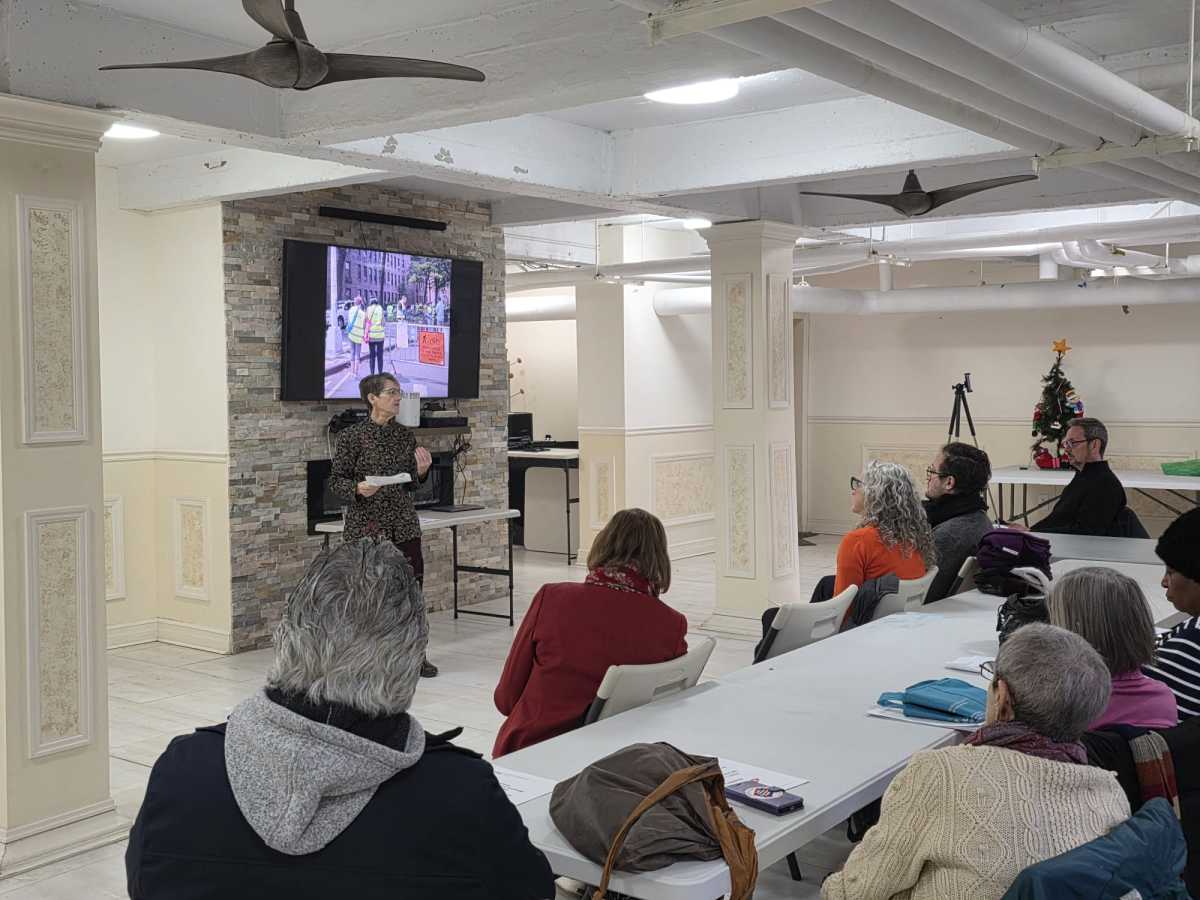
Selfhelp Community Services, a non-profit advocating for older adults, has called on the Department of Transportation (DOT) to make “simple and important changes” to the 34th Avenue Open Street after completing five separate “walk audits” of the area between July and November.
The 34th Avenue Open Street, which includes a 26-block stretch measuring 1.3 miles, is the first permanent open street in New York City and limits the street to local car traffic between 7 a.m. to 8 p.m. every day.
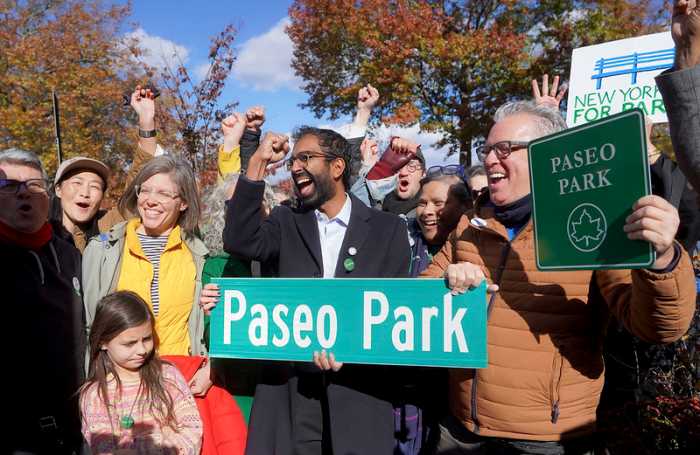
The open street, recently co-named Paseo Park, was originally conceived as a temporary initiative to offer members of the Jackson Heights community access to open space during the COVID-19 pandemic but has since been transformed into a permanent DOT fixture.
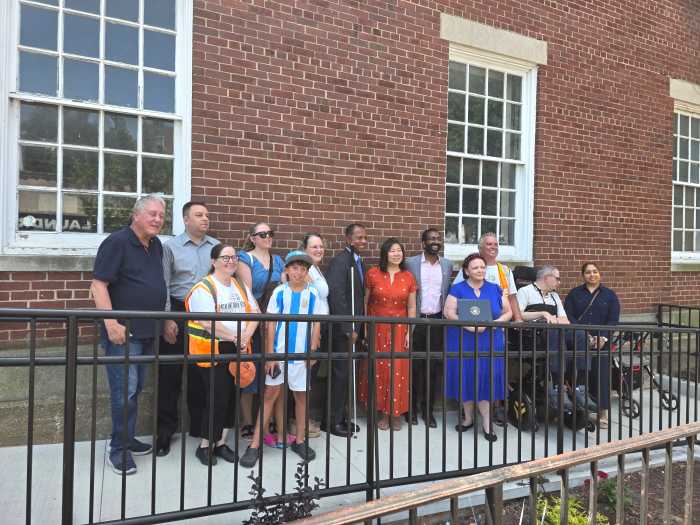
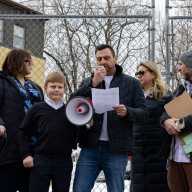
Selfhelp’s Northridge/Brulene/Southridge Neighborhood Naturally Occurring Retirement Community (NR NORC) recently undertook five separate walking audits of the street to examine safety, accessibility and walkability.
A number of local seniors joined the five audits, which were funded through an AARP Community Challenge Grant and took place on five separate dates between July and November, with each walk taking place at different times of the day.
Participating seniors outlined a number of issues during the comprehensive survey, expressing a particular frustration at a lack of enforcement surrounding motorized bikes.
Numerous participants alleged that mopeds speed up and down the open street despite signs expressly forbidding them, creating dangerous conditions.
Others alleged that electric bikes and e-scooters regularly break posted speed limits along the corridor.
Some residents accused the 115th Precinct of failing to properly enforce the rules on the open street. The NYPD has not yet returned a request for comment.
The DOT, on the other hand, said the agency has worked closely with local residents to improve 34th Avenue, pointing to a 60% reduction in crashes involving pedestrians since the launch of the corridor.
“New Yorkers are safer for it, with crashes involving pedestrians down 60% and crashes resulting in injuries down 30%,” an agency spokesperson said. “We appreciate all the work Self Help does to provide recommendations and other local input as we continue to transform 34th Avenue both in the near term and as part of the future capital construction.”
A DOT official added that mopeds are not permitted to enter the corridor, adding that the agency is actively monitoring conditions along the open street.
Dawn Siff, executive director of the Alliance for Paseo Park, said mopeds “are like water” and will go wherever there is a path for them. She encouraged local residents to continue raising their concerns about mopeds with elected officials and city agencies.
Other participants, meanwhile, raised concerns about confusing or inconsistent signage for pedestrian and bicycle lanes, which they said changed from block-to-block.
Others criticized a lack of trash cans along most of the corridor, contributing to a pile-up of litter, while some participants said there was a lack of seating options for older adults who needed to rest while walking.
Selfhelp also reported that several participants in the recent audit pointed to tripping hazards created by cracked pavement, potholes and uneven sidewalks.
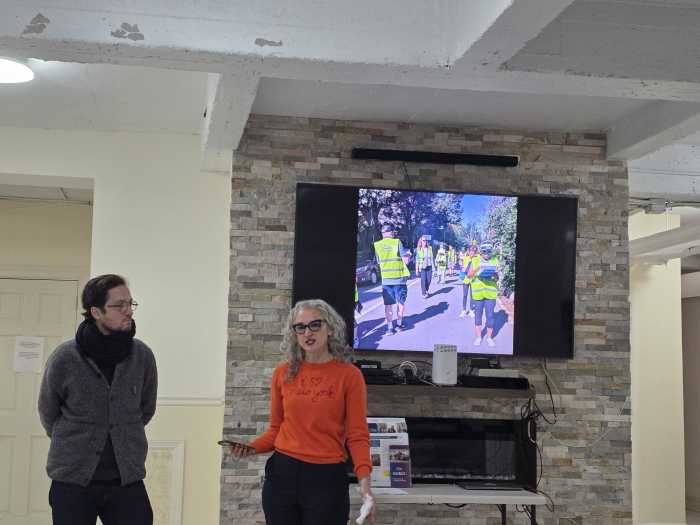
“If somebody was trying to go down that street with a stroller or a walker, it would be very, very difficult,” Karen Taylor, program director at Selfhelp NR NORC, told local seniors at a Jackson Heights Friday afternoon.
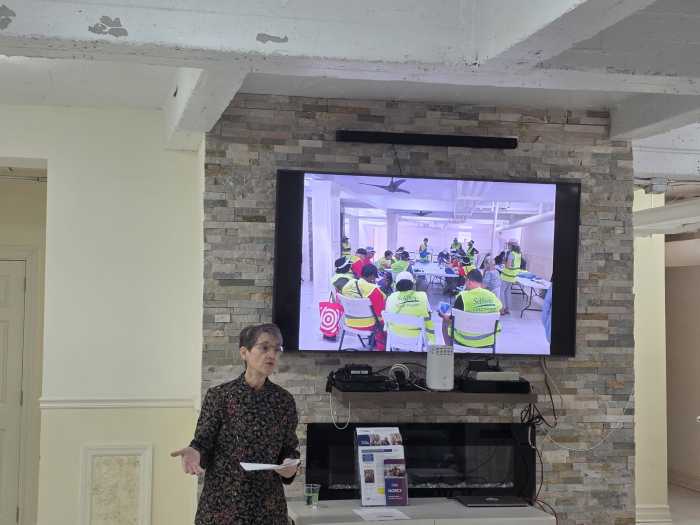
The organization has proposed several recommendations on foot of the report, calling on the city to standardize and clearly mark all pedestrian and bike lanes within the 26 blocks of the open street.
It has also proposed increased enforcement of speeding by electric bikes through the use of additional cameras and greater police visibility.
Additionally, Selfhelp called on the city to install more trash cans and seating, repair deteriorated roadways and improve landscaping along the corridor to combat some of the issues raised in the report.
Stuart Kaplan, CEO of Selfhelp, said the recent walk audit has given local seniors a “real voice” in shaping the future of the Open Street and called on the city to implement recommendations made by participants.
“Their observations make it clear that improving signage, enforcing speed limits and adding basic amenities like seating and trash bins will go a long way toward making this Open Street work for everyone,” Kaplan said in a statement.
Beth Finkel, state director of AARP New York, said it is “critical” to make walkable streets safe for people of all ages, but particularly for older adults who rely on the corridors to stay healthy and connected.
“By using older residents’ day-to-day experiences, this report offers practical, achievable recommendations to make this Open Street safer, more accessible and more welcoming for everyone who uses it,” Finkel said.
Council Member Shekar Krishnan, who represents the area covered by the 34th Avenue Open Street, praised Selfhelp for identifying “important and simple” changes that would instantly improve user experience along the corridor. He added that the changes would enable older adults to navigate the open street would confidence.
“The residents of our NORC want to age in a community that is safe, accessible, and respectful of their needs,” Krishnan said in a statement to QNS. “I really appreciate their feedback. I’m dedicated to listening to the community and finding ways to keep improving our beloved open street, which is always a work in progress.”
Assemblymember Jessica González-Rojas, who also represents the district, said in a statement that it is vital that dozens of local seniors had taken part in the audit.
“Community engagement and input are what make public park spaces like Paseo Park so vital to the community,” González-Rojas said. “Through this walk audit, they identified simple but important changes that would help them navigate Paseo Park with confidence.
“I hope the city will take these recommendations to create a more accessible space for our older adult community members.”
Several participants stated that they were grateful to be included in the audit and have an opportunity to highlight their own concerns about the corridor.
Debbie Arkin, who participated in all five walks, told QNS that the initial temporary concept for the open street was “amazing” but said the permanent corridor will require continuous input before it is satisfactory for all community members.
“You only learn after something opens what you can do to make it better,” Arkin said.
She said the walks also served as a community building event, connecting her with neighbors she never even knew she had.
Esther Curenton, who both drives and walks in the local community, expressed frustration over the impact that the corridor has had on parking spaces in the community. Curenton, a co-op owner in the neighborhood, said she has frequently called on elected officials and city agencies to provide a municipal parking lot in the area to make up for parking spaces lost.
“We (co-op owners) are shareholders in this community,” Curenton said. “Parking is part of what we look forward to.”
She added that she often feels like concerns of motorists living in the area are not fairly heard by relevant authorities.
However, Curenton, like Arkin, said she was grateful for the opportunity to raise concerns through the recent audit.
Siff described the corridor as a “beloved community space” but said the area has not yet been finished. She said the audit has reinforced a top priority that the Alliance had heard during its own outreach.
“People want Paseo Park to be a safe space for pedestrians,” Siff said.