

QNS is looking back at the top stories throughout 2025, as we look forward to 2026.
Below are some of the top stories from the month of August, including important court filings and rulings, the closure of a popular Astoria restaurant and more.
AG James files landmark criminal charges after elderly Queens woman’s home stolen in deed theft scheme

New York State Attorney General Letitia James announced the first indictments under a new deed theft law in August, just over a year after it first went into effect.
The law, SO8306, establishes deed theft as a crime, amends the statute of limitations to give homeowners and prosecutors more time to seek justice, allows the Office of the Attorney General (OAG) original criminal jurisdiction to prosecute deed theft and allows for the OAG to return the property to the rightful owner.
The indictments were for Manhattan resident Deepa Roy and Queens resident Victor Quimis, who were each charged with four counts of grand larceny, two counts of offering a false instrument for filing, residential mortgage fraud, money laundering, two counts of criminal possession of a forged instrument and scheming to defraud.
Roy and Quimis allegedly conspired together over the course of two years to steal the Kew Gardens Hills home of Renuka Bherwani, an elderly widow and immigrant, while she received end-of-life hospice care in her home. The duo allegedly forged Bherwani’s signature on documents that transferred ownership of the home to themselves before they took out a mortgage on the property.
State Supreme Court issues temporary injunction preventing DOT from installing protected bike lanes on 31st Street in Astoria
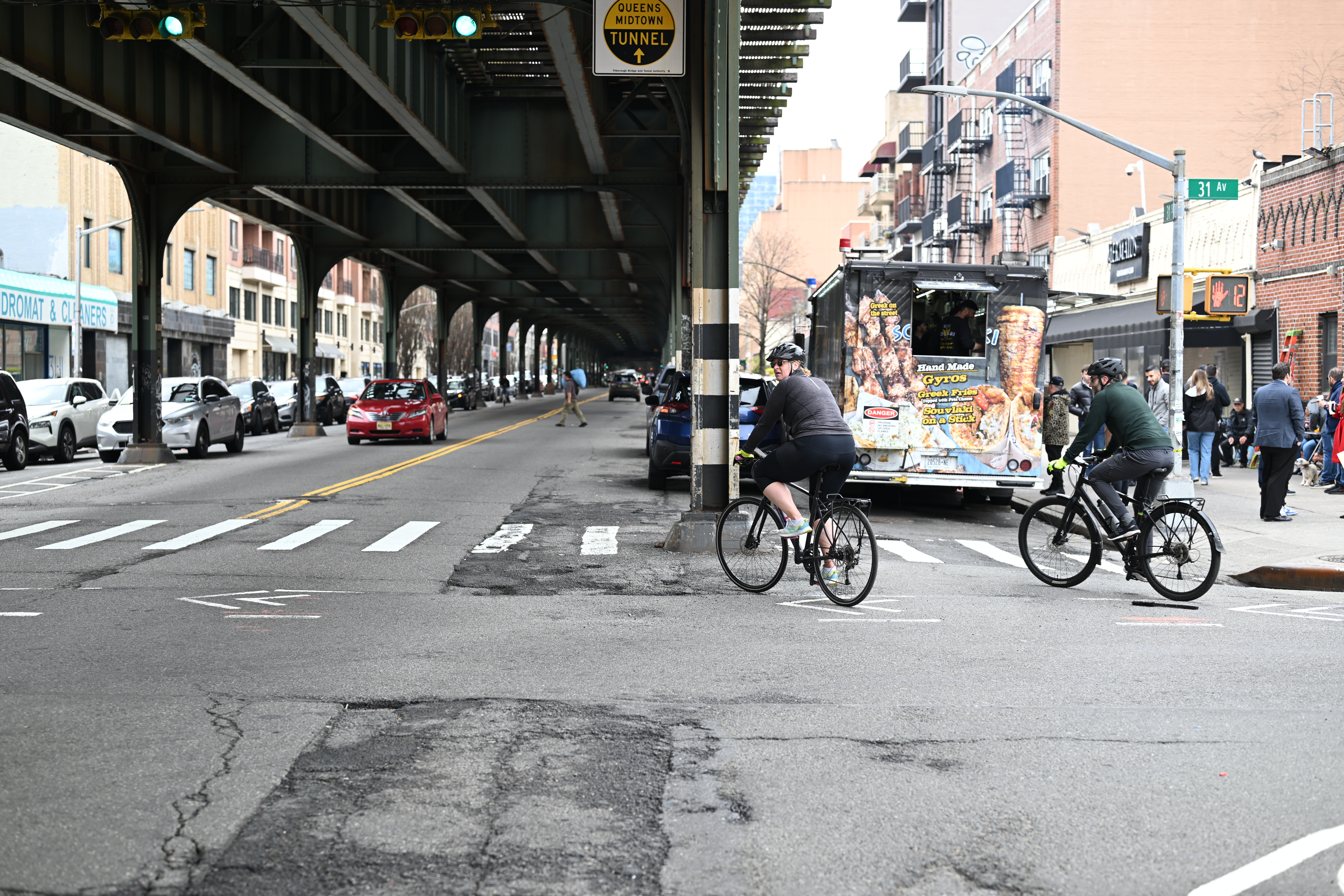
Another top story in August related to the planned protected bike lanes along 31st Street in Astoria. Plans were put on hold when the New York State Supreme Court issued a temporary injunction after a legal challenge was filed by the 31st Street Business Association, alleging that these lanes would compromise public safety on the street, negatively impact local businesses and were in violation of city laws.
This proposed project from the New York City Department of Transportation (DOT) has been a hot topic this year. Supporters of the protected bike lanes argue they are essential for improving safety along 31st Street, which is among the most dangerous in New York City, according to DOT data, with more than 200 injuries occurring there over the last five years. Many of those in opposition to it say the new protected bike lanes would create new safety issues and hurt local businesses by being installed through loading and delivery zones.
The Queens Supreme Court recently ruled that plans for protected bike lanes along 31st Street must be halted, putting the project’s future up in the air. Queens Supreme Court Justice Chereé Buggs ordered the agency to halt its plans for the protected bike lane in a Dec. 5 ruling.
Buggs also ordered the DOT to remove a section of the bike lane that it had installed between 31st Avenue and Broadway within 30 days. Buggs sided with the 31st Street Business Association and other local residents who filed a lawsuit against the DOT, arguing that the bike lanes would negatively impact local businesses, prevent emergency services from being able to effectively respond and endanger children at the St. Demetrios Greek-American School, who are regularly dropped off along the planned bike lane route.
Resorts World granted key land use approval from state for $5.5B expansion if granted commercial gaming license

Resorts World New York City received its last major land use approval for its proposed $5.5 billion project to build an integrated resort at the Aqueduct Racetrack in South Ozone Park in August.
This approval came shortly after the New York State Franchise Oversight Board voted unanimously to accept the final environmental impact statement and finding statement for the next phase of the project, which will result in a 5.6 million-square-foot attraction minutes away from JFK International Airport.
Now that Resorts World has officially been granted a commercial gaming license, operations are expected to be expanded as early as July 2026. By then, the workforce will be more than tripled.
The new Resorts World Casino in South Ozone Park will have 6,000 slots and electronic table games, as well as 800 table games across a 500,000-square-foot gaming floor. The resort will feature a 7,000-seat multi-purpose arena, more than 7,000 parking spaces, more than 30 food and beverage outlets, hundreds of thousands of square feet of large-scale meeting space, 12 acres of community park space, a spa and 2,000 hotel rooms.
End of an era: Astoria institution Porto Bello to close its doors for good
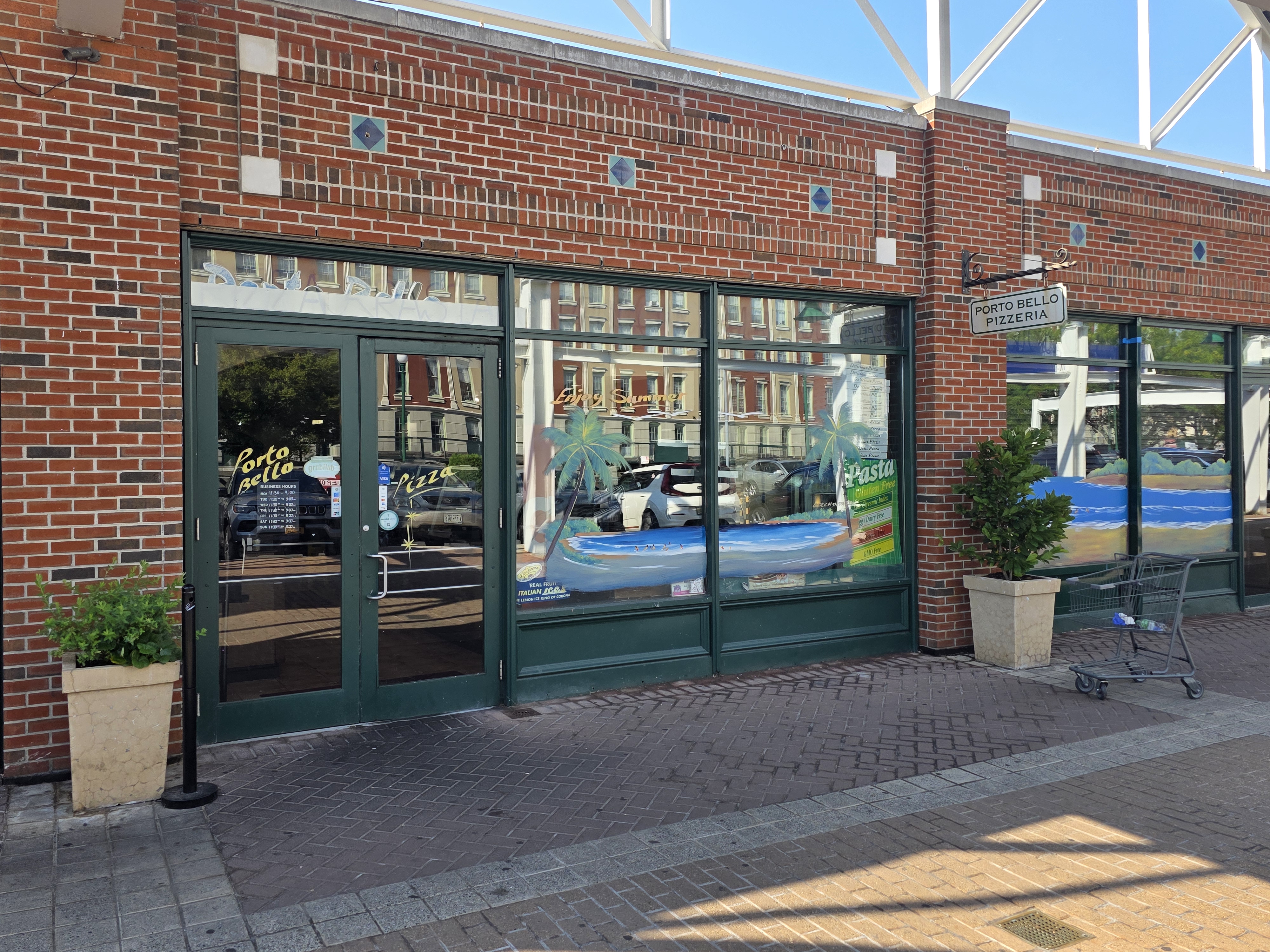
The popular Astoria-based Italian restaurant Porto Bello officially closed in August 2025.
Porto Bello was first opened by Maria and Pietro Maniaci in 1999 at 43-18 Ditmars Blvd., where it grew into a community gathering place. The Maniacis’ son, Salvatore, had been operating the establishment in recent years.
Salvatore said that it was much more difficult to run the business by himself after his parents died. Additionally, he noted that business had been slower since the COVID-19 pandemic.
The rising cost of running a business in New York City, along with the mental, physical and financial strains it put on him, led to Salvatore deciding to close the restaurant.
It was a very difficult decision for Salvatore to close the restaurant that his parents had built and where he watched his own kids grow. Porto Bello also helped community members forge close relationships with one another.
Community groups host Jackson Heights rally in support of Airbnb bill that would expand city’s short-term rentals
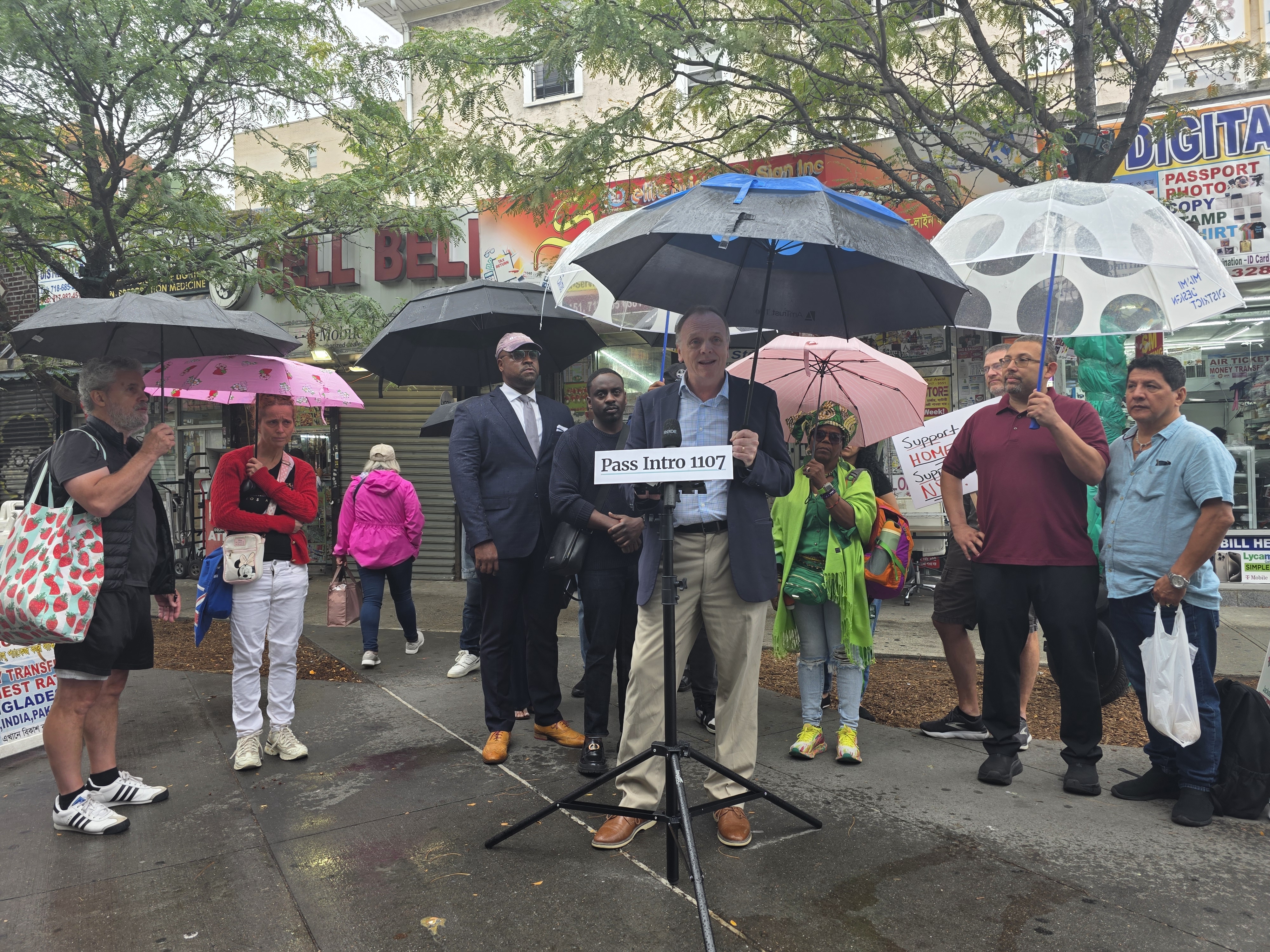
Several community organizations and homeowners gathered last August at Diversity Plaza in Jackson Heights for a rally supporting the City Council legislation Intro 1107, which is intended to expand flexibility for Airbnb and other short-term rentals in New York City.
The proposed legislation would allow owners of one-family and two-family homes in the city to rent their spaces out to up to four adults plus children. Additionally, it would eliminate an existing law requiring homeowners to be present while letting out their homes. Under Local Law 18, homes can only be made available on sites like Airbnb if the homeowner is present during the stay. Additionally, Local Law 18 mandates that short-term rentals can be leased out to no more than two adults at a time.
Jackson Heights was decided upon as the neighborhood for this rally because it does not have many hotels and has suffered from a drop in tourism since Local Law 18 went into effect in 2022. The organizers and attendees argued that Intro 1107 could help address the affordability crisis in New York City, as hotel prices have gone up by a large amount since Local Law 18 went into effect.