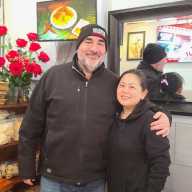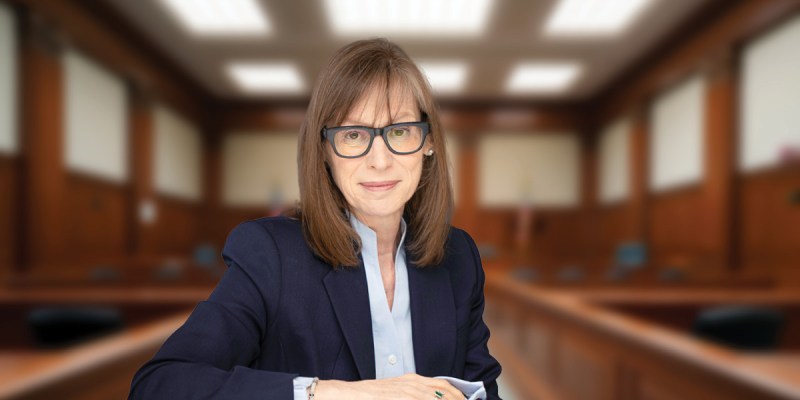
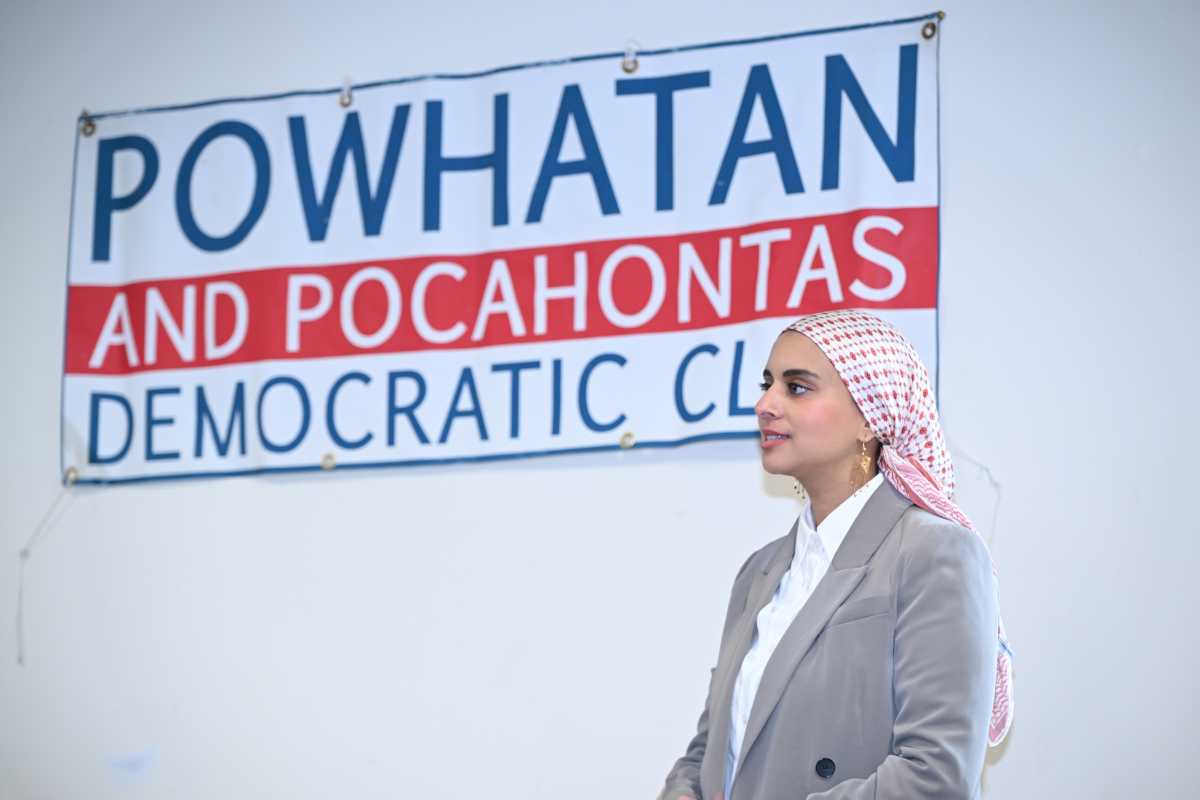
Rana Abdelhamid, a candidate in the upcoming special election to succeed Mayor Zohran Mamdani in the 36th Assembly District, has made fighting for small businesses and working families central to her campaign.
Abdelhamid, a Muslim community organizer and the founder of local self-defense non-profit Malikah, launched her campaign to replace Mamdani at the end of November and has pledged to fight for affordable housing protections, universal childcare, immigrant protections and community safety programs if she is elected to the state legislature.
Abdelhamid, a member of the New York City chapter of the Democratic Socialists of America (DSA), founded Malikah to help teach self-defense to individuals from minority communities and said at a launch party in November that she learned of other issues facing the community through conversations with participants at self-defense classes around the neighborhood.
She previously ran for Congress in 2022, attempting to defeat then-incumbent Carolyn Maloney in the 12th Congressional district, which included parts of Astoria and the east side of Manhattan. Abdelhamid later dropped out of the race when the district was redrawn to remove Astoria.
Abdelhamid, who would become the first Egyptian and Muslim woman ever elected to the New York State Assembly if she is elected in the Feb. 3 special election, faces competition from fellow DSA members Diana Moreno and Mary Jobaida for the seat.
Moreno has secured the Queens Democratic Party nomination in the race and has received endorsements from the DSA and Mamdani himself.
Abdelhamid, on the other hand, has received endorsements from traditional progressive lawmakers such as Council Member Julie Won and U.S. Rep. Nydia Velázquez.

She noted that all three candidates in the upcoming special election are progressive women of color, but said she stands apart from her fellow candidates in how she focuses on supporting small businesses. Abdelhamid also stated that she was “raised” by the local community and said her politics have been directly shaped by lived experiences in the district.
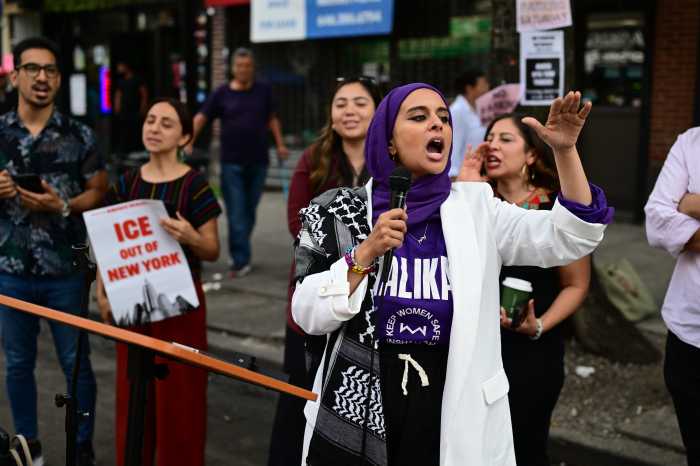
Abdelhamid has vowed to fight for the district’s immigrant community by supporting legislation such as New York for All, which would prohibit state and local law enforcement from cooperating with ICE, and the MELT Act, which would ban federal immigration officers from wearing masks.
She also vowed to fight for deeply affordable housing so that families can remain in the district if she is elected to the state legislature.
QNS spoke to Abdelhamid about a range of campaign issues in a conversation this week. The interview has been edited for length and clarity.
This race features three progressive candidates competing for one seat. How do you set yourself apart from two candidates you are aligned with on a lot of issues?
I think there’s a couple of things. From a policy perspective, I do have a focus on small business in the district. As someone who grew up in a small business in the district, my family owned a halal deli grocery on Broadway, I saw how rising rent and how rising costs impacted and made it difficult for us to keep our small businesses. I also run two festivals in the district where we engage 40 businesses every year. Through those festivals and through those conversations, I see all the challenges that our small business community faces. Steinway Street is nicknamed “ghost town” for a reason, because of how quickly the turnover rate is for so many of our community businesses, and I just feel like there is Astoria or Long Island City without that small business infrastructure.
And so as an assembly person, I would fight for commercial rent stabilization. I would fight for grant money to be driven to our small businesses in case of emergency, and I would make sure that I was an advocate for our family-owned stores in our community.
I don’t come to this work new. I come to this race having done work for a very long time, through crisis and through responsibility and through personal experience… This is the community that raised me. This is the community where I’m raising my son, and this is a community I’m incredibly, incredibly connected to.
District 36 has a very strong immigrant community. What would you do if you were elected to protect that community from federal immigration authorities?
I want to highlight that there’s an increasing number of asylum seekers in the district. I work very closely with specifically African asylum seekers who are coming to the district, and many of them have been impacted by some of the federal cuts on a national level to refugee and asylum intake by the United States government. And so I will do everything in my power to protect our immigrant neighbors.
I’ve already been running mutual aid assistance. We do food distribution weekly for immigrant neighbors. I run a center for unhoused immigrant neighbors. I have organized, and still am organizing ICE safety hubs and anti-ICE training in the community. So not only will I continue to do that work as an advocate and as an organizer, but I would also fight for New York for All and the MELT Act.
I would also fight to invest in universal access to legal representation for immigrants facing deportation, and expand funding specifically for asylum seekers and newly arrived families so they have protection through access to housing, healthcare and education, which is like something that I see every single day through the mutual aid hub that I run in district.
In terms of housing, how would you go about ensuring access to affordable housing for people in District 36 and across the state?
I’m someone who works a lot with tenants. As someone who runs a mutual aid hub, I’ve been to housing court before, and I also have done a lot of anti-violence programming within public housing in this district. As a self-defense instructor, as someone who organizes against gun violence, I’ve worked very closely with tenants and public housing tenants.
Growing up in this district, I experienced housing insecurity. I moved nine times as a teenager because of rising rent. And so the first thing I would want to do is I would actually want to fund right to counsel. I know that something like 80% of tenants show up to court without a lawyer. 90% of landlords do show up to court with a lawyer. And when tenants have legal support, they’re actually much more likely to have access to their rights and are much more easily able to navigate housing court.*
I would also like to fund the Western Queens Community Land Trust as permanently affordable, publicly owned land. We would then be able to have nonprofit development of deeply affordable housing in that community land trust.
I would also like to fully fund our public housing, and I would like to pass the REST Act, which would expand the number of rent-stabilized units across New York City and New York State…
Right now, definitions around affordability are not reflective of the actual needs on the ground. Oftentimes, they’re using very bloated Area Median Income (AMI) indexes… There are so many roadblocks and so much corruption within housing development spaces, it is very difficult for the development of 100% affordable housing, especially in our part of Queens. So, I would want to make sure that we’re redefining how we’re thinking about affordability, that we’re creating tax incentives for the development of deeply affordable housing.
*A 2025 report by former City Comptroller Brad Lander found that only 42% of tenants facing eviction appeared in Housing Court with a lawyer.
On education, test scores seem to be slipping, attendances are dropping. What would you do to combat those issues if you were elected to the Assembly?
I’m someone who went to New York City public schools. I went to schools in this district and went to high school in Queens and middle school in Queens. I know firsthand not only how deeply underfunded our school system is, but oftentimes segregated by class and race.
I think it’s really important that we are investing state resources into our school system to stabilize our schools so that learning can actually happen. Right now, schools are understaffed. They’re under-resourced. So I would want to invest in making sure that we have social workers, we have bilingual educators, that we have trained special education staff specifically for disabled students. I would want to have a culturally responsive curriculum and invest in family engagement.
I work with the Department of Education now. I do a lot of culturally responsive and anti-violence programming, and I hear from educators and admin about this reality of under-investment. So, I would want to make sure that we have a school system that is not overly reliant on testing, but also on projects and different kinds of education that will actually allow for New York City public school students to be prepared for the kind of workforce that we see today.
On taxes, the Mayor ran last year on an affordability agenda that would be funded through a progressive tax on the wealthiest residents in the state. If you were elected, would you fight for a progressive tax on the wealthiest residents in the state?
I would support taxes on the ultra-rich and the rich corporations and luxury developers. I also want to fight to end tax giveaways to luxury developers and to private universities like Columbia University,
With how things stand at the moment, the state legislature seems to be more in favor of raising income tax than the Governor. Do you think a compromise can be reached between those two different positions?
I think it’s really important that the Governor sees this moment where we are going to increase revenue to fund the things that New Yorkers need, especially with incoming cuts from the federal government. And it’s very important that we do tax the rich.
Assuming you are elected on Feb. 3, what is your day one legislative priority?
My day-one legislative priority would be doing everything we can to protect our immigrant communities. So it would be fighting for New York for All and the MELT Act.
Universal childcare is a popular topic at the moment; the city and the state seem to be moving towards that. Is that something you would fight for?
Yeah, 100%. I’m very, very happy that there’s 2k and we’ve done something to increase early childhood education and childcare for our children. But I think we need to do more than that,
There are a lot of races across Western Queens that pit a DSA candidate against a traditional progressive… Do you think that says something about the direction that Western Queens is going?
I think it’s a really incredible moment that we have multiple progressive options. I’ve been saying this to many of our neighbors and voters. Typically, when you go vote, you’re choosing from the lesser of two evils, and now you really get to be nuanced in your politics and your choices.
I have deep respect for all progressive organizers and DSA members, and I think this is pushing our politics forward. But where I do think I’m different is how long I’ve been doing the work on the ground in this community and how I’ve been able to actually translate our needs as communities into actual wins.
I didn’t come to this work through a political organization. I did come to this work from personal, lived experience – because of crisis response, because of the things that I’ve seen my community being confronted with, whether it’s state violence or economic insecurity or because of a reality as an immigrant community.
So I feel like I really bridge a gap between electoral politics, movement politics, institutions and the actual people in this district who I’ve been deeply connected to for a really long time.
I wanted to ask for your comment about recent remarks made online, apparently by your supporters, claiming that Diana Moreno “doesn’t belong here.” Those remarks drew criticism. Do you have any response to that?
I don’t support anyone making a comment like that at all. It’s not reflective of the values of the race that I’m trying to run, or my own leadership.
I just don’t support comments like that. I think everybody has a right to run. I think it’s great that we have several women of color running who are leftist. And I also feel really confident about the race that we’re running.
Additional reporting by Ramy Mahmoud.