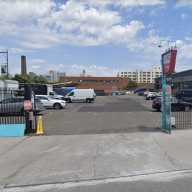

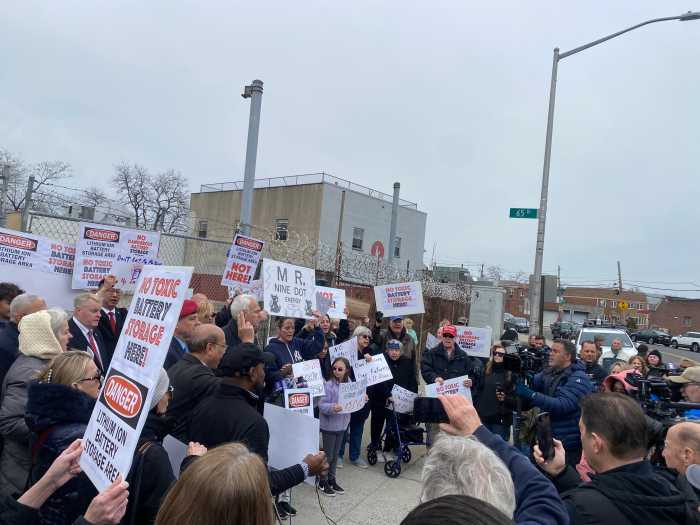
Lithium battery factory. The lithium-ion facility. A “mini-Chernobyl.” Just some of the names the Middle Village community has heard referring to the proposed Battery Energy Storage System (BESS), located on 69th Place.
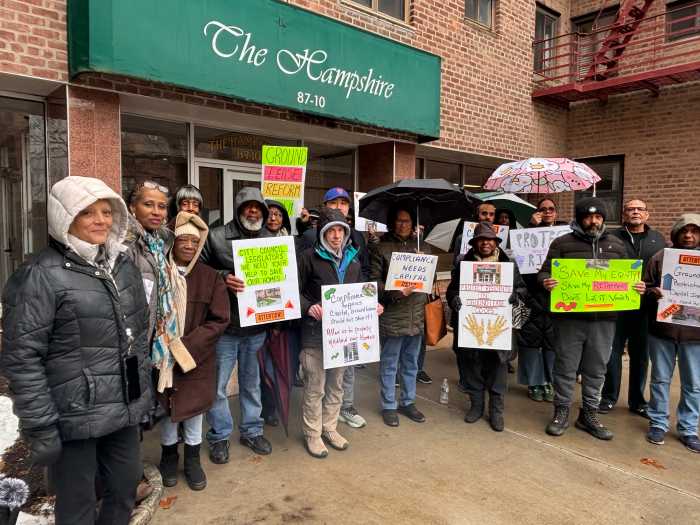
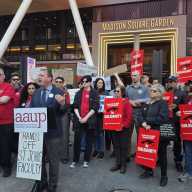
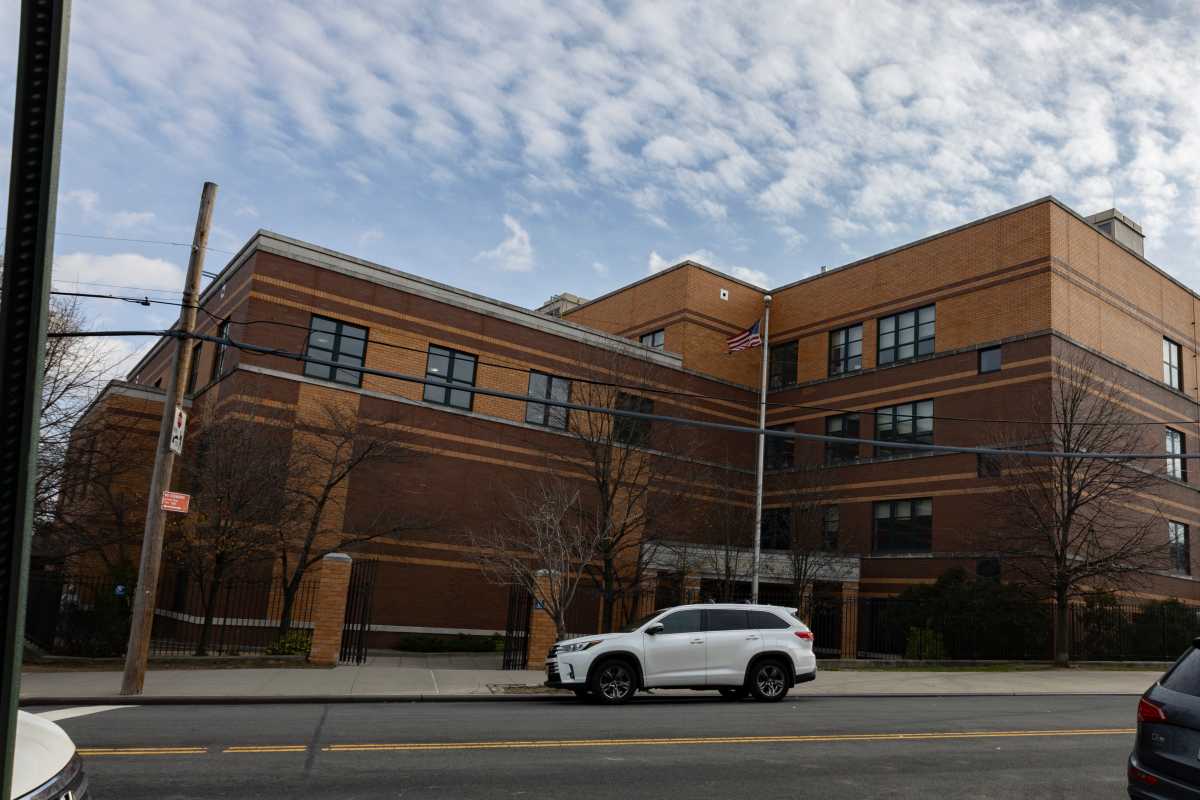
After two protests — with a third planned on Feb. 26 — and one proposed State bill attempting to supersede City zoning regulation, many Queens residents have rallied against just one of these facilities due to its placement across the street from PS/IS 128 and nearby residences for fears of safety and health effects from hazardous chemicals, fires and noise pollution.
A band of civic leaders and elected officials have signed a joint statement in opposition to the project. The co-signers include local City Council Member Phil Wong, along with City Council Speaker Julie Menin, U.S. Rep. Grace Meng, Queens Borough President Donovan Richards, state Sen. Joseph Addabbo, Assemblymember Andrew Hevesi, United Federation of Teachers President Michael Mulgrew, Juniper Park Civic Association President Anthony Nunziato and Middle Village Chamber of Commerce President Salvatore Crifasi.
The joint statement, which stresses the purported risks of having the BESS system at the Middle Village site, is as follows:
“Battery energy storage will play a role in strengthening our electric grid, but the proposed location at 69 Place is simply the wrong fit given its immediate proximity to PS/IS 128, a daycare center, a children’s fun house, an animal hospital, residential homes, and even a District 24 Teachers Center. We are united with the community in opposing this site and support a constructive counterproposal that would relocate the project to a more appropriate industrial area. The goal is to balance the need for reliable energy infrastructure with the responsibility to protect residential neighborhoods and community institutions. There is a clear path forward that allows this project to advance in a more suitable industrial location without compromising the safety and character of the surrounding community.”
Despite the stated concerns, numerous questions about BESS remain. How safe is it? Where are these systems being placed in other communities? And is the risk really comparable to the worst nuclear energy disaster in human history?
QNS decided to take a closer look at BESS, the rhetoric used in opposition to them, and spoke with experts seeking to have many of the community’s questions answered and concerns addressed.
Bottle rockets vs. rocket ships
During his 2025 campaign for Mayor, Republican Curtis Sliwa called the proposed BESS a “mini-Chernobyl” and protested with then Council Member Bob Holden outside the site in early 2025 with chants of “Save our kids.”Addabbo also introduced a new bill that would require BESSs to be built outside of residential areas. In a press release, Addabbo cited the Moss Landing energy storage facility fire in California and several that occurred in Warwick, NY, for the community’s safety concerns. Videos shared on social media of burning e-bike batteries, also using lithium-ion technology, is another common comparison.

However, there are “key differences” between the batteries that burned in these incidents and those permitted for use in the City. Of the almost 7,500 BESS in the State, only three have caught fire for a .04% failure rate.
“It’s like comparing a bottle rocket to a spaceship,” said NineDot Energy VP of Strategic Development Sam Brill. “Yes, it’s the same chemistry, but the level of engineering and sophistication is so far beyond the basic chemistry of a lithium-ion battery that it’s not a fair comparison.”
To date, there has not been a fire or safety incident at any of the 30 BESSs already operating in the City, including one in Ozone Park just 20 feet from a middle school.
At the Moss Landing site, batteries were densely packed and in contact with each other on “open racks” and not monitored for thermal runaway or overheating, which caused the fire. The repurposed factory they were housed in contributed to the intensity of the blaze and amount of smoke, forcing the evacuation of 1,500 nearby residents.
Two days after the fire, the Environmental Protection Agency (EPA) monitored the air quality for both particulate matter and hydrogen fluoride gas and detected “no measurements exceeding the moderate air quality level” that violated California’s human health standards. Monterey County conducted soil and water testing in a 10-mile radius and detected no higher presence of copper, lithium, manganese or other heavy metals in the soil than found in typical residential screenings. Less than 10 of the soil samples detected one heavy metal: lead, which it is not a “key metal” in lithium-ion batteries and “not indicative of fire-related impacts,” as it was found beneath the surface of the soil.
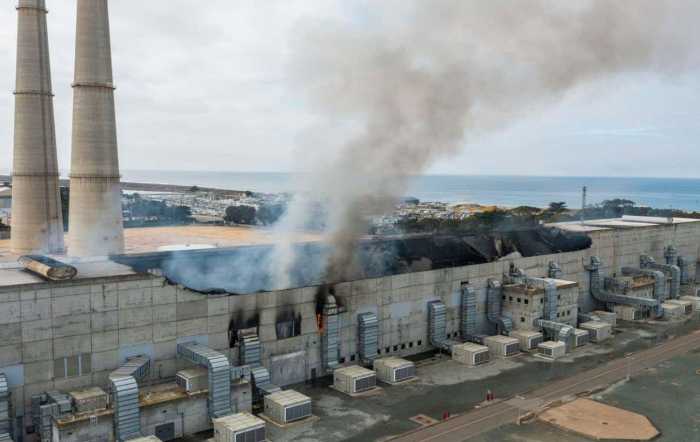
“[Moss Landing] was the absolute worst case, insane scenario for an energy storage system that never should have been built, never should have been operating and looks nothing like what’s built in New York City,” said Brill. “Even so, officials said there were not impacts that were hazardous to human health.”
The batteries used in the Moss Landing and Warwick facilities are not permitted for use within the City, which Brill called “decades-old technology.” According to City of Warwick officials, the December fire at Convergent Energy’s 28 Church St. facility was contained to a single cell and did not spread to other batteries. The engineer consultant hired by the city, LaBella, found 1.5 parts per million (ppm) of the toxic gas hydrogen cyanide in the air, which did not exceed any levels deemed hazardous.
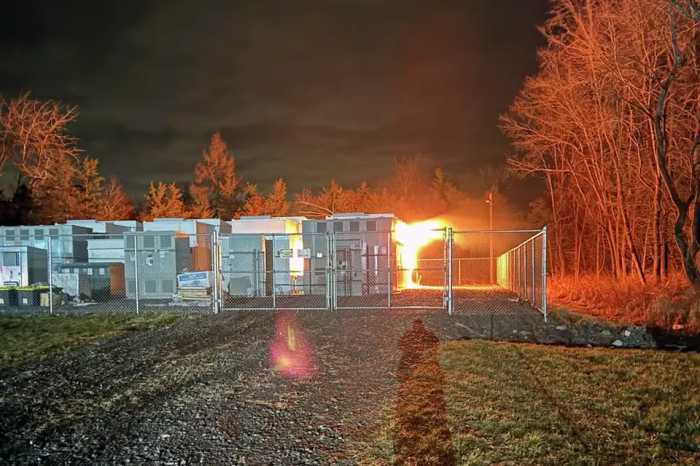
On Jan. 20, the facility’s landlord, Warwick BBA, sent a letter to Convergent Energy alleging violations of building code and permitting of local, county and/or state law.
An outdoor BESS, like the one being proposed by NineDot, has batteries sealed in water-proof, fire-proof and noise-dampening containers, as required by the FDNY. Energy storage facilities in the city utilize a system that automatically shuts off any cell that is overheating. What look like average shipping containers hold off-gassing systems, spark plugs, overhead water spray, 24-7 thermal cameras and layers of manual shutoffs.
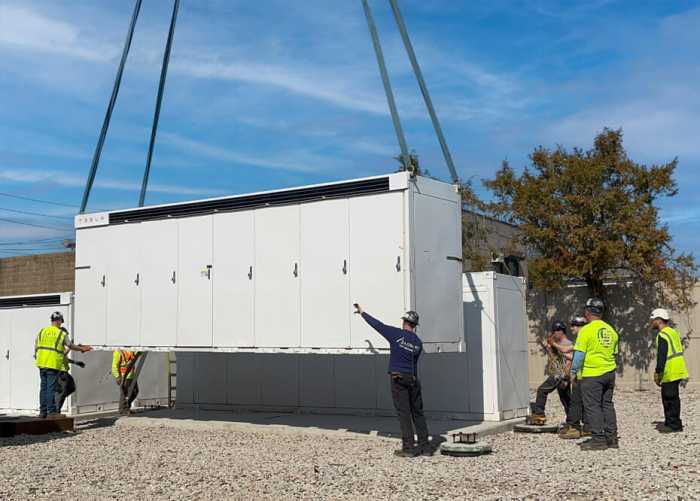
Additionally, all local firehouses are trained prior to the project becoming operational and do not require evacuation, as the containers are designed to withstand the fire and stop the spread.
Yet Addabbo believes the mere risk of a disaster at the proposed Middle Village BESS site is enough to cause a “significant” problem.
“Even in cases where air monitoring did not exceed federal thresholds, we’ve seen evacuations, public health advisories, and measurable toxic gas detection during fire events,” Addabbo said. “The disruption to communities, particularly when children are involved, is significant.”
‘A good neighbor?’
Addabbo’s bill would mandate all 3+ megawatt (MW) BESS’s in the City be placed at least 300 feet away from homes, schools and farms and include financial surety requirements, such as insurance or allocated emergency funds should a fire occur.
But according to the Natural Resources Defense Council (NRDC), Environmental Advocates NY, WeAct and a dozen other environmental advocacy groups, the 300-foot stipulation “would prevent nearly all BESS from being built in New York City,” by disqualifying over 90% of locations across the City and hindering the ability to build the required 4,000 facilities citywide.
“This bill overrides the expertise of local zoning and fire safety experts. At present, BESS siting is governed by local zoning, as well as either the NYS or NYC Fire Code. This bill would discard the years-long efforts of fire safety professionals and the policy decisions of local zoning authorities – in favor of arbitrary setback requirements,” as stated in an open letter of opposition filed earlier this week.
Addabbo believes, however, that the concerns are more than arbitrary.
“While battery energy storage plays a role in our state’s clean energy future and we are in need for more electrical power, public safety must always come first,” said Addabbo. “When a large-scale lithium facility is proposed directly across from a school, we must rethink the placement of these facilities and work towards placing them away from schools and residences.”
As debate over the Middle Village BESS site continues, one school in the Bronx was happy to have the new facility across the street, even designing a mural for the fence.

Shubert Jacobs, executive director of Bronx Charter Schools for Better Learning, located at 3740 Baychester Ave., is directly across the street from a NineDot BESS. Jacobs contacted NineDot after seeing the project in construction and developed an “unusual collaboration” between the company and the school. Since being built several years ago, NineDot’s team have attended enrichment programs, participated in community events and continually informs the school of operations on the site, according to Jacobs.
NineDot met with students to teach them about renewable energy and hydroponics and offered a full educational tour of the facility. Students are now in the process of designing a mosaic of the school’s emblem to join the mural on the fence.
“They brought something to the community and then they actually shared it in such a way that the school could actually benefit from it. Because it’s not just benefited us from the standpoint of just talking about clean energy. It benefited us from the standpoint of projects that kids did and parents were happy to come out to actually be a part of the mural,” Jacobs said.
Jacobs was surprised to hear about the community and legislative backlash towards the facility, and stated that no member of the 700 families whose children attend either the elementary or middle school expressed concerns about fires or safety to him directly.
Middle Village Residents Association President Paul Pogozelski, who organized the latest protest, cited the same concerns parents brought to Addabbo, Wong and other elected officials.
Pogozelski is also concerned about noise pollution from the BESS sites, saying that he noticed a distinct humming sound coming from the BESS located on Rust Street in Maspeth. He told QNS that he met Brill from NineDot last year on the sidewalk at another protest and requested a public meeting, which he said would be more beneficial for transparency. He declined a request for a full private meeting.
“Why not put together a [public] meeting where you’re willing to make sure that there’s assurances in place by a civic leader or whoever to actually get this point across and get it to a broader base of people,” Pogozelski said. “There’s a way to have these meetings where it doesn’t have to be a confrontational back and forth. They could do a better job… being more transparent, meeting with the public.”
A NineDot representative stated that a public meeting would not be “productive,” and continued to reach out for one-on-one sessions. Brill has since met several parents from PS/IS 128 virtually and knocked on doors of the nearby houses, but both the school principal and the Middle Village Parent Teacher Association have yet to make contact. However, a representative stated that they respond to every message via the website contact form and more information can be found on its FAQ page.
Wong and the other local representatives are still working to find a new location for the BESS. Despite fears of noise pollution and hazardous materials in Middle Village, Shubert said there haven’t been any complaints from parents or much activity from over the fence, and stated that there is no persistent sound or noisy operations that interrupt life during the routine maintenance trips. The Bronx is traditionally underserved in energy needs and has the highest rates of childhood asthma and other respiratory illnesses due to pollution, which Jacobs said was a factor in welcoming the BESS, but it was mainly due to the direct communication with NineDot.
“We have found this to be such a great partnership; aligned around science, community and care for the environment,” Jacobs said. “They are about working with kids, working with the school, engaging us in what they are actually doing. So I really cannot think of a better neighbor to have. If you’re going to have a good neighbor and a company that collaborates with you, I think NineDot would be among the top.”
Con Edison doing its ‘BESSt’
New York’s grid has seen better days. According to Brill, the facility of the size proposed would alleviate the threat of blackouts in a 10-block radius around it. Con Edison has proposed an alternative to BESS’s throughout the city: a brand new distribution substation and replacing miles of underground cables with higher-voltage versions.
That multi-billion-dollar project would be subsidized by rate-payers.
“It is a dramatically more cost-efficient way to build out that infrastructure. We’ve calculated that on a per megawatt basis, it is about 2.5x more cost-efficient to do an energy storage project than the traditional grid infrastructure that Con Edison builds,” Brill argued, noting NineDot’s projects are privately funded. “That should lead to people’s rates going down, because instead of this really expensive infrastructure, we can build more energy storage and it won’t cost rate payers anything.”
Con Edison, New York’s largest private grid operator, stated, “Battery storage is an essential part of our clean-energy future.” New York State’s Climate Act mandates that 6,000 MW of battery energy storage be built by 2030, and 2/3’s will need to be built in the City. The Middle Village BESS has a 4 MW capacity, and the state is already 1,000 MW behind its latest benchmark.
Queens residents experience more blackouts and brownouts than any other borough, increasing in frequency during winter, and one that left over 1,000 people without power for days and unable to cool their homes in the 2025 summer heat wave. At night, the batteries get charged and during the day, during peak hours of electricity use, the energy is released back onto the grid to alleviate the load. The extra energy stored in the BESS is only deployed at Con Edison’s request, but it keeps the power on during peak demand.
Without BESS’s, energy drawn from renewables can be wasted and cannot be deployed intentionally during peak hours. Currently, the city utilizes fossil fuel-powered “peaker plants” during peak hour overload. Every single peaker plant is required by law to cease operation by 2030, leaving a high risk of an energy deficit during peak hours.
“Why aren’t we hearing more people be concerned about a combustible fuel sitting in the middle of our city, but they’re worried about small battery storage facilities that can help facilitate solar energy development?” asked Kim Frakzek, director of the non-profit The Sane Energy Project.
Despite the protests and controversy, a representative of NineDot stated, “We are working with those elected officials to get to an outcome where there is clean, reliable, affordable, safe energy in Middle Village.”