
St. John’s University hosted its third annual Martin Luther King Jr. Legacy Dinner at the college’s D’Angelo Center, celebrating the life and legacy of the civil rights leader and delving deeper into his message of peace and justice.
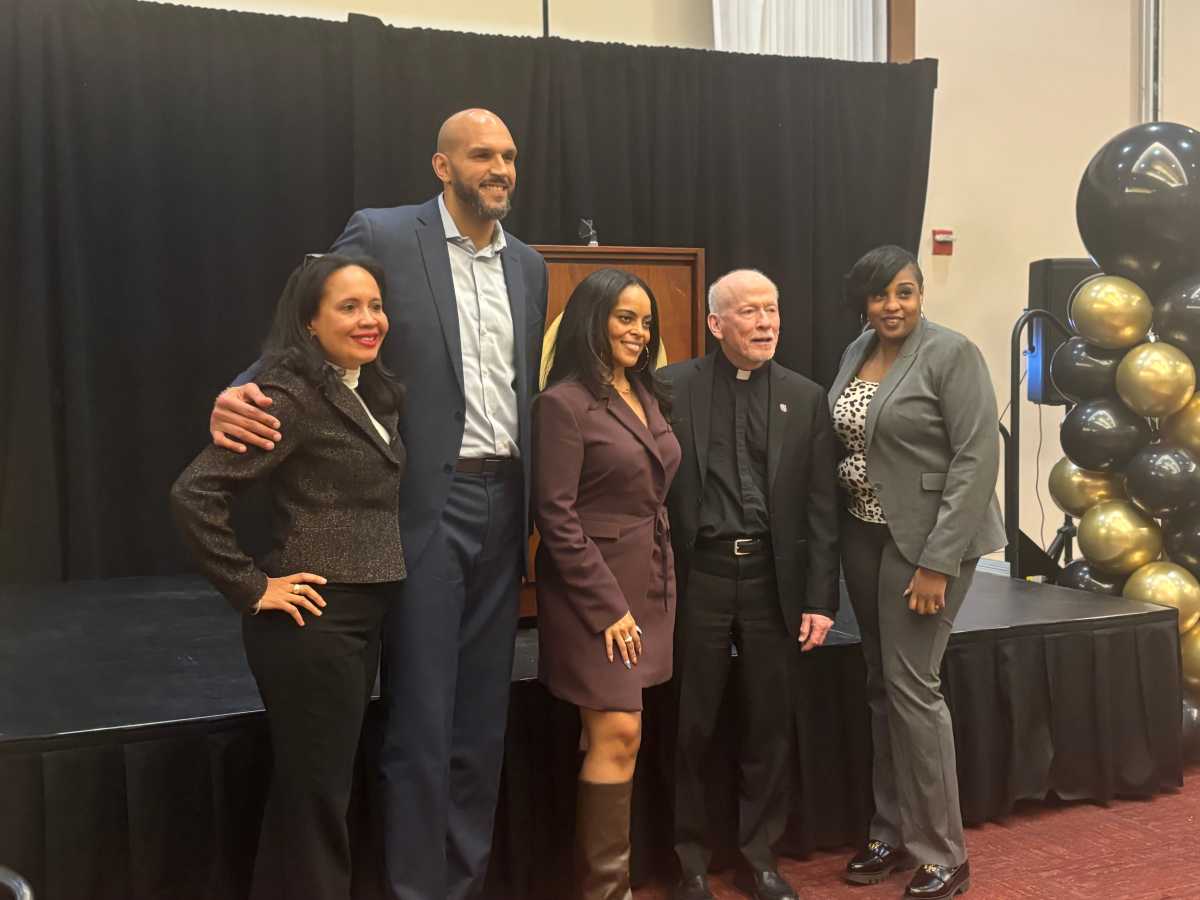
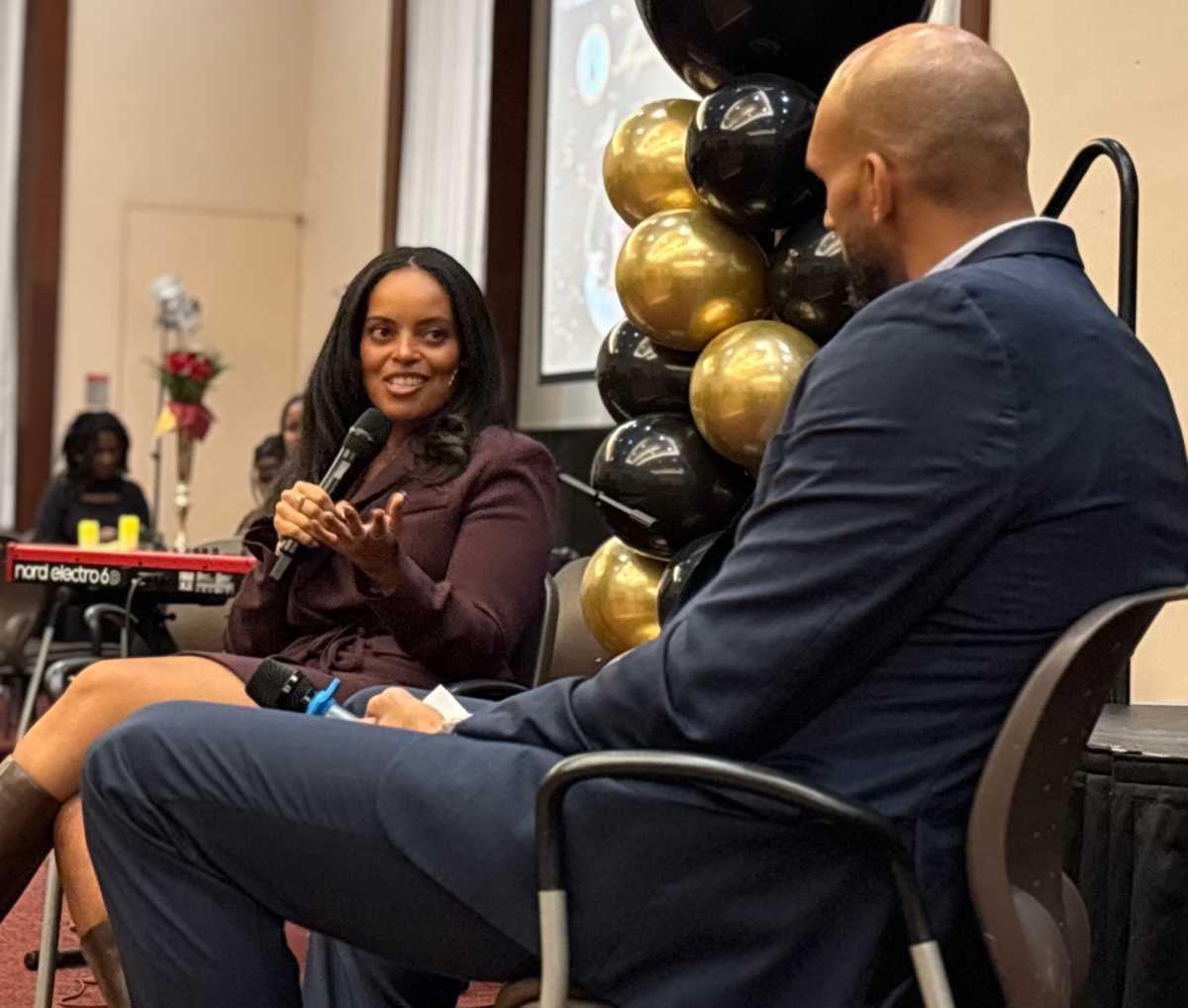
The evening event, coordinated by St. John’s Office of Equity and Inclusion, featured two keynote speakers: former NBA player Jeff Aubry, who is now executive director of the Next Gen Basketball Players Union, and former NBA executive Alexys Feaster, who produced Hoops, Hopes & Dreams for Hulu last year.
“He chose this path, knowing how dangerous it was and what he would have to sacrifice,” Aubry said of King. “His courage still stands out to me in ways I can’t even really describe.”
Over 100 attendees gathered at the campus in Jamaica at 5 p.m. as Lové Johnson, assistant director of Social Justice Training and Education at St. John’s, delivered opening remarks.
Johnson emphasized the importance of community and the actions of local movements as critical components to the continuation of King’s legacy, thanking those on the campus who contribute to civil rights causes at St. John’s and beyond.
“Reimagining the dream requires us to listen deeply, act courageously and recognize that our local efforts are inseparable from global movements for freedom and human rights,” Johnson said. “As we move through this evening — through art, dialogue and fellowship — may we be reminded that the dream is not simply a moment in history, but a living commitment that challenges us to ask not only what Dr. King dreamed, but how we will carry that dream forward together.”
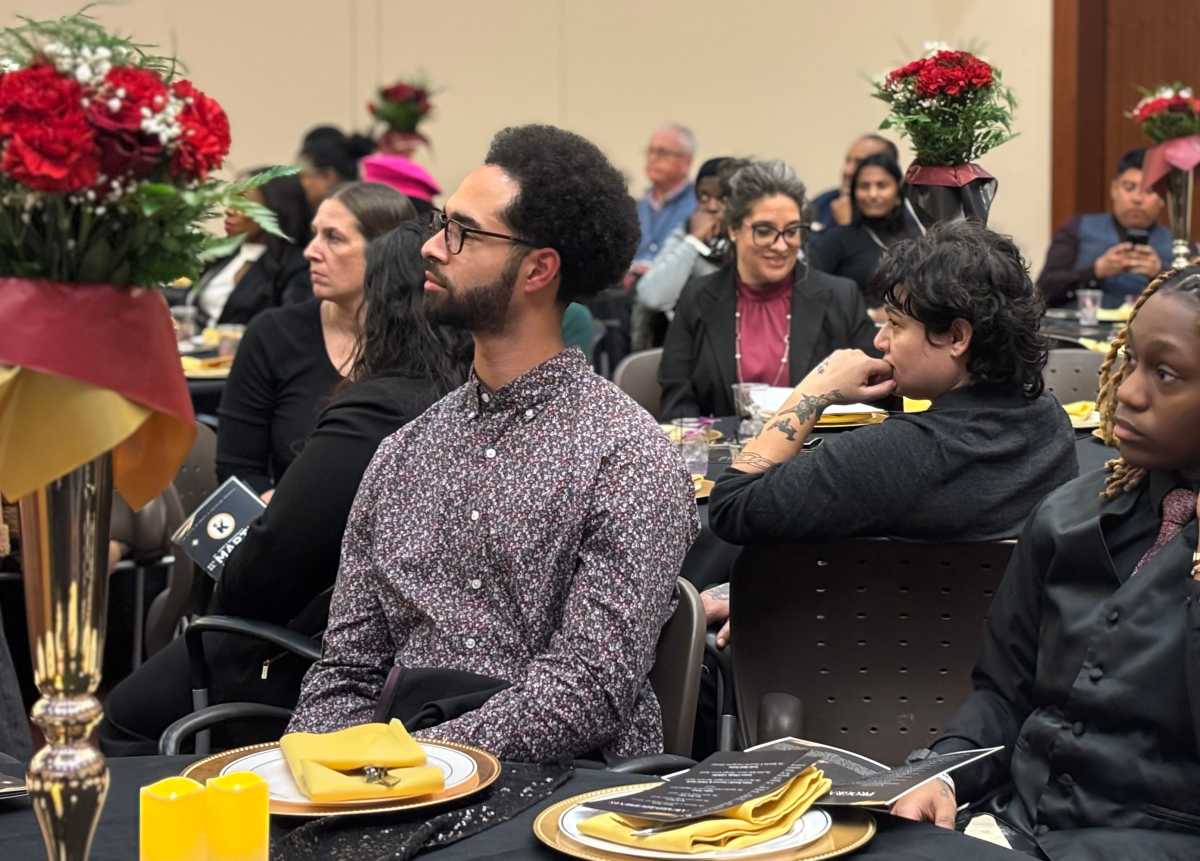
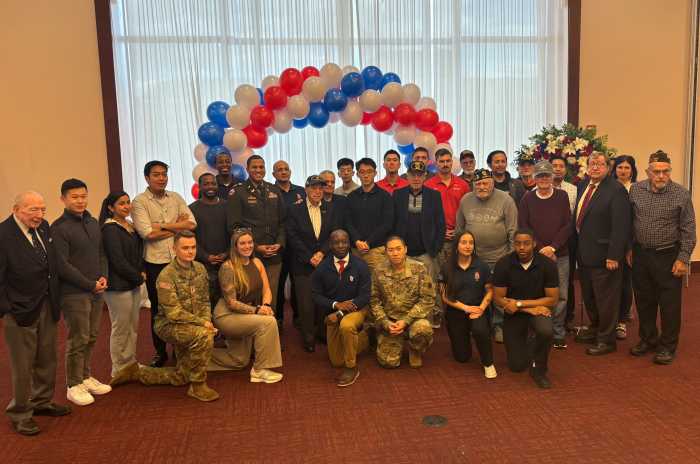
St. John’s also presented awards to eight honorees for their civil rights advocacy and service to the school and the surrounding community. Professional honorees included Kevin Reed, Noa Ben-Asher, Amber Wilson and Ermira Uldedaj, and student honorees included Valent Benedict Guevarra, Nikolai Sotelo, Marcus Hardy and Sydeda Hijab Fatima.
Fr. Hugo Medellin, chaplain of the college, delivered an invocation at the beginning of the program, drawing parallels between the word of God and the ideals preached by King. He encouraged attendees to be inspired by peaceful efforts and defiance of injustice.
While many use their differences as a way of viewing themselves as better than others, he said God reveals through Paul the Apostle that followers should instead cast away pride and practice humility.
“We stand here in [God’s] presence, aware of the deep divisions in our lives,” Medellin said. “Today, we remember His message of peace, love and solidarity.”
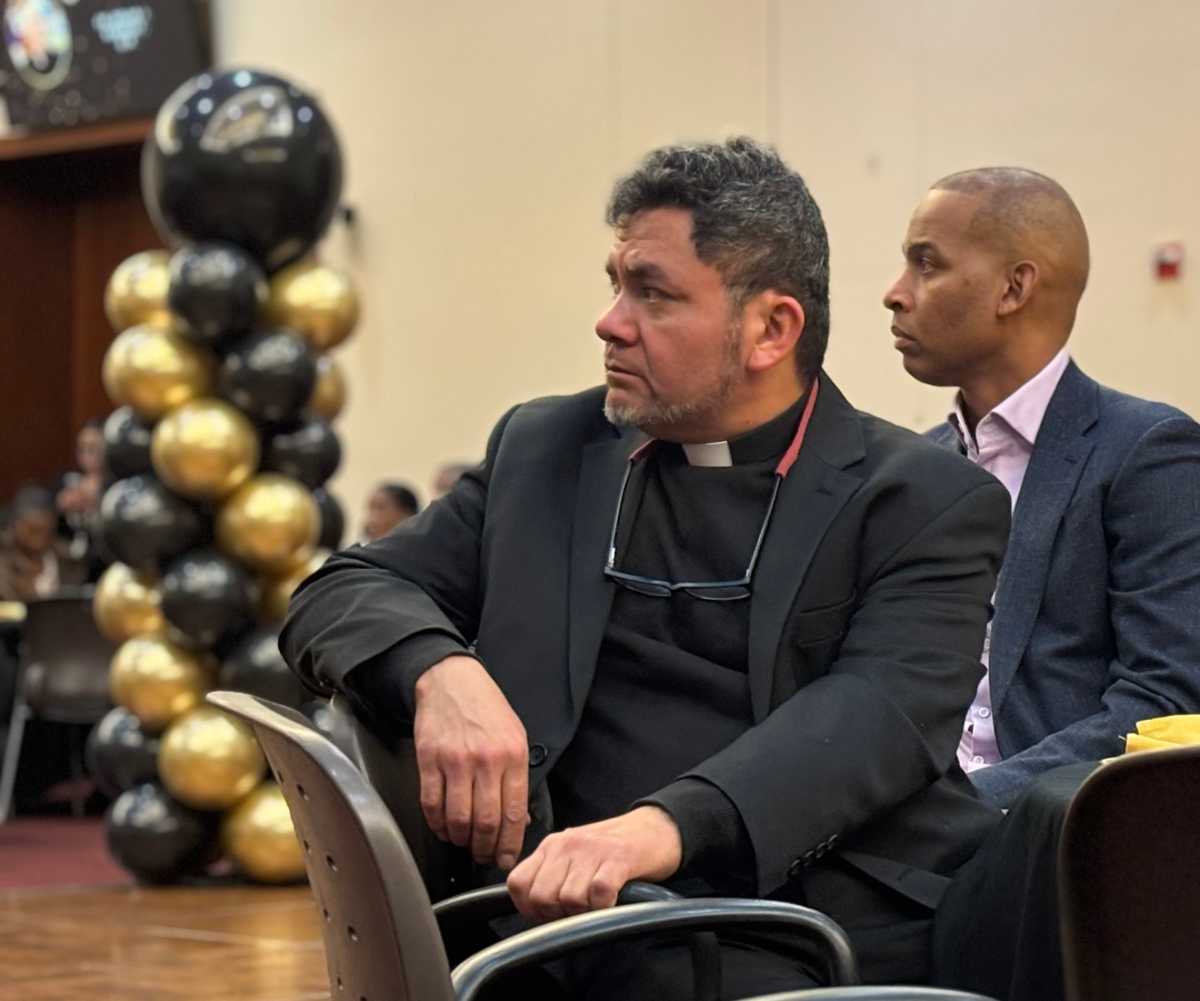
Rev. Brian Shanley said something he does each year to honor King’s memory is reread King’s Letter from Birmingham Jail, which he finds to be his most interesting and philosophical piece.
King was jailed in 1963 for leading a nonviolent protest, the Birmingham Campaign, in Alabama after an ordinance was issued banning public gatherings without a permit. While the right to assemble and express views in protest is protected by the First Amendment, Birmingham’s public safety commissioner, Eugene “Bull” Connor refused to grant King permits on multiple occasions.
Bull was known for violent policing tactics — fire hoses and police dogs — to attack protesters, including children.
During King’s time in jail, eight prominent white Alabama clergymen penned a criticism of the civil rights leader and his methods of protest. They claimed King should leave his fight against segregation in the courts rather than on the streets.
King, then in solitary confinement, began writing on scraps of paper until his lawyers could smuggle him a pad to write on.
Shanley pointed to one criticism of King in which the clergymen asked how he could justify breaking some laws and obeying others. He said according to King, the answer lies in the fact that there are two types of laws — just and unjust.
King said not only do people have a legal responsibility to follow just laws, Shanley continued, but a moral responsibility, as well. Conversely, he said people have just as much of a responsibility to disobey unjust laws.
“I would agree with St. Augustine that an unjust law is no law at all,” Shanley said. “The clarity, courage and the conscience to stand up for what is right in the face of those saying the same things they said to King… [King] has left us with one of the most important things we can reflect on in the time we are here.”
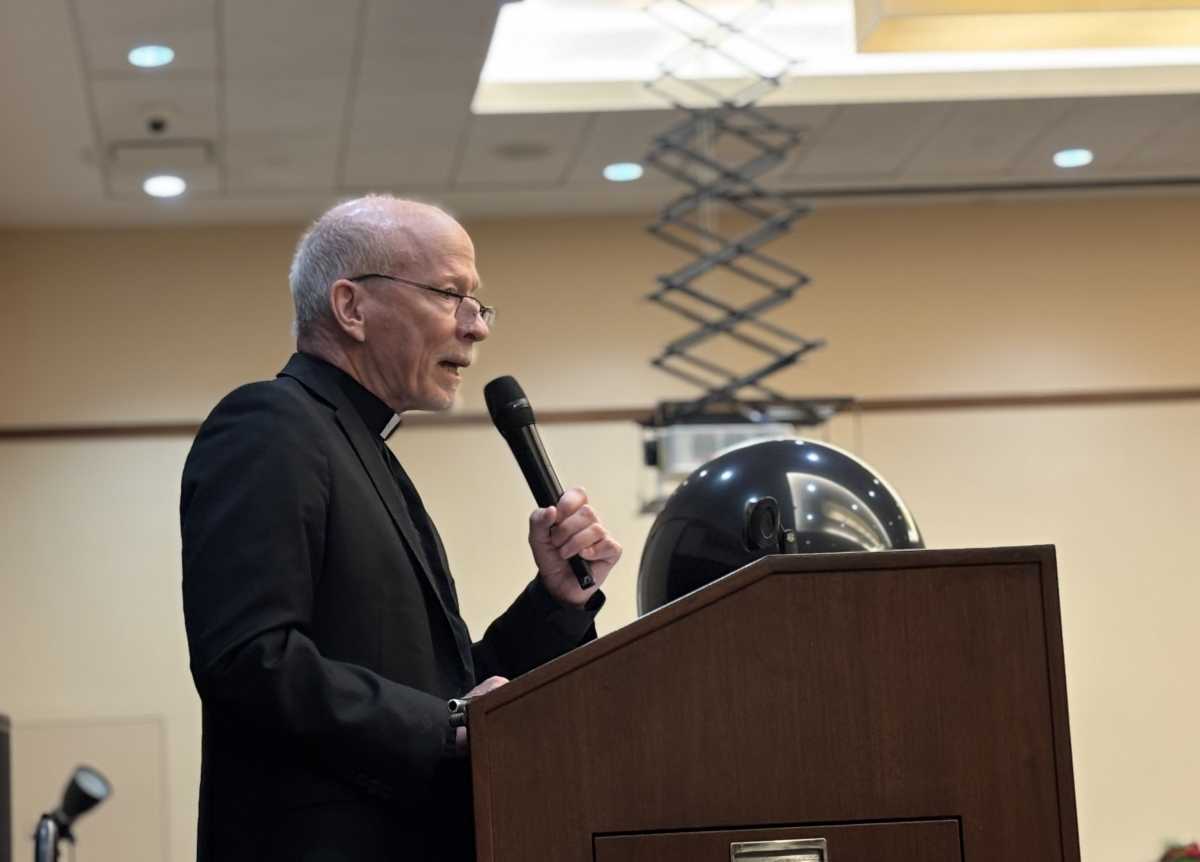
Jeff Aubry pointed out that many of King’s teachings and ideals were deeply unpopular during the time he was alive, and many of his lessons of racial justice have since been whitewashed and embraced by modern American culture, often depicting him as a “safe” figure in the eyes of the American people.
However, Aubry emphasized King’s approach to economic justice as a major component of his activism in the year leading up to his assassination. One of King’s last protest efforts was marching with sanitation workers on strike in Memphis.
“As a labor leader myself, I think about his last effort,” Aubrey said. “The labor movement as a whole is responsible for the strength of the middle class and American prosperity. It was the last thing Dr. King did, and his approach to economics is potentially what got him killed because it was so revolutionary.”
Aubry said King’s advocacy, despite knowing he was angering his allies in the U.S. and President Lyndon B. Johnson, speaks to the sacrifices the civil rights leader made to keep fighting for what he believed in.
While many would take opportunities to escape the criticism and pressures King endured, Aubry continued, King kept standing up for oppressed communities.
“He had the opportunity to get out of it,” Aubry said. “But that would have meant abandoning the causes he had already championed — the things he had pushed down the road that he thought would lift this veil of oppression from the American people. But he stayed on that road, and I think that’s incredible.”
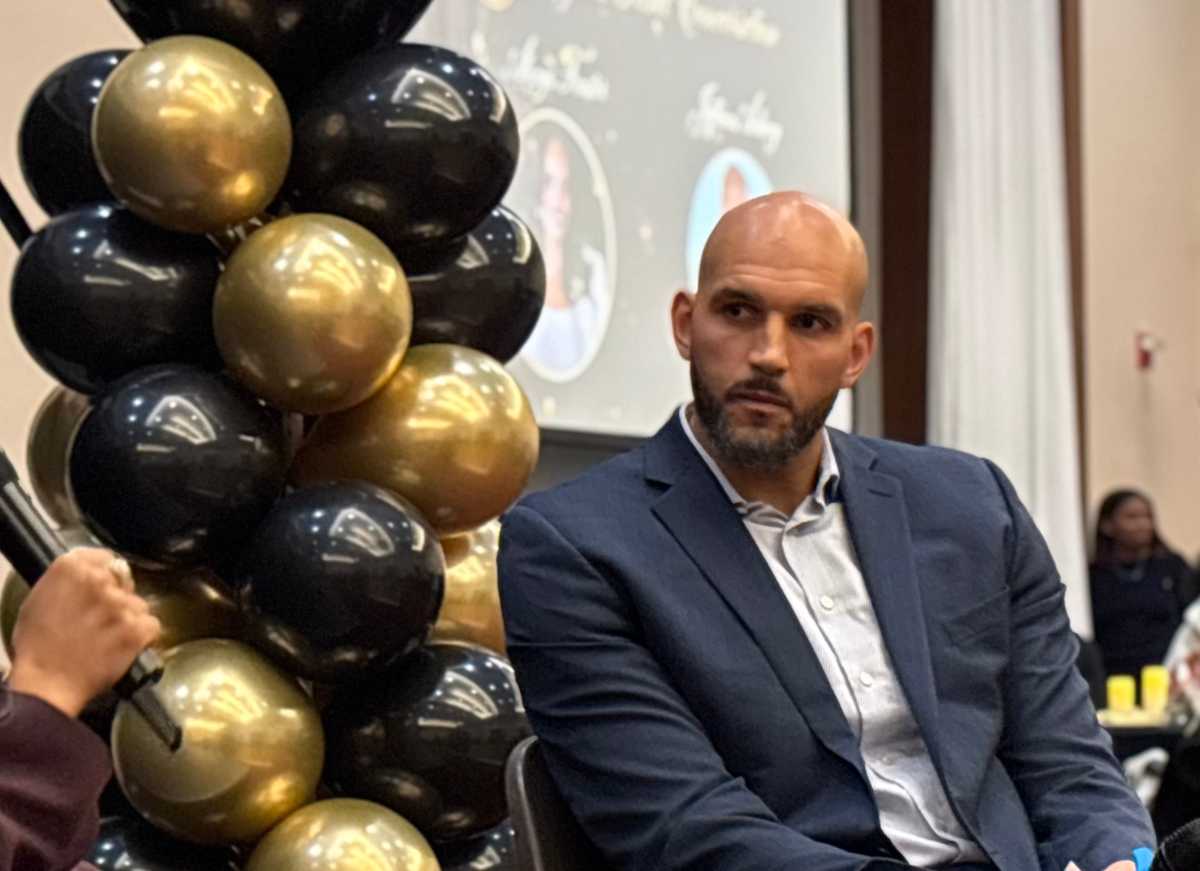
According to Alexys Feaster, maintaining hope for the future of civil rights is a discipline. “We have to stay motivated and encouraged, and we have to have hope for a better nation,” she said.
Feaster reflected on the risks King took to lead social change — something she said she’d like to see more from those who are part of the movement.
“I think we’re in a culture of following,” Feaster said. “People want to see somebody else step out first before they lead the charge, or people want to see if there’s societal outrage before they stick their neck out. That’s something Dr. King did without needing someone to lead him.”
In particular, Feaster called on athletes and other entertainment figures to use their platforms and speak on issues that are important to them.
Feaster then recounted a moment in which Bernice King — King’s daughter and executive producer for Hoops, Hopes & Dreams — told her that King wasn’t special. Rather, Bernice said King was an ordinary man who had big dreams for himself and the community.
“To hear Bernice King say that Dr. King was just an ordinary man — I mean, isn’t that who we are?” Feaster asked. “We’re just ordinary people that have an opportunity to make a bigger impact.”