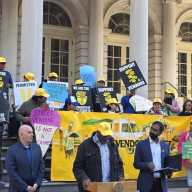

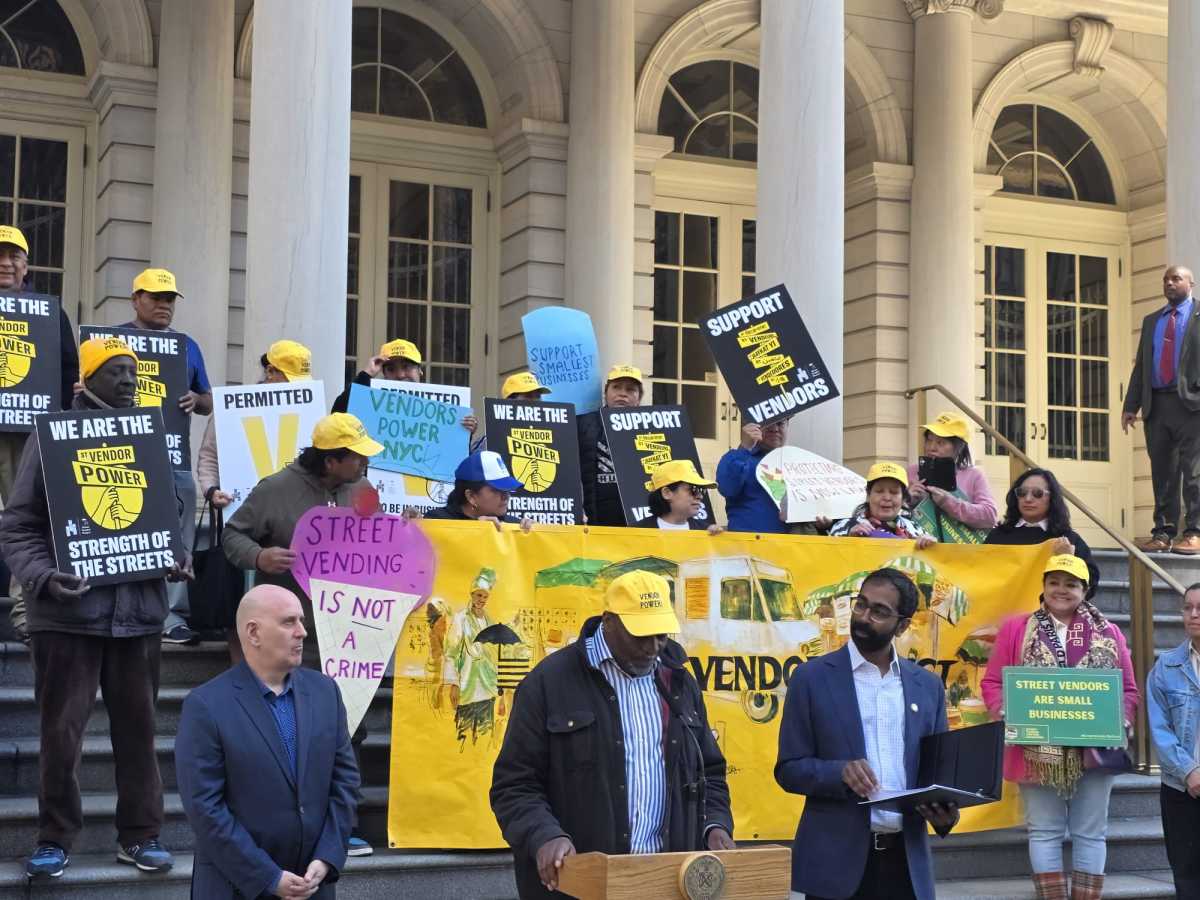
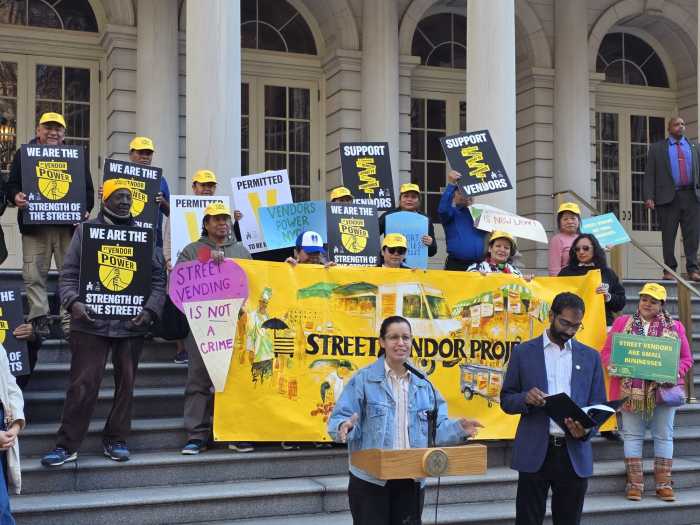
Council Member Shekar Krishnan joined street vendors and City Council colleagues on the steps of City Hall Monday afternoon to celebrate the enactment of a new law reducing criminal liability for street vendors, the first bill enacted as part of the Street Vendor Reform Package.
Local Law 122, sponsored by Krishnan as Intro 47B last year, came into effect on Monday, March 9, after the City Council overrode a veto from Mayor Eric Adams last September .
Krishnan joined Council Speaker Julie Menin, Council Members Tiffany Cabán and Harvey Epstein, and representatives from Street Vendor Project and the New York Immigration Coalition to celebrate the law, which advocates say will be “transformative” for New York’s vending community.
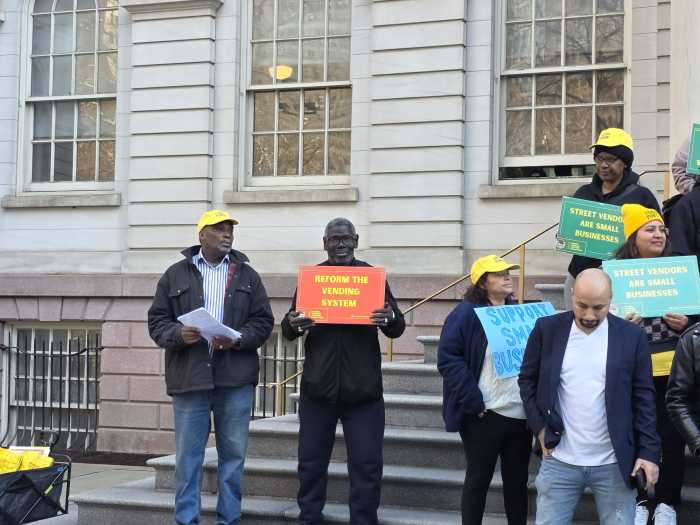
The law ensures that vendors will not face jail time for vending violations, with licensed vendors receiving a civil penalty for all future violations. Unlicensed vendors can still receive criminal penalties, but the law prevents judges from issuing criminal misdemeanors. A separate bill in the Street Vendor Reform Package will increase the number of vending licenses to help reduce the number of unlicensed vendors in the city.
Advocates say Local Law 122 will have a massive impact on New York City vendors, the majority of whom are immigrants and often face visa complications because of criminal penalties issued for violations.
Krishnan, meanwhile, described the enactment of the new law as a “historic day” that is “long overdue” and ensures that vendors will be treated with dignity and respect.
“Nobody should face jail time simply for selling food to support their family, “Krishnan said.
He added that the law would be “transformative” for immigrant vendors who find themselves in a “very precarious environment” amid federal immigration raids.
“I don’t think it could have come at a more critical moment that we have these protections in place,” Krishnan told QNS. “The criminal and immigration systems are so intertwined, one affects the other. We need to stop that flow before it goes any further.”
Street Vendor Project, part of the Urban Justice Center advocating for street vendors across the city, said the law was particularly important because criminal penalties and charges put immigrant vendors at increased risk of ICE arrests, resulting in detention and deportation.
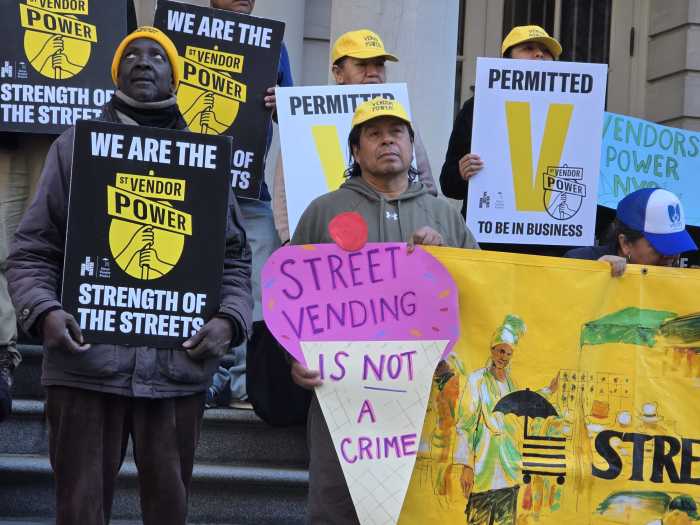
The group said the NYPD had issued 3,662 vending-related criminal summonses in 2025 alone, with the vast majority going to vendors of color.
A spokesperson for Street Vendor Project said the rate of criminal summonses had not slowed even after the Council overrode Adams’ veto.
Krishnan said the City Council will communicate with the NYPD and other city agencies to ensure officers comply with the law.
“It is the law of New York City as of right now, and we have full expectations that the agencies will comply with them,” Krishnan said. “Otherwise, they will be held accountable.”
Menin, who previously served as a commissioner of the Department of Consumer and Worker Protection during the de Blasio administration, said Monday was a “true celebration” after the enactment of Local Law 122. She said the law would treat vendors like any other small business in the city and ensure that they are not targeted by federal immigration authorities.
“Reducing criminal liability for street vendors is the first step to fixing the system,” Menin said.
She added that the law would help protect immigrant vendors from the “dire consequences” of criminal summonses.
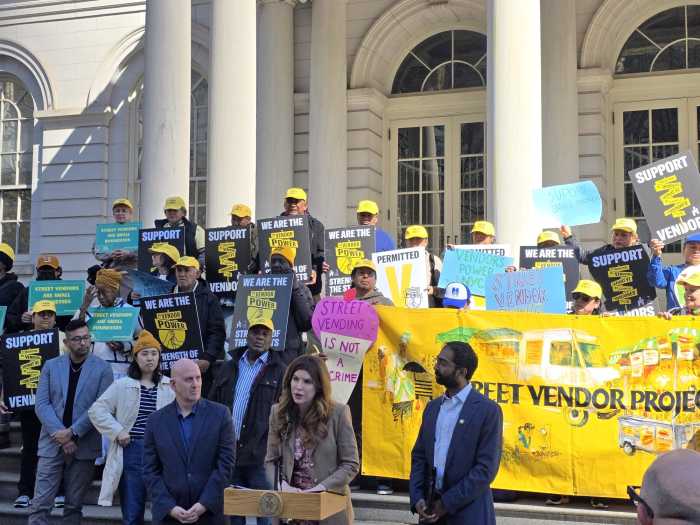
Several street vendors welcomed the new law, stating that it would uplift vendors who had been “living in the shadows” out of fear of criminal liability and immigration status.
Calvin Baker, who has been selling a variety of clothes at a stall in Harlem since he was 15, said the city’s “broken licensing system” had left many vendors unable to obtain a permit and vulnerable to misdemeanor criminal charges.
“The impact of this legislation on those with immigration status cannot be overstated,” Baker said. “Previously, a vendor could receive a misdemeanor for minor infractions like being too close to a crosswalk. Intro 47 removes these criminal penalties and ensures that a simple business violation doesn’t lead to a lifelong criminal record.”
Baker further added that misdemeanor convictions can become a “roadblock” to obtaining green cards and citizenship.
“By shifting these offenses to civil violations, the law removes a major threat of deportation and family separation,” he said. “No longer will a vendor face the threat of 90 days in jail for selling flowers or food. This keeps parents at home with their children and neighbors in their community.”
Mahmoud Zaed, a food vendor in Midtown Manhattan, said he previously received criminal penalties for violations such as failing to display his license and operating too close to a crosswalk.
“The way I was treated was bad. I didn’t deserve to be treated this way,” Zaed said.
Zaed, however, said he was pleased that future generations of vendors would not have to face similar punitive measures as a result of Local Law 122.
“I don’t want future generations of vendors to experience what I experienced in the past.”
Cabán, meanwhile, said criminal summonses are “destabilizing” for vendors because they require multiple court appearances, which reduces their ability to make an income.
“Every single day you are sitting in court, you are losing the ability to take care of your family,” Cabán said. “You are putting your housing at risk. You are putting the ability to access healthcare at risk. You are putting the ability to take care of your children at risk.
“When immigrants are exponentially under attack, this is the least we could do.”
Cabán further described the law as the “floor” of what the City Council can do to support street vendors throughout the city.
The law is the first of several City Council bills known as the Street Vendor Reform Package to be enacted. The Council overrode Adams’ vetoes of other bills in the package last December, including a measure that would provide an additional 2,100 food vendor licenses each year through 2031, creating an additional 10,500 licenses.
Other bills in the package aim to combat administrative delays in the licensing process and call for the creation of a Division of Street Vendor Assistance within the Department of Small Business Services.