


As the height of the flu season approaches this weekend, health experts are recommending residents take extra special precautions as cases are expected to soar. Reports show that this year’s outbreak, while not a super flu, has the highest number of recorded cases in the past 30 years.
While both New York City and the state are among the highest hit regions this season, the most recent data from the New York State Health Connector shows that during the week of Christmas alone, over 9,000 flu cases were reported in Queens — higher than all other boroughs.
The data shows the number of hospitalizations in Queens was significantly higher during the beginning of the season, reaching its peak the week of Dec. 20. There were 341 hospitalizations in Queens that week, compared to 160 in 2024-25 and 261 in 2023-24.
While hospitalizations dropped significantly the first week of January — 154 hospitalizations total — and is far below the previous two years’ numbers — 254 hospitalizations in 2024-25 and 202 hospitalizations in 2023-24 — experts are expecting numbers to go back up in the following weeks.
Why are flu cases surging this year?
This year’s particularly severe flu outbreak is attributed to low vaccination efficacy after researchers inaccurately predicted this year’s influenza strain.
Shi-Wen Lee, the chairman of emergency medicine at Jamaica Hospital Medical Center, said the strain identified in patients that tested positive for the flu, H3N2, is not the same strain predicted by health experts when formulating the vaccine ahead of this year’s outbreak.
Lee said while flu vaccines are generally 60-65% effective against the flu, this year’s vaccine is around 30-40% effective.
Maja Castillo, medical director of Healthfirst, still stressed that individuals should still get vaccinated. She said just because the vaccine is less effective than prior years, getting vaccinated helps confer some immunity and reduce the severity of the illness’ symptoms.
Both Lee and Castillo noted that flu cases always surge during the holidays because people generally get together and transmit the illness through close proximity.
“The spike really started after Thanksgiving,” Castillo explained. “A lot of people were traveling. Whether you’re on a train, plane or at parties where you’re inside with a lot of people in a small space, there’s going to be more transmission.”
While she said she can’t say for certain why Queens was hit hardest, she noted that there is a high density of residents in the borough that often uses public transit to commute to work. “The trains are packed in the morning,” she pointed out.
Castillo herself lives in Jackson Heights and commutes to the Healthfirst office in Manhattan. She said the first thing she does when she arrives at her office is wash her hands.
Why are people hospitalized for the flu?

Populations hit hardest by the flu tend to be seniors and small children, but Lee said the flu is hitting children ages 0-4 hardest this year.
Lee, who has worked at the Jamaica hospital for over 25 years, said while many of the classic flu symptoms are present in cases he treats in the emergency room — fever, chills, headache, cough, sore throat, runny nose, body aches, fatigue, weakness, etc. — young children are experiencing much more nausea, vomiting and diarrhea this year.
However, Lee said when symptoms increase in severity — such as trouble breathing, chest pain, and severe dehydration from vomiting and sweating — and a fever that lasts longer than a week without improvement, patients should get evaluated at the hospital.
He also noted that patients that are pregnant, young, elderly or experience chronic health conditions are at a higher risk of complications from the flu. If someone is diabetic, for example, their glucose levels might rise as a result of the illness.
In the first 13 days of the year, Lee continued, the hospital has seen 131 flu cases — 26 of which were admitted to the emergency room.
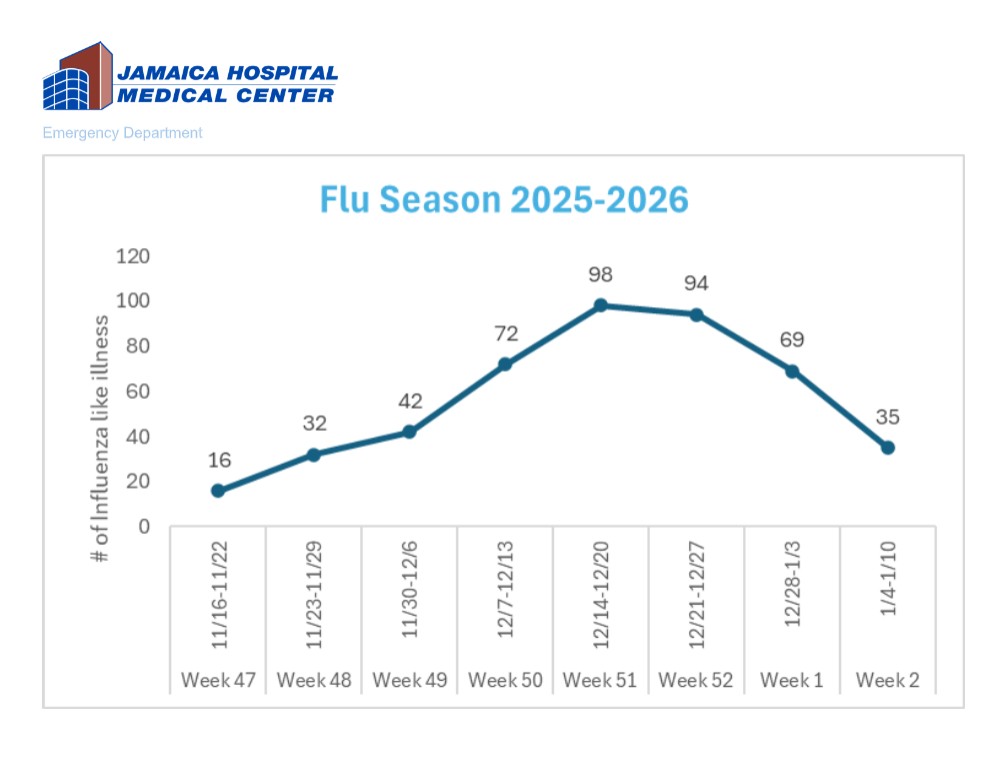
While these numbers are somewhat consistent with previous years, he noted that there was a marked increase in hospitalizations during the uptick in cases toward the end of December. “From now until March, the ED will see a tremendous volume of flu and flu-related illnesses,” Lee noted.
Lee said during the patients’ stay at the hospital, nurses will help manage their fevers, treat dehydration through IV’s, monitor their oxygen levels and ensure the illness does not progress into pneumonia.
However, he said one of the main obstacles with treating flu cases in the emergency room is that the illness is highly contagious and requires isolation, meaning rooms that have two beds can only be used for one patient at a time. Nurses have to wear additional protective gear when treating patients with the flu, also putting hospital staff at risk of contracting the illness.
What should you do to stay healthy this flu season?
Regardless of these complications, Lee assured the Jamaica hospital was fully capable of treating patients and encouraged anyone experiencing symptoms that are concerning to come to the hospital for an evaluation.
“If you have symptoms — rest, stay hydrated, avoid going out, wear masks and check your temperature,” Lee emphasized.
Castillo said it’s important to encourage people to think about others when out in public during this intense flu outbreak. She reiterated that if an individual feels sick, they should either wear a mask or stay home.
For those on public transit, she encouraged commuters to wash their hands with soap and water after getting off the bus or train.
For more information about this year’s flu cases and tips on what to do if you’re feeling sick, visit NYC.gov/DOH.