March 28, 2017 By Hannah Wulkan
The Parks Department shared its working plans for the first phase of the $30 million renovation to Astoria Park Monday, detailing how it will bring a new track and soccer field to the area by the fall of 2019.
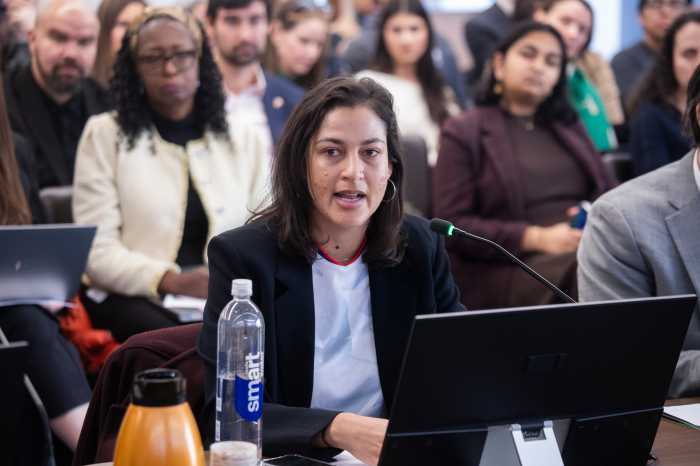
The landscape architect working on the project, Nancy Owens, along with various other Parks team members, shared detailed plans for the first phase of the park revamp with the Community Board 1 Parks Committee Monday night.
Following the presentation, the Committee unanimously voted to send a letter supporting the Phase One plan to the Public Design Commission.
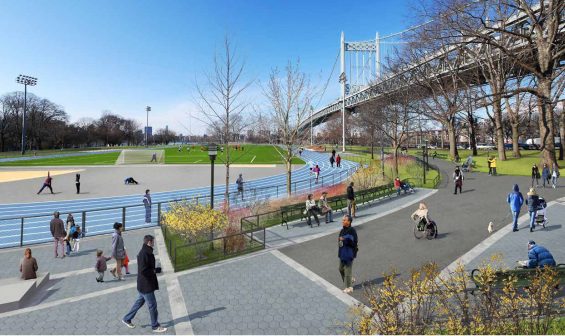
Throughout the first phase of the project, the park will see a total revamp of the southernmost section of the park below the RFK Bridge. It will include a new 8-lane blue running track with a high school regulation size turf soccer field in the middle, added seating, new adult fitness equipment and plantings, as well as work on erosion control and the drainage system.
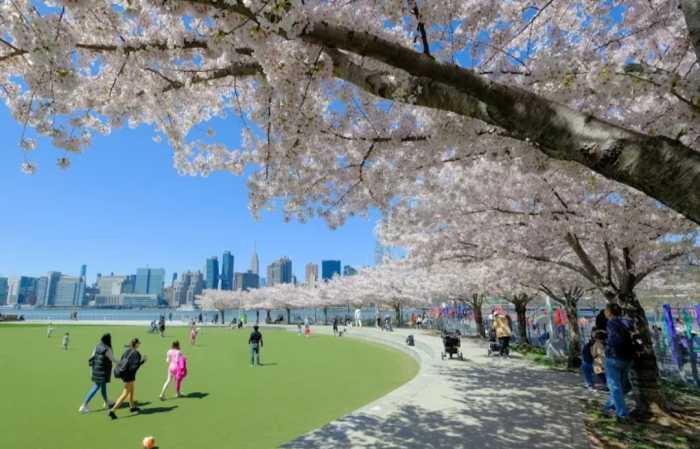
Owens said that the design focuses heavily on capitalizing the stunning views that can be seen from the park. The department will be adding an overlook by the water during the first phase and aims to make sure that visitors to the park will be able to go to many vantage points to see the views.
The overall budget for the project includes a $30 million allocation from Mayor Bill de Blasio, who designated Astoria Park the Queens “Anchor Park” last year, along with one park in each other borough.
The project will also use funds that had previously been designated for water fountains and erosion control projects in the park, bringing the total budget up to $34.23 million, Owens said.
The first phase of the project will cost a hefty portion of the overall budget, costing about $13.5 million total, including $750,000 from Borough President Melinda Katz for erosion control and about $150,000 for water fountains that was allocated during the participatory budgeting cycle last year.
Vincent Cirrito, a project manager for the Astoria Park upgrade, explained that the Parks Department chose the southern most section of the park for phase one because it would be fairly quick and easy to update.
Though the huge swath of the park between the bridges is landmarked, the area for phase one is not, meaning that it will not need to go through the Landmarks process for approval.
The area was also simpler to design, because the primary focus was the track area, and the rest of phase one could work from that starting point.
Cirrito estimated that the design process would be done by December and the project would then go out to bid to contractors. He said that the Parks Department is aiming to break ground on phase one by fall 2018, and complete it by fall 2019. The area included in phase one will be closed to the public during construction.
Other plans beyond phase 1 are being discussed although nothing has been nailed down.
However, what is known is that future work will also involve upgrading park infrastructure. This includes fixing the drainage system and protecting the park from erosion.
Owens explained that Astoria Park has “great bones” but is very run down, and will require much more than cosmetic improvement.
Owens noted that an arborist, who assessed the condition of the park, discovered that about 44 trees were dead or dying and would need to be removed.
In addition to the infrastructure improvements, future phases are likely to involve upgrading the playground and nearby comfort station, as well as adding lighting, plantings, and general upgrades throughout the park. There are also plans to add canopy trees for shade, as well as smaller plants and shrubs.
Cirrito said that the future phases have not yet been mapped out, but will go through the same community planning process as the first phase did.
Though the park will go through many upgrades, Owens said that the goal was simply to enhance the existing park so that it still looks like the “iconic Astoria Park.” She said she focused on using a cohesive theme in materials throughout the park, and chose benches and other materials that matched the historical feel of the park.
“I thought the design was really thoughtful and reflected how beloved the park is,” said Astoria Park Alliance director Martha Lopez Gilpin, who attended the presentation last night. “I thought it integrated the comments from the community very respectfully, which I really appreciated.”
Lopez Gilpin added that she was excited to see what the future phases would look like, and that she was keeping an open mind, but her priorities included park infrastructure and the playground and comfort station upgrades.
“I was struck by just how much the park really needs and deserves this attention to its infrastructure just so it can be preserved, which I normally wouldn’t think about” Lopez Gilpin said. “It’s almost like it’s getting this badly needed infusion just in time to preserve it and take care of this beautiful iconic place that is so important to the community.”