Queensboro Bridge (Fran Fran via Flickr)
Jan. 31, 2018 By Nathaly Pesantez
Only 3 percent of commuters in Long Island City, Sunnyside, and other neighborhoods within Assembly District 37 would face a congestion charge for entering Manhattan as proposed by Governor Cuomo, according to a new report.
The report, released Tuesday by the Tri-State Transportation Campaign, a non-profit that vouches for reducing car dependency, analyzed the 140 State Assembly and Senate districts to see how many commuters would be affected by a congestion charge for crossing into Manhattan’s central business district (CBD), or anywhere below 60th Street, as outlined by Governor Cuomo’s Fix NYC panel.
Under the Fix NYC panel’s plan, passenger cars would be charged $11.52 for entering Manhattan within the CBD on weekdays from 6 a.m. to 8 p.m. Commercial trucks would see a charge of $25.34 for the same time frame.
Tri-State Transportation Campaign
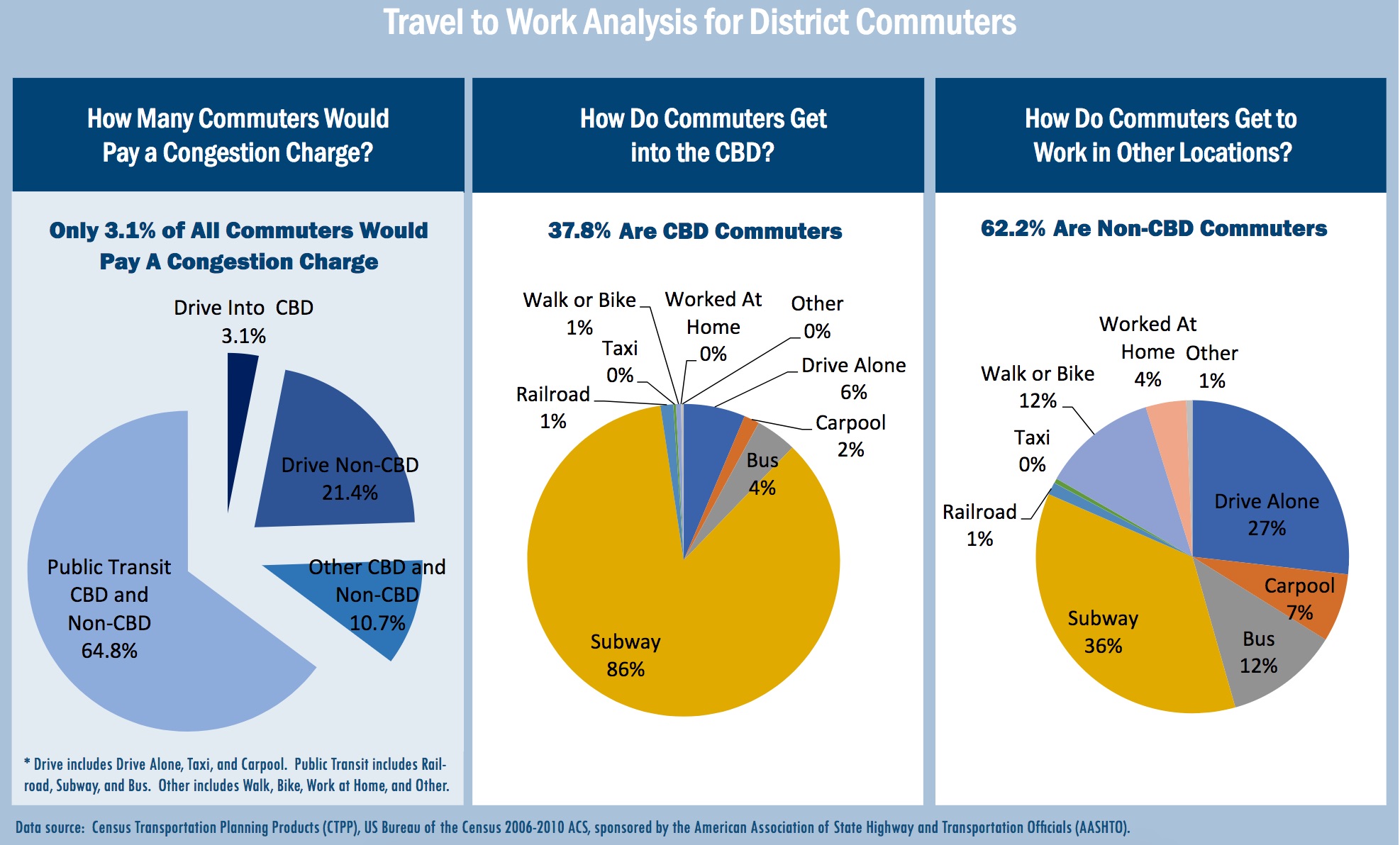
The report shows that 3.1 percent of commuters in Assembly District 37 would pay the congestion charge. These single-digit percentage of commuters in the district, according to the non-profit’s report, exclusively drive into Manhattan below 60th Street, and would therefore be affected by congestion charges.
The rest of the district’s population would not pay the charge, as a large percentage of commuters heavily rely on public transportation to get to the CBD, or drive north of 60th Street and to other places without charges.
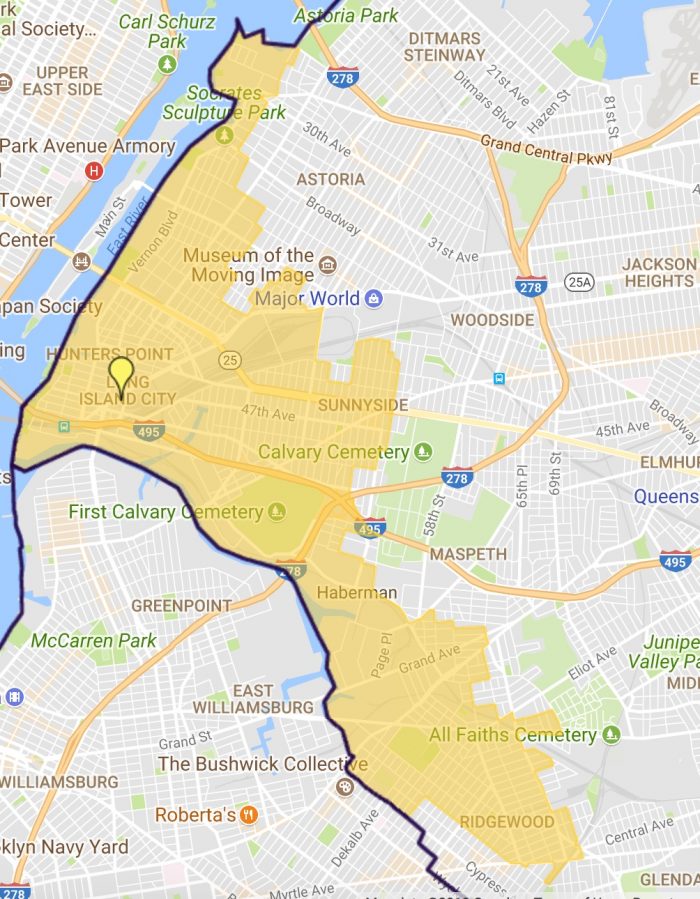
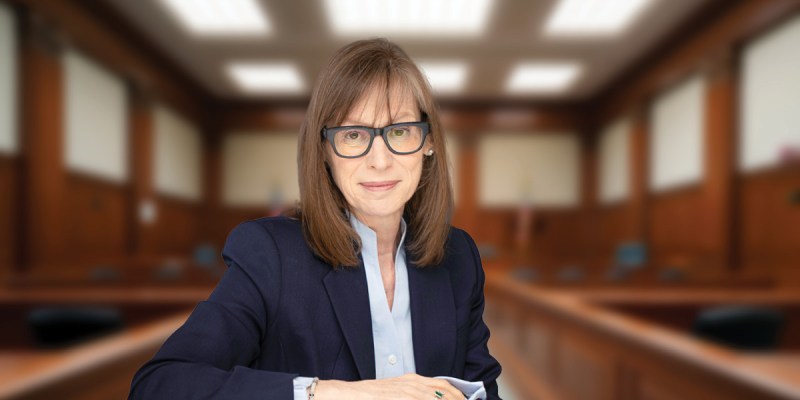
Assembly District 37, represented by Assembly woman Catherine Nolan.
The report shows that 64.8 percent of Assembly District 37 commuters use public transportation to get into Manhattan, regardless if they’re entering the central business district. And just over 20 percent of commuters also drive to get into Manhattan, but they do not enter the CBD.
Overall, over half of commuters from the district don’t head into the CBD, according to the report. For these non-CBD commuters, roughly 40 percent take the subway, while a sizable 27 percent drive alone.
For the 37.8 percent of commuters that do go into the CBD, an overwhelming 86 percent use the subway, and just 6 percent of these CBD commuters drive alone to the area.
The numbers for Assembly District 37 are consistent with one of the group’s overall findings—that in all districts surveyed, only single-digit percentages of residents commute into the potential tolled zone of Manhattan.
The Tri-State Transportation Campaign also found that drivers commuting into the CBD tend to have higher incomes than those who take public transportation, an analysis that takes a jab at a widely-heard criticism on congestion pricing that says middle-class, outer borough residents will be most hurt by the measure.
In Assembly District 37, the median income of workers who commute by driving alone is $45,514. For workers using public transportation, the median income is $36,191, the report shows.
The transit advocacy group used data from the US Census 2011-2015 five year American Community Survey for the report.
“While congestion pricing by itself won’t solve every transportation challenge our city faces, it is an integral part of a larger strategy to make urban transportation more efficient, sustainable and equitable,” The Tri-State Transportation Campaign said.
Assemblywoman Catherine Nolan, who represents over 124,000 constituents in Assembly District 37, did not respond to a request for comment on the report’s findings by press time.
The proposal released by the Fix NYC panel on Jan. 19 has been the subject of discussion between Governor Cuomo and lawmakers across the state since, with deliberations expected to take months.