A rendering of the proposed shoreline restoration as part of the Long Island City Innovation Center project. (TF Cornerstone)
Sept. 12, 2018 By Nathaly Pesantez
The developer behind the proposed city-led project along the Long Island City waterfront has released details about the open space slated to be part of the massive and controversial development site.
The proposed project, to be developed by TF Cornerstone on city-owned land, is dubbed the Long Island City Innovation Center, and spans more than 1.5 million square feet at 44th Drive.
The development, which requires zoning changes and other approvals to be realized, is mainly comprised of office, retail, and manufacturing space, along with two high-rise towers with more than 1,000 units, of which 25 percent would be affordable.
It also features approximately one acre of publicly accessible open space, which would take the form of a waterfront park built with resiliency and sustainability in mind, according to TF Cornerstone.
The project’s waterfront edge, making up part of the open space, is known as “Anable Cove,” and spans roughly 400 feet from the former Water’s Edge Restaurant space to just before the area colloquially known as “Lake Vernon”.
It’s at this cove, where shallow, still waters allow for some marine life, where TF Cornerstone says it would focus on preserving and enhancing the ecological habitat.
“For the past several months, we have been working closely with waterfront and habitat restoration experts to revitalize and enhance the natural marine habitat that has existed here for generations,” said Jake Elghanayan, principal at TF Cornerstone, in a statement.
Anable Cove, with one of the two development sites seen behind it. (EDC)
Work on the cove would include removing an old platform running along the shoreline, which would provide for a larger marine habitat space, TF Cornerstone said.
The proposal calls for the platform to be replaced with rip rap boulders—rocks commonly found along shorelines to protect from erosion. Plantings would also appear just before the shoreline.
Additionally, the piles farther out from the shoreline that currently hold the platform up would be left in place to minimize disruption to the river bottom. The piles also have the added benefit of providing a habitat refuge and wave attenuation, calming the waters in the cove and reducing wave impact.
The river bottom would also be cleared of decades-old debris to help foster a clean and protected habitat.
The development team, which includes Matthews Nielsen Landscape Architects and Handel Architects, say their proposed actions along Anable Cove would restore and grow a home for marine life like fish, crabs, and lobster to thrive.
Apart from shoreline restoration, the project would provide the public with direct access to the water. Stairs, for example, would descend down to the water, with the area to be outfitted with bioswales and other self-draining elements to help with expected flooding during severe storms.
TF Cornerstone’s announcement comes as the development team is preparing to enter its public review process for the project, beginning with a public scoping meeting next week.
The announcement also picks up from a recent community workshop led by the Economic Development Corporation, the city agency leading the project, for ideas on the open space’s design.
The project, however, has garnered massive push-back since it was unveiled in July 2017, with residents, civic groups, and local politicians saying the project is too large and an inappropriate use of public land. Many called for the project to be scrapped or re-envisioned.
One local group, the LIC Coalition, has held a rally opposing the project, and created a petition outlining its vision for a large wetland park and community recreation center at the two city-owned lots (a DOE parking lot and DOT facility) instead.
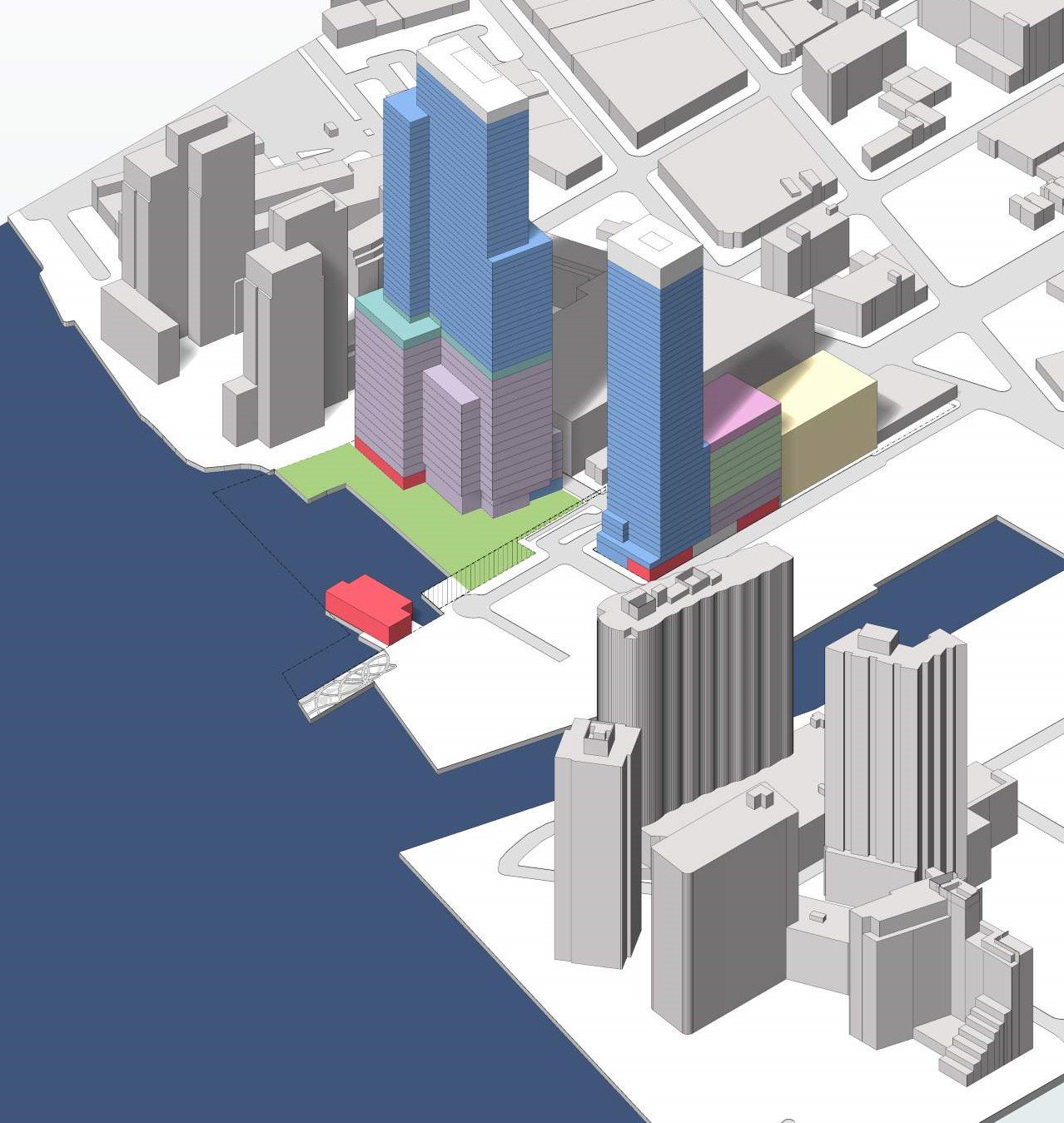
The city’s proposed project for 44th Drive (colored buildings north of Anable Basin), also known as the Long Island City Innovation Center. (NYC EDC)
The group said a wetland park would help against flooding and other environmental concerns, and deter potential overcrowding on the waterfront.
“We the Community are tired of the City’s promise of affordable housing at the expense of open/ public space, and in exchange for massive density that further contributes stress to the waterfront and the flood plane,” the group’s petition reads.
The details on the public space, however, follow TF Cornerstone’s statements made earlier this year on its commitment to addressing environmental concerns raised by the community.
At the time, TF Cornerstone said a small wetland park would do little to absorb the impact of the water, with their project aiming to raise the water’s edge and streets instead. The project’s buildings would also be set back and elevated to a height of 13 feet, as required by building codes.
While the development team is proposing to restore Anable Cove as part of the project, it does not mark the first efforts for habitat restoration work at the site.
Two decades ago, Tom Paino, an architect and member of the LIC Coalition, proposed a plan to restore habitat sites all along the East River, with Anable Cove to act as the pilot site for the project. Paino’s plan called for the cove, once a dock-repair facility, to include a wildlife viewing walkway, along with restoration and stabilization work to the shoreline.
The waterfront development also includes retail and community facility space, work-spaces for artists, a 536-seat school, and workforce development and training space—all uses that speak to the project’s diversity while mirroring needs expressed by the community, the EDC and the development team say.
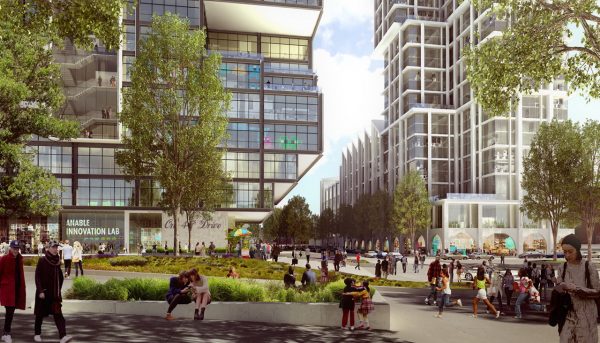
A rendering of the proposed Long Island City Innovation Center at 44th Drive. (EDC)