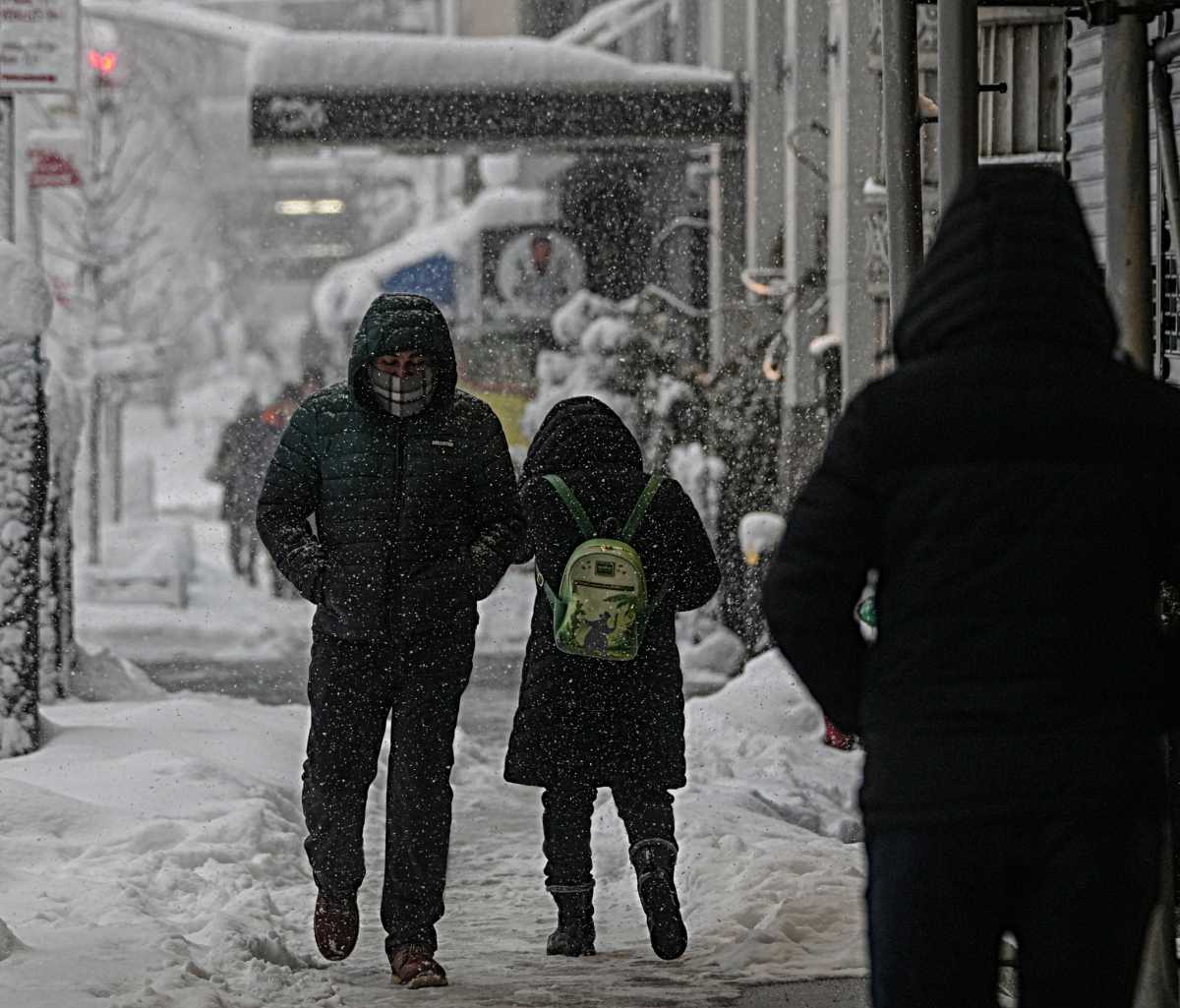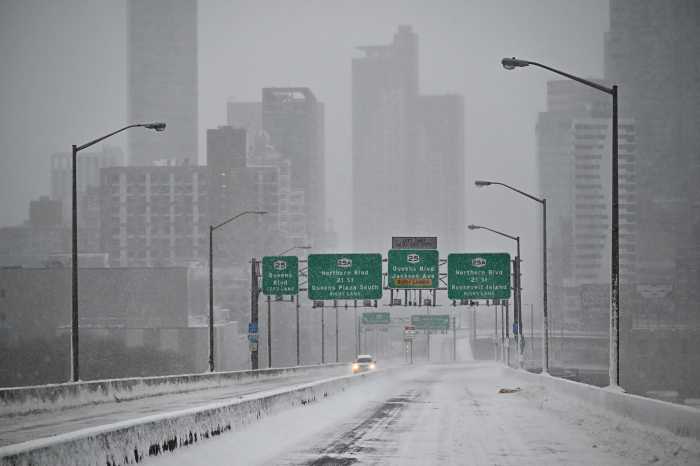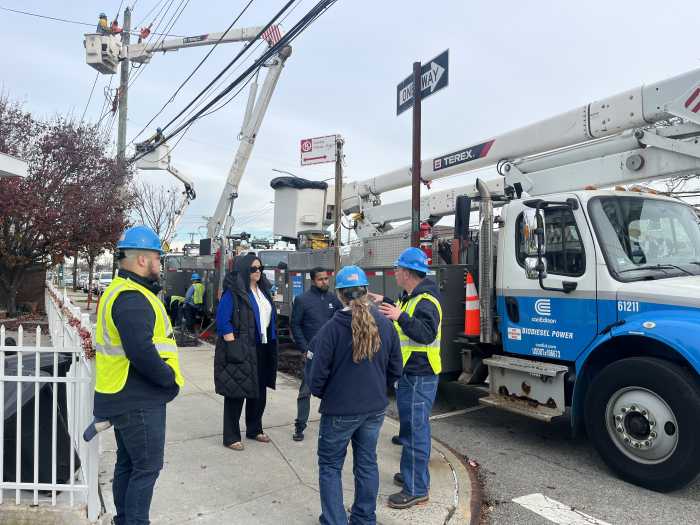


Snowy weather is approaching Queens this weekend with up to 5-7 inches of snow in the forecast for Saturday. Plans for the city’s snow removal process were unveiled during a meeting at Borough President Donovan Richards’ office on Dec. 1, where city officials assured residents they are prepared for citywide snow removal operations.
Antonio Whitaker, assistant director of the Bureau of Community Affairs at the NYC Department of Sanitation, presented the borough’s winter preparedness plans for the 2026 fiscal year.
The DSNY hosted its annual snow preparedness meeting last week before the Thanksgiving holiday, Whitaker said, which was attended by every city agency with snow removal capability. These city agencies include the transportation department, parks and recreation department and the Metropolitan Transportation Authority.
The sanitation department is specifically responsible for clearing snow off city streets, highway ramps, off-ramps and public walkways, while the transportation department is responsible for clearing highways and municipal areas. The MTA is responsible for clearing snow and ice off train tracks, stations and platforms. The parks department website states that residents can report snow and ice on park pathways and sidewalks next to parks using 311.
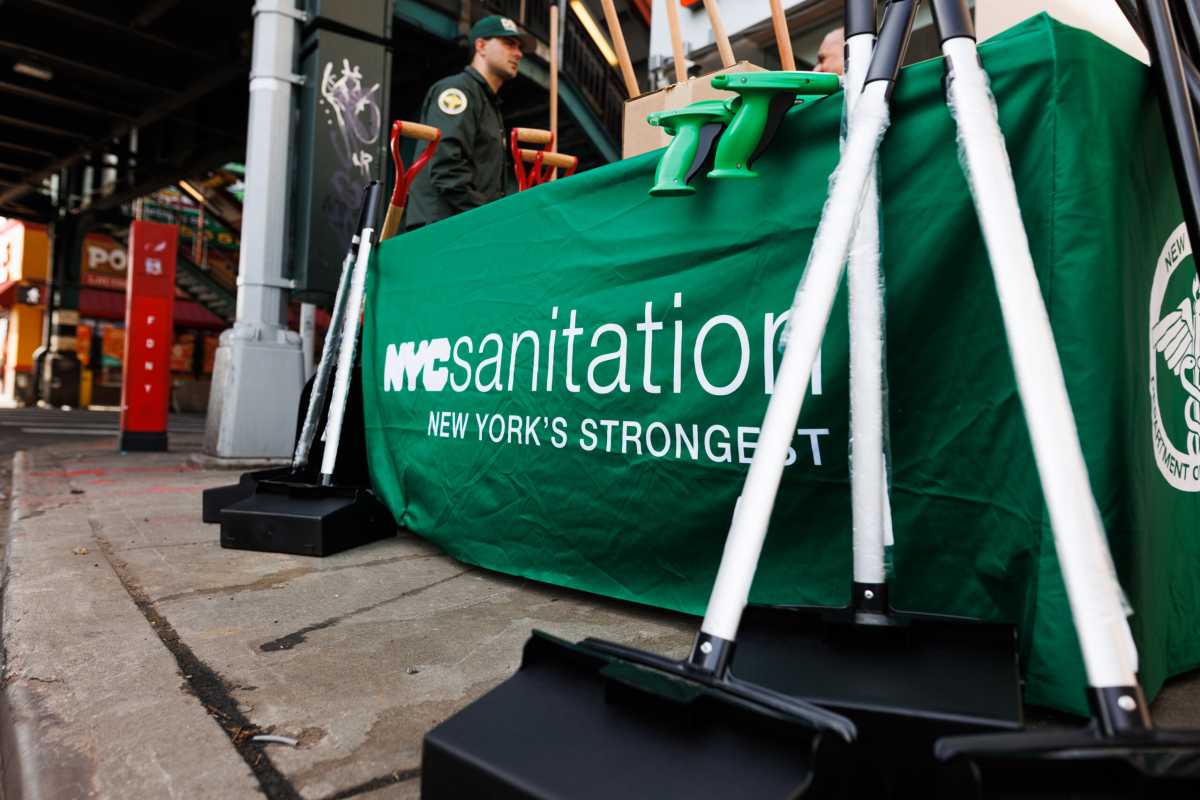
The sanitation and transportation departments also hire paid emergency snow shovelers, which can be deployed after 4 inches of snow accumulation. Anyone interested and physically capable of becoming an emergency snow shoveler can schedule an appointment on DOT website or DSNY website to register for the upcoming season. According to the website, snow shovelers will be paid $19.14 per hour, and $28.71 per hour after the first 40 hours worked in a week.
Whitaker also advised residents to check their respective community board’s website for more information about resources including snow preparation, personnel and equipment.
Ahead of the storm
The DSNY clears snow and ice from more than 19,000 lane-miles of roadways across the city. Sanitation workers are scheduled in three rotating 8-hour shifts to ensure staff is available for unforeseen weather events, and transition to two rotating 12-hour shifts when city-wide snow response is required.
Snow storm preparedness is a year-round effort, according to the DSNY. Over 1,500 snow routes are evaluated by personnel in the spring and summer months, and staff at the operations office monitors weather forecasts from three contracted weather reporting services — AccuWeather, CompuWeather and Metro Weather — which are monitored 24/7, year-round.
Since 2022, the city has increased the number of plows on its roads by 15 percent and currently has over 2,000 vehicles capable of spreading salt and plowing snow. The DSNY has over 700 large and small salt spreaders and over 700 million pounds of salt available in the event of snow and ice.
The plows, which are general collection trucks outfitted with equipment to clear snow and spread salt, are capable of being deployed on all routes at the same time.
According to Whitaker, the sanitation department is also coordinating with the transportation department to invest in equipment to clear bike lanes more quickly and efficiently.
Plows are tracked using a service called Bladerunner, which was launched by the DSNY in 2023 to track regular trash collection and cleaning operations. Key features include Google Map integration, real-time data updates, search options for specific streets and vehicles, and visual layer data to track equipment locations and points.
Between 24-48 hours before snow is expected, sanitation vehicles are equipped with brine, a salty water solution that can prevent snow from sticking to the ground, and dispensed onto roadways — particularly near overpasses, hills, highway ramps and bus lanes. However, the DSNY cautions that brine is not useful if a storm starts as rain and transitions into snow because stormwater can wash away the solution before snow begins accumulating.
Snow response tiers
The DSNY’s snow response levels are categorized by snow accumulations, in inches.
Trace levels of snow up to 2 inches would result in the deployment of over 700 pieces of salt spreading equipment. Salt is useful during winter storms to melt snow and ice, preventing snow accumulation and providing traction.
Between 2 and 4 inches of snow would trigger a full deployment of all spreader equipment, adding over 1,600 plows to roadways. Whitaker noted that plows are slightly raised above street level so they do not get caught on bumps in the road or flip manhole covers. As a result, he said a plowed street might not expose the blacktop right away.
Once the plows are deployed, the DSNY said it is helpful for residents to stay off the streets to ensure the trucks can effectively travel along roadways.
When there is snow accumulation between 4 and 8 inches, the DSNY would activate full spreader and plow coverage across the city. At this point, the sanitation department would begin activating other city agencies’ plowing assets and employing emergency shovelers. Once accumulation reaches 8 inches, the DSNY would begin assessing the need for snow melting and hauling operations.
After the storm
Once the storm is over, sanitation workers would begin clearing city infrastructure including roads and other pathways. Front-end loaders would remove large piles of snow from streets and, if there is 8 or more inches of snow on the ground, snow melters would melt up to 120 tons of snow per hour in each borough.
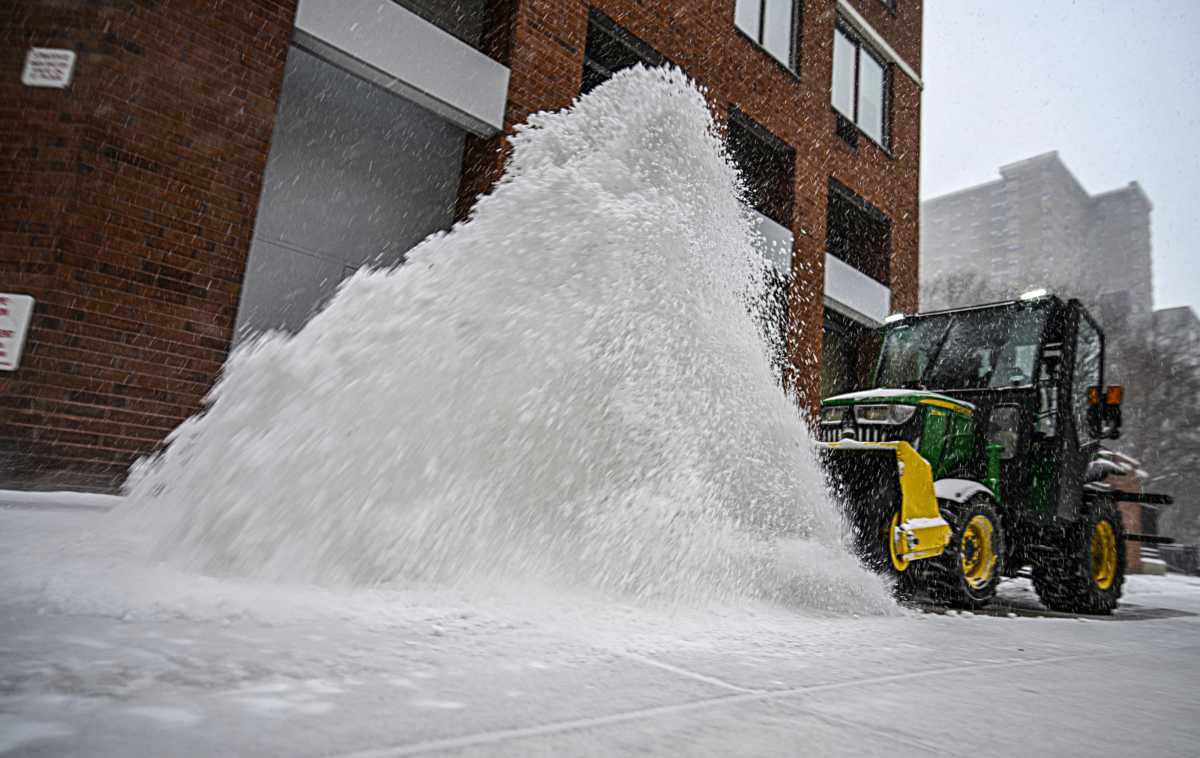
Sanitation crews would also begin shoveling pedestrian infrastructure, including bus stops and crosswalks, using over 100 skid steers to mechanize the process. Crews are supplemented with temporary emergency snow shovelers, as well.
New Yorkers interested in monitoring plowing progress can use PlowNYC. A map, which is updated every 15 minutes during snow plow procedures, will be available on NYC.gov/PlowNYC. Streets on the map will be color-coded to indicate to viewers whether a street has been plowed yet, or how long it’s been since a plow passed down a street.
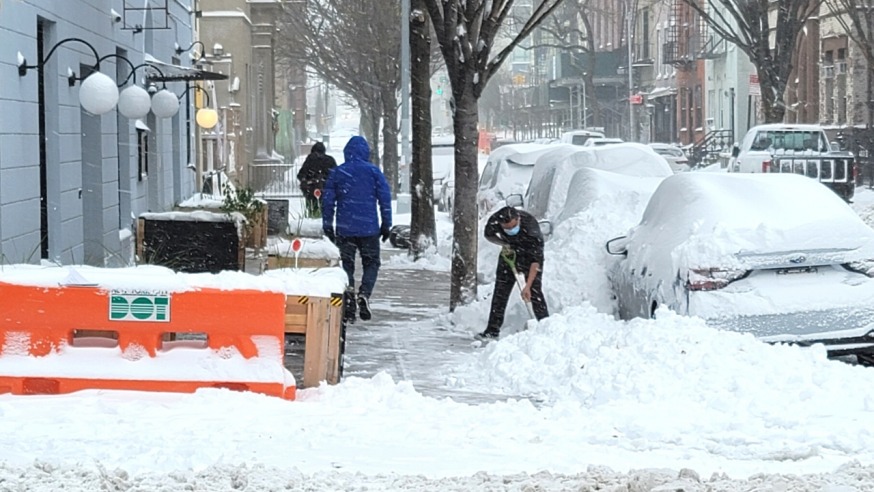
Property owners, on the other hand, are responsible for clearing snow and ice from sidewalks in front of their properties to avoid fines up to $250. According to the DSNY, the department issued over 14,000 summonses for failure to clear snow and ice within the timeframe.
Timeframes for clearing snow are based on when snowfall officially ends. The exact end time is determined by the weather reporting services contracted by the DSNY and announced by the sanitation department both on its website and social media accounts.
- If snowfall ends between 7 a.m. and 5 p.m., property owners are expected to clear sidewalks within four hours after the determined end time.
- If snowfall ends between 5 p.m. and 9 p.m., property owners are expected to clear sidewalks within 14 hours of snowfall.
- If snowfall ends between 9 p.m. and 7 a.m., property owners are expected to clear sidewalks by 11 a.m.
Occasionally, snow will continue falling in areas of the city beyond the exact end time announced by the DSNY, but Whitaker said there is currently no formal process in place for accommodating those situations.
Some attendees at the meeting raised concerns about seniors or disabled persons who are incapable of shoveling snow, which Whitaker also noted there was no formal process in place to address those circumstances. However, he said he would relay any concerns residents had for those unable to shovel snow on their properties to the rest of the sanitation department.