New York’s affordability crisis is real. Families in Assembly District 36 feel it every month when rent is due, when childcare bills arrive and when grocery prices keep climbing faster than paychecks. Addressing those pressures matters. But after months of campaigning and listening across our district, I am convinced of this: affordability that ignores economic opportunity is a dead end.
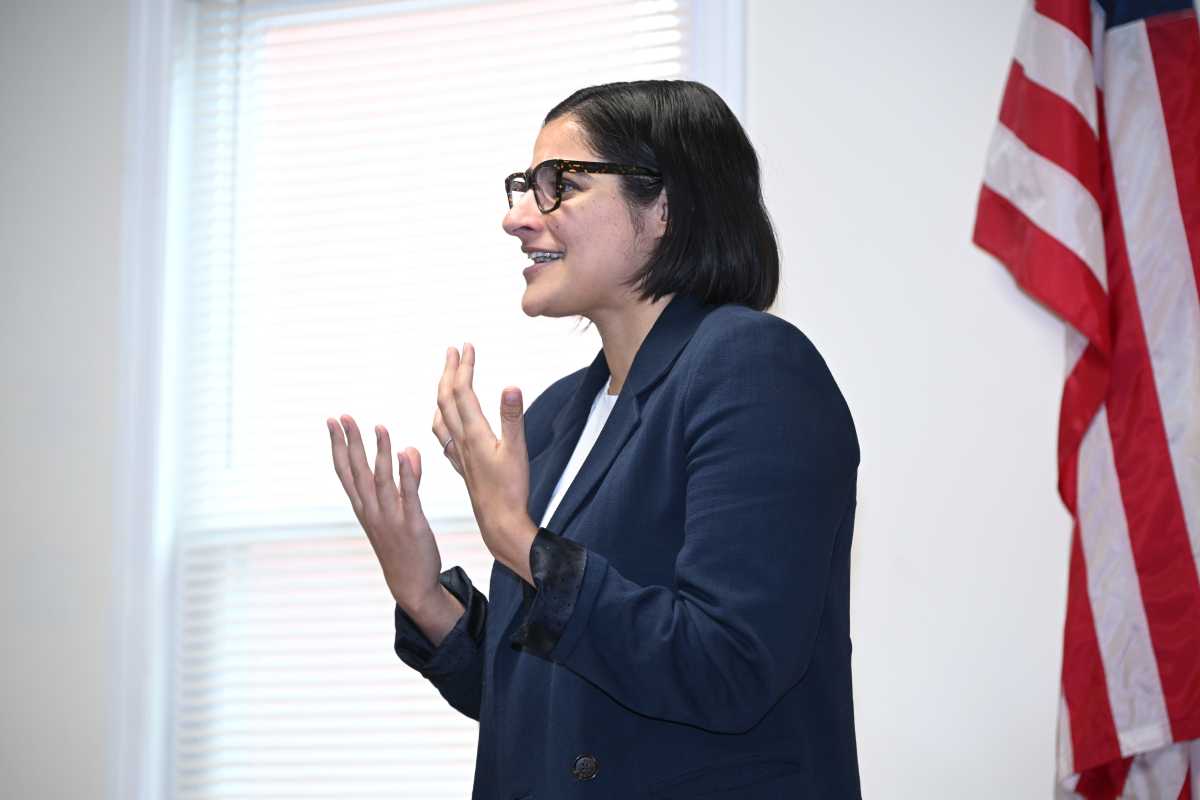
In the aftermath of the Feb. 3 special election, I have decided to step back from this race and not challenge the winner in June. That decision is intentional. My campaign was never just about winning a seat. It was about elevating an issue that must now move from conversation to action: treating job stability, income growth and mobility as essential components of any serious affordability strategy.
Early in the campaign, I met a paraprofessional, a mother of three, whose husband works as a grocery store manager. Despite both working full-time hours, they still relied on SNAP benefits to get by. That conversation made the problem unmistakable: affordability efforts fail when full-time work does not provide basic economic security.
For too long, affordability has been framed almost exclusively as a cost-management problem. Lower the rent. Cap the fare. Subsidize childcare. These policies are important, and I support many of them. But they do not answer the deeper question facing working families in Western Queens: can people earn enough, consistently enough, to stay rooted in their communities and plan for the future?
Affordability is not just about prices. It only works when people have stable incomes and real access to opportunity.
I urge the candidate chosen by voters to make this opportunity-centered affordability agenda a priority for Assembly District 36, and I stand ready to work alongside them to help move it forward.
Across New York City, a majority of renter households are rent-burdened, with more than half paying 30% or more of their income toward housing. That burden is especially acute in Queens, where long commutes and nonstandard work schedules are common. At the same time, wage growth has been modest and job stability has eroded. Many workers are piecing together income from multiple sources, often without benefits, protections or predictable hours.
This is not simply a housing crisis. It is the widening gap between what things cost and what people earn.
That reality is impossible to ignore in Assembly District 36. Our district runs on the hard work of nurses, teachers, childcare workers, delivery workers, freelancers, creatives, small business owners and care workers. These are not marginal roles. They are the backbone of our local economy and our daily lives. Yet many of our neighbors face low wages, unstable schedules, wage theft and limited pathways to advancement, even as their work is in high demand.
Workforce shortages in healthcare, education, childcare and the trades are often described as staffing problems. But this framing misses the point. These shortages are opportunity failures. When essential jobs do not offer sustainable pay, safe staffing, training pathways or real career ladders, people leave. Communities then pay the price through understaffed hospitals, stretched classrooms and childcare deserts that push parents out of the workforce.
New York City does not lack work. It lacks a coherent strategy to connect people to good jobs and long-term economic mobility.
This issue is personal for me. My family immigrated to this country, and my parents sacrificed their own careers so my brother and I could access strong educational opportunities. I was raised to believe that hard work and a college degree would guarantee economic mobility and long-term stability. I have spent my career trying to ensure higher education delivers on that promise. But today, a degree alone is no longer a guarantee of security and too often leads to lifelong debt. We need to change the equation.
An opportunity-centered affordability agenda starts by recognizing that college cannot be the only pathway to stability. In some New York neighborhoods, more than 80% of adults have college degrees. In others, fewer than 20% do. That disparity is not a reflection of talent or ambition. It reflects uneven access to opportunity.
We must make college more affordable, especially at CUNY, while also expanding pathways that do not require a four-year degree. Paid apprenticeships, union jobs, sector-based training and credential-to-career pipelines in healthcare, education, construction, climate and technology must be scaled with urgency. Young people deserve real choices. Adult learners deserve second chances. Workforce systems built only for 18-year-olds are failing a city where most workers are already in the labor force.
At the same time, a growing share of our district works outside traditional employment. Research focused on Western Queens shows that gig workers and freelancers often work full-time hours with part-time protections, face high levels of economic and housing insecurity and rely heavily on mutual aid and public assistance. Wage theft, late payment and misclassification are not edge cases. They are common experiences.
Protecting workers must be treated as core economic policy. Strong enforcement of labor laws, accessible legal support and clear pathways for reporting violations are essential. So is recognizing that many independent workers are, in practice, small businesses of one. They need business advising, tax support, digital skills and access to capital, not just enforcement after harm has already occurred.
Small businesses and entrepreneurs are central to opportunity-driven affordability. As the daughter of two small business owners, I have seen both the daily struggle and the transformative power of entrepreneurship. Small businesses create local jobs, keep dollars circulating in the community and anchor neighborhood stability. Yet they continue to face disproportionate barriers to financing, contracting and technical assistance, especially immigrant- and women-owned businesses. Supporting their growth is one of the most effective ways to strengthen local economies from the ground up.
Childcare makes the link between opportunity and affordability impossible to ignore. The recent childcare commitment announced by the Mayor and Governor is an important and long-overdue step forward. But its success will depend on implementation and on whether childcare jobs themselves are made economically viable. If childcare workers remain underpaid and burned out, workforce shortages will derail even the best-intentioned policies. Childcare is not just a family support. It is workforce infrastructure.
Homeownership must also be part of an affordability strategy that lasts. When families are permanently locked out of ownership, we cut off one of the most reliable paths to long-term security and generational wealth. Expanding first-time homebuyer assistance, supporting shared-equity models and building housing designed for first-time buyers alongside affordable rental housing must be priorities.
Research from the Center for an Urban Future has repeatedly shown that New York’s affordability challenge cannot be solved by lowering costs alone. Their work on adult learners, workforce shortages, CUNY access and nontraditional work makes clear that too many New Yorkers are locked out of stable careers not because they lack motivation, but because systems are fragmented and under-resourced. Without sustained investment in income growth and career mobility, affordability policies will always be partial and temporary.
At the community level, organizations like Urban Upbound show what it looks like to close those gaps in practice. By integrating workforce training with financial coaching, entrepreneurship support, housing stability and benefits navigation, particularly for NYCHA residents and working families in Western Queens, they reflect how people actually experience economic insecurity. When these supports are coordinated and rooted in the community, they create real pathways to job stability and mobility.
The Governor’s budget and the Mayor’s focus on affordability present a real opportunity to scale what works. Workforce innovation, adult learner pathways, apprenticeships and community-based training must be funded with the same seriousness and discipline as cost-mitigation programs. Opportunity cannot remain an afterthought.
That is why I ran. And that is why I am stepping back from the race, not from the work.
I urge candidates, elected officials and policymakers across the city and state to treat job stability, wage growth and career mobility as essential parts of any affordability agenda. We must talk about jobs, careers, ownership and stability with the same urgency as rent and prices. I am ready to partner with any leader, public agency, organization or coalition committed to building an affordability strategy that prioritizes economic opportunity.
Lowering costs helps families survive today. Building opportunity is how we make sure they can stay.