

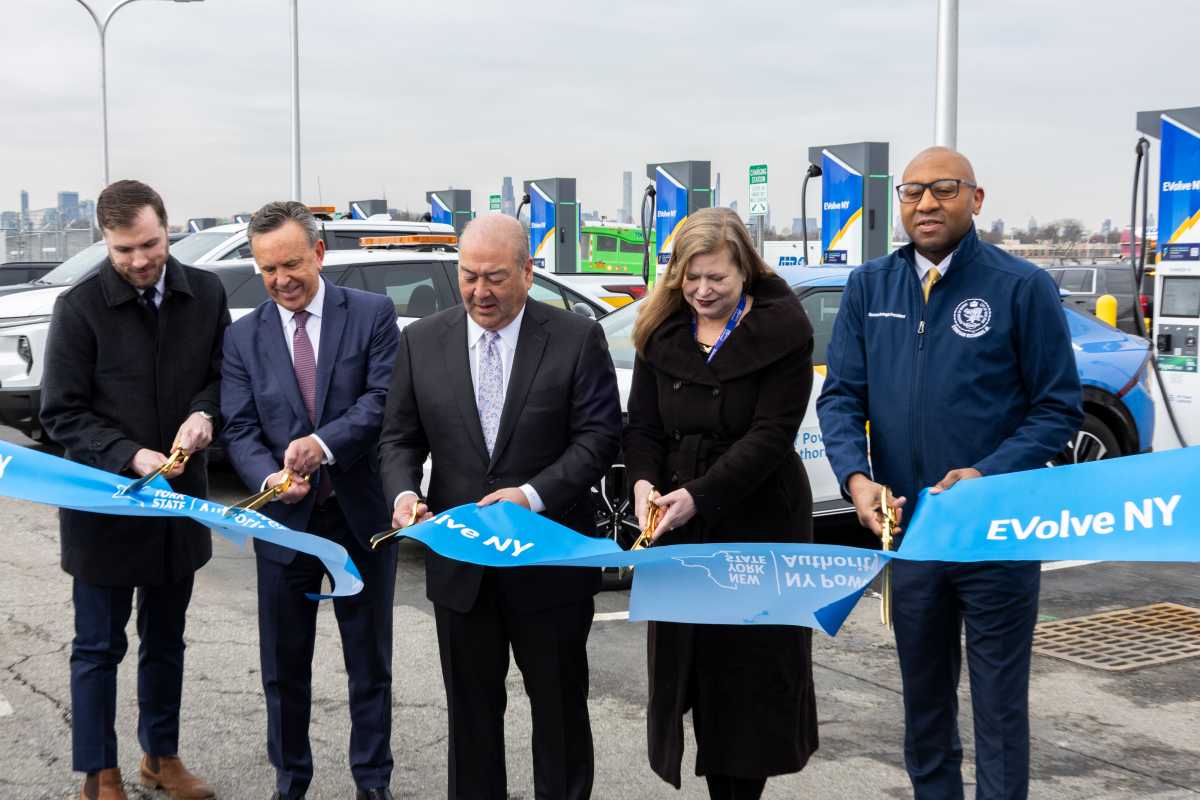
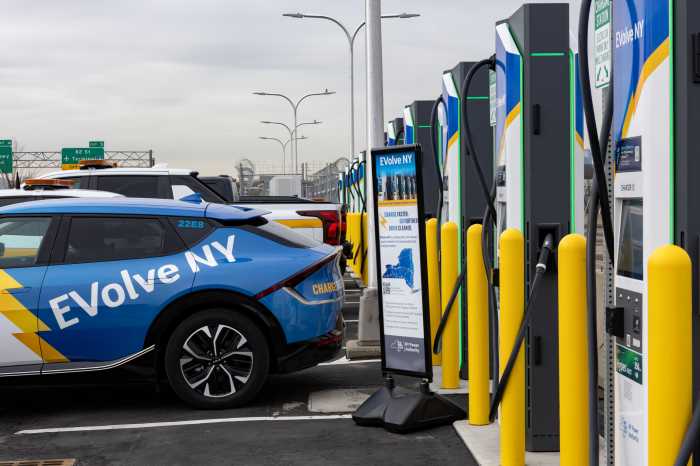
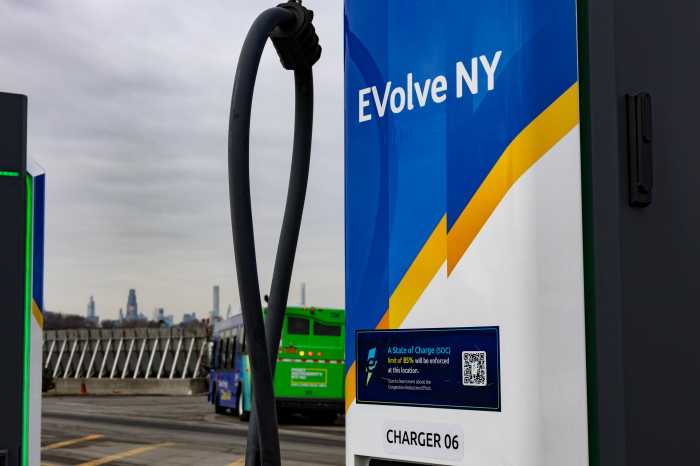
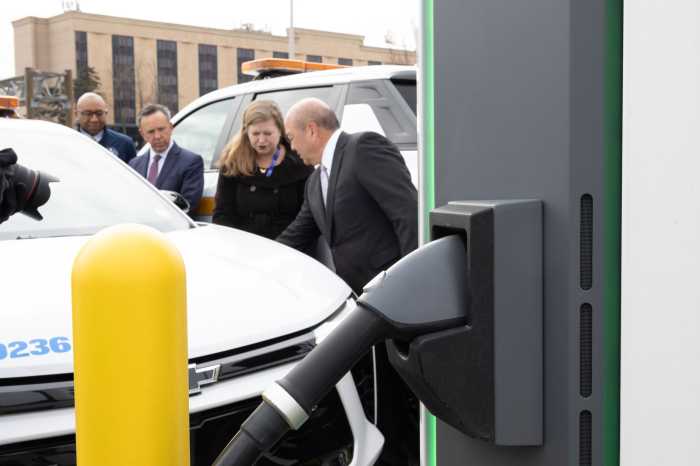
The Port Authority of New York and New Jersey (PA) and New York Power Authority (NYPA) cut the ribbon to debut a row of fast-charging stations for electric vehicles (EV) at LaGuardia Airport as the latest addition of the EVolve NY program.
Located at Grand Central Parkway’s Exit 7, the 12 new stations can fully charge a car’s battery in less than 30 minutes, costing EV commuters about $35-45 for a full charge.
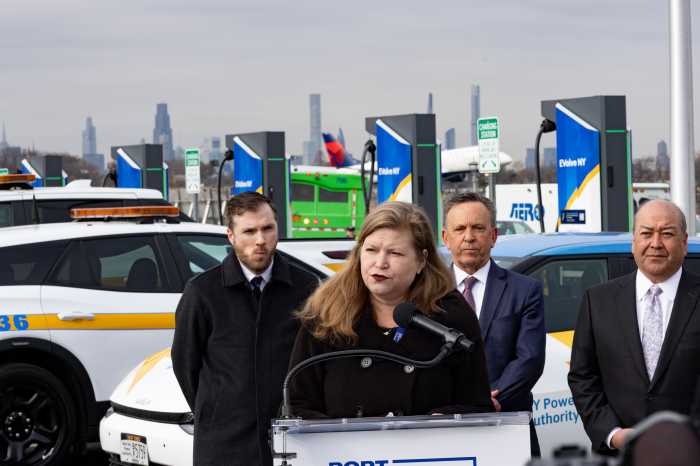
“I want to thank Governor Hochul who has charged not only the Port Authority, but also much more directly the New York Power Authority with sort of making sure we are prepared for the future,” said PA Executive Director Kathryn Garcia. “As she often says, we are the first generation to be experiencing the impact of climate change and the last generation to do anything about it.”
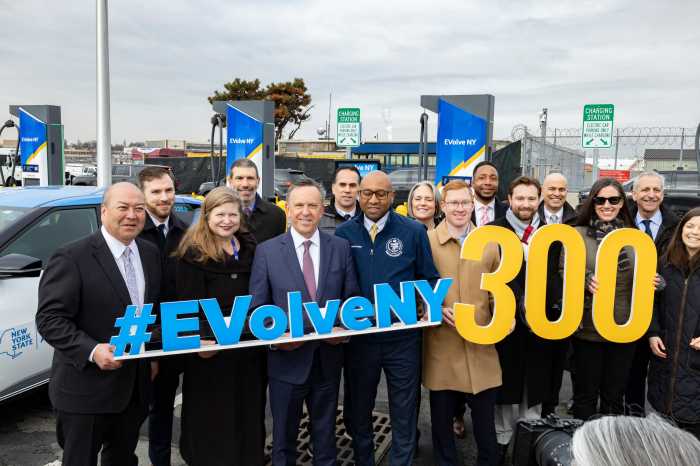
Gov. Kathy Hochul invested $3 billion of the state’s budget for vehicle electrification. The $250 million EVolve NY program is NYPA’s mission to make EVs an “affordable and convenient option” for New Yorkers by placing them along highway corridors, positioning them close to exits for ease of access. The LaGuardia station marks the 300th charger installed at over 63 locations statewide, but NYPA plans to vastly increase those numbers by adding 400 more chargers across 86 locations by the end of 2026. One day, a charging station will be found every 50 miles, though for now EV drivers can check the EVolve NY map to find locations.
“It’s a great example of the collaboration and partnership that we’ve had over the years with the Port Authority, with the Borough of Queens, and the New York City region to try to drive transportation electrification,” said NYPA CEO Justin Driscoll. “we’re really excited about today and what this means for the future of electrification, of transportation, and the clean energy economy that we’re all working towards.”
The charging ports are compatible with any EV with fast charging capabilities, though some Tesla cars require an adapter to utilize the CHAdeMO port, available at select locations. Previous chargers around New York provided 50 kW of charging power, but the latest chargers tripled that figure, drastically cutting down on charging time.
“Queens is home to more solar installations than anywhere else in New York City. Not only are we meeting the needs of drivers today, and for hire vehicle drivers, visiting our airports,” said Queens Borough President Donavan Richards. “I can tell you we were doing a lot of work around ensuring that infrastructure was put in place, because one of the things we would hear from companies is that, ‘Hey, we want to electrify our fleet,’ but unfortunately, we cannot do that because the infrastructure is not in place… so today is really a solution.”
The charging stations are also a part of the PA’s climate action roadmap, which began after a 2021 announcement where the authority pledged to follow the climate goals of former President Joe Biden’s administration, cutting emissions in half by 2030 with the ultimate goal of being net-zero by 2050.
“We are on track, and that is because we know that despite the hardships of climate change, it’s not always easy to decide to electrify your house or electrify something else. But that is the future, because climate change is not waiting for us,” said Garcia.
As a part of Hochul and the state’s incentives toward electrification, EV drivers, now a total of 100,000 on the roads across New York, are offered the “Drive Clean Rebate,” which provides $2,000 towards the purchase or lease of a vehicle with an over 200 mile range, though that figure decreases as the range drops.
Former Mayor Eric Adams launched the Green Rides Initiative in the beginning of 2024, requiring that rideshare companies like Uber and Lyft will ensure 5% of high volume rides are through vehicles that are either zero-emission or wheelchair accessible. The benchmark increases every year, now up to 25% total by the end of 2026, until the transition is complete by 2030. However, Con Ed estimates that the end-goal would require 4,000-6,000 curbside EV chargers.
The NYC Taxi and Limousine Commission stated that the initiative is still ahead of schedule, reporting that 21% of rides were in an EV or WAV as of August 2025.