
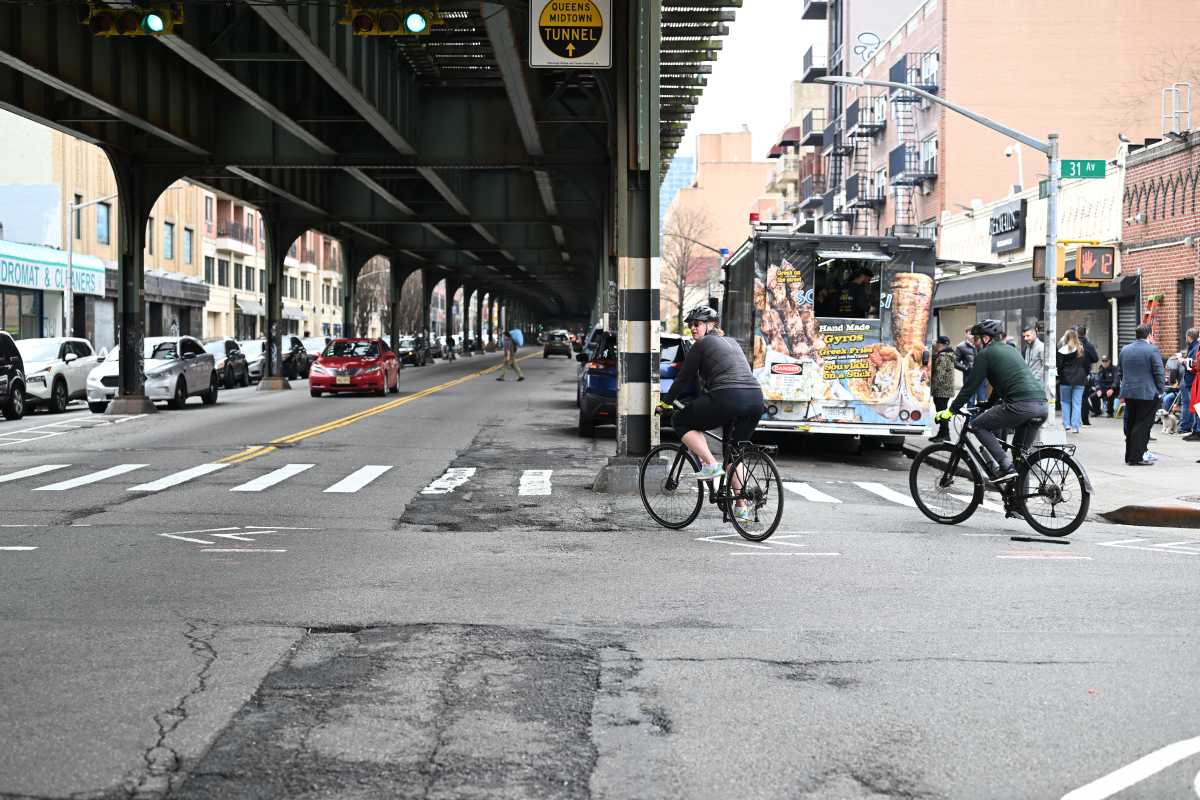
Mayor Zohran Mamdani has announced that the city will restart the process to redesign 31st Street in Astoria one month after a Queens judge ordered the Department of Transportation to halt plans for a protected bike lane along a one-mile stretch of the street.
Mamdani announced the move on Jan. 7, describing 31st Street as one of the most dangerous corridors in Queens. He said the decision to restart the redesign process and comply with a ruling issued by Queens Supreme Court Judge Chereé Buggs represented the “fastest path” to delivering “critical safety upgrades” along the corridor.
The Mamdani administration added that the New York City Law Department will also file a notice of appeal of the court’s ruling.
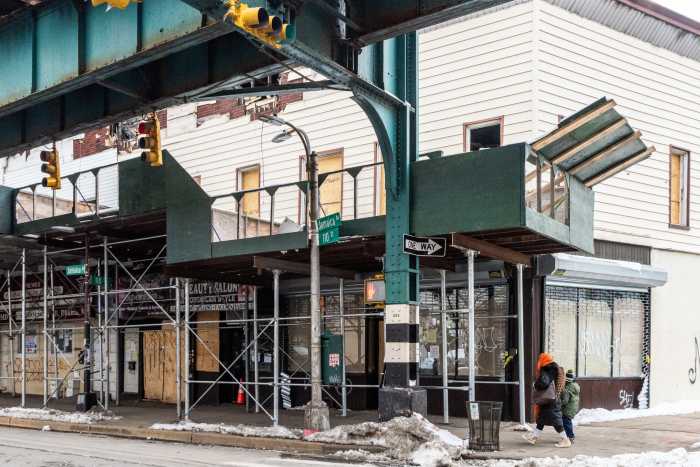
Mamdani, as an Assemblymember representing Astoria in the 36th District, was part of a cohort of elected officials who proposed the Western Queens Street Safety Plan, which called for a protected bike lane underneath the elevated N/W subway tracks along a mile-long stretch of 31st Street from 36th Avenue to Newtown Avenue.
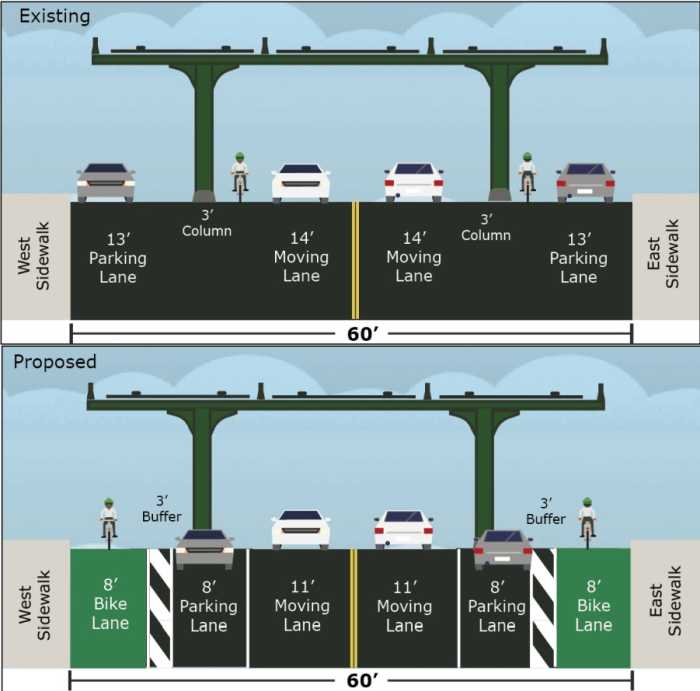
The DOT’s plans for a 31st Street redesign included plans to reduce moving lanes and parking lanes by three and five feet, respectively, to make way for 8-foot-wide protected bike lanes on each side of the corridor. Advocates said the plan would significantly improve street safety along the corridor, pointing to two fatalities and 11 serious injuries that took place on 31st Street between 2020 and 2024.
Buggs, however, sided with a number of local businesses and residents who had filed suit against the city, arguing that plans for a protected bike lane were rushed and presented a hazard for pedestrians and motorists along 31st Street.
In her December ruling, she ordered the DOT to halt plans for the street redesign, also ordering the agency to restore the roadway to its original design after a section of the protected bike lane was installed on one side of 31st Street between 31st Avenue and Broadway over the summer.
A coalition of local businesses and residents sued the city shortly after that work began in August, accusing the DOT of violating proper procedures by failing to properly engage with the local community about their concerns.
Buggs sided with the plaintiffs, ruling that the DOT had failed to comply with mandatory consultation and certification requirements with agencies such as the Department of Small Business Services (SBS) and the Mayor’s Office for People with Disabilities.
Buggs also cited concerns raised by the FDNY after the Fire Department informed the DOT in July that the street redesign would not permit it to operate at “full capacity.” The Fire Department further warned that the implementation of the redesign would “negatively impact FDNY emergency response and fireground operations, delaying Fire Department personnel and their resources for fire suppression.”
Buggs further ruled that the DOT’s response to concerns raised by St. Demetrios School, a Greek-American school located at 30-03 30th Drive, was “insufficient.”
School representatives had stated that the proposed bike lanes would run directly through drop-off and pick-up zones used by parents and students, adding that the bike lanes would create “unacceptable risks.”
Mamdani acknowledged that Buggs had taken issue with how the DOT had previously completed a legally required Mandatory Transportation Project (MTP) process regarding the 31st Street redesign. He announced that the agency intends to begin the MTP process again in compliance with the court’s decision.
Mamdani also described 31st Street as a corridor that is unsafe for pedestrians, cyclists and motorists, adding that he regularly avoided using the corridor when he lived in the neighborhood.
“I love being in Astoria — walking through it, biking across it and driving from one end to the other,” Mamdani said in a statement. “But when I can, I avoid doing so on 31st Street because it isn’t safe for pedestrians, cyclists or drivers. Enough is enough. My administration is restarting the 31st Street Redesign because New Yorkers shouldn’t be forced to go out of their way because our roads are too dangerous.”
DOT Commission Mike Flynn described 31st Street as one of the most dangerous corridors in Queens and said there is an urgent need to make the corridor safer.
“We have a proven safety-focused design solution, and it will be implemented as quickly as possible. Since 2020, there have been two traffic deaths and 190 injuries along this corridor—and that is unacceptable,” Flynn said in a statement.
Flynn confirmed that the city is beginning the legally required mandatory consultations necessary to restart the project, as well as filing a notice of appeal of the court’s decision.
The 31st Street Business Association, a collection of local businesses that joined the lawsuit against the street redesign last year, did not respond to a request for comment.
The organization previously described the 31st Street redesign a “dangerous plan that would have made our streets and community less safe.”
The group had consistently called on the DOT to install a bike lane on a residential corridor running parallel to 31st Street such as 33rd Street, where there are fewer storefronts and less traffic.
In a statement issued last month, the group said it remains committed to collaborating with the DOT to find an appropriate location for the protected bike lanes. They also accused the agency of refusing previous suggestions.
“We are eager to participate in a genuinely collaborative process with DOT to improve street safety for everyone: including pedestrians, older adults, young children, people living with disabilities, public transit users, cyclists and motorists,” the 31st Street Business Association said in a statement.
Association President Joseph Mirabella previously claimed that the proposed bike lanes would negatively impact local businesses while creating new safety issues by installing bike lanes through loading and delivery zones along 31st Street.
“We support cycling infrastructure,” Mirabella said. “But given the nature of 31st Street with the amount of commercial loading zones and the subway running overhead, it makes no sense to do this here.”
State Sen. Kristen Gonzalez, Assembly Member Jessica González-Rojas and Council Member Tiffany Cabán, who worked on the Western Queens Street Safety Plan with Mamdani in 2023, described the December ruling as “deeply dangerous” for local residents.
“Removing a protected bike lane on one of the most hazardous corridors in Queens is terrible news for pedestrians, cyclists, and drivers alike. I look forward to working with the City, local businesses, and residents to find a path forward that prioritizes safety for everyone,” González-Rojas said in a statement last month.
Cabán, meanwhile, said the ruling “puts lives at risk” by removing plans for “proven safety measures.”