
Assembly Member Claire Valdez has joined several elected officials to sign an open letter calling on Con Edison to “stop hindering the development” of battery energy storage systems (BESS) in New York City, with critics claiming that the energy company has made it “prohibitively expensive” to connect systems to New York’s grid.
The Utility Customers Association, which distributed the letter, described the policy as an “effective moratorium” on BESS projects, stating that Con Edison is charging BESS developers tens of millions of dollars in interconnection upgrade fees.
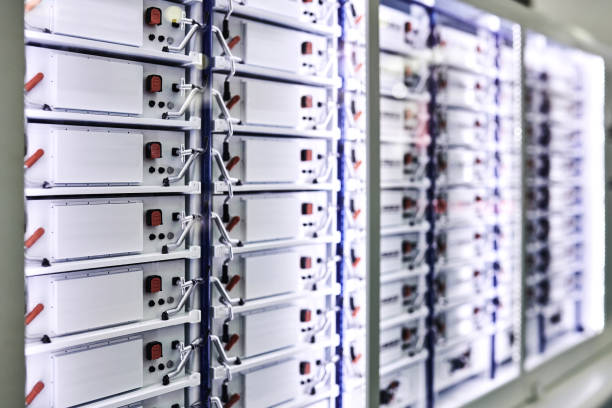
BESS facilities can help alleviate blackouts and brownouts across the city while delivering savings for ratepayers, supporters say. The batteries, which are charged at night, release energy back into the grid during peak hours of electricity use during the day to alleviate the strain on infrastructure.
Con Edison: Risk of overloads in some neighborhoods
Con Edison, however, says that the batteries could overload the grid if they are clustered in the same neighborhood, arguing that a surge of BESS projects in the same area could create new overnight peaks if they all charged at the same time. This would overload neighborhood electric hubs called substations, Con Edison argues.
The energy company has thus asked developers to pay fees to connect to the grid in order to fund the infrastructure upgrades that would accommodate those new peaks, rather than passing those costs onto customers.
Raghu Sudhakara, vice president of Distributed Resource Integration at Con Edison, said the measure aims to make energy more affordable by avoiding the clustering of BESS projects in certain areas.
“Energy storage delivers its greatest value when it reduces peak demand and defers infrastructure upgrades or integrates renewable generation efficiently as more clean resources come online,” Sudhakara said. “The grid has been built to serve customers, not to host battery storage anywhere, at any scale. Now is the time to take a fresh look at battery storage policy and make sure it is delivering real value for customers, not just economic value to storage developers.”
In filings with the state, Con Edison argued that BESS projects are not spread evenly across the city but instead clustered in areas where land costs and zonings make such projects more affordable for developers.
Con Edison implementing ‘near-total freeze’
But Claudia Villar-Leeman, senior director of policy at the New York Battery and Energy Technology Storage Consortium (NY-BEST), strongly disputed that reasoning.
She said NY-BEST has been urging Con Edison to modernize its rules so that all BESS systems do not charge at the same time and create new overnight peaks. Villar-Leeman accused the energy company of instead “going it alone” by introducing a new interconnection methodology that has resulted in a “near-total freeze” on new storage.
She added that energy storage is currently being governed by “outdated rules” and called on Con Edison to update its own rules on the technology so that storage can respond to what the grid needs.
“It’s kind of like noticing a leaky faucet and demolishing the whole kitchen instead of figuring out how to fix the problem,” Villar-Leeman said.
Patrick Robbins, director of the Utility Customers Association, said BESS systems can help rate-payers save money on two fronts – by stabilizing demand during peak hours and by avoiding expensive distribution upgrades.
Robbins said the infrastructure can also save rate-payers money by participating in Gov. Kathy Hochul’s Statewide Solar for All program, which aims to deliver clean energy savings to low-income households. The program will begin by offering energy credits to residents in disadvantaged communities, with the goal of delivering a minimum of $40 in energy credits to 800,000 households.
Supporters further argued that BESS systems will also allow the city to fully utilize energy drawn from renewable sources, which cannot be intentionally deployed during peak hours at present.
An alternative to peaker plants
Currently, the city utilizes fossil fuel-powered “peaker plants” during peak hour overload. Every single peaker plant is required by law to cease operation by 2030 if suitable alternatives are in place.
The Utility Customers Association letter calls on Con Edison to roll back its “unilateral and unwarranted changes” to its method of studying BESS interconnection.
Valdez was one of seven city and state officials to sign onto the letter, joining Council Members Alexa Avilés, Sandy Nurse and Lincoln Restler, Assembly Member Phara Souffrant Forrest, and State Senators Kevin Parker and Julia Salazar.
“I was proud to sign on to the letter to Con Edison, and I hope that more of my colleagues will step forward on this issue now that the word is getting out,” Valdez said in a statement.
The Queens lawmaker added that BESS projects represent “common-sense technology” that will help lower energy rates across the city and help New York move away from fossil fuels.
“If we’re paying Con Edison increased rates year over year, the least they can do is allow these common-sense technologies onto the electric grid. Batteries can lower our bills and help us move away from the city’s dirtiest and most expensive fuel sources,” Valdez added.
Villar-Leeman, meanwhile, said peaker plants contribute to “poor health outcomes” like asthma, predominantly impacting low-income neighborhoods. She said the city will not shutter peaker plants if it does not have sufficient energy storage capacity by 2030, adding that failing to do so will increase the risk of blackouts and brownouts.
“BESS projects are designed to discharge and provide electricity to the grid during those peak hours, and therefore reduce the likelihood of blackouts and brownouts by supporting that local infrastructure,” Villar-Leeman said.
“As we see heat waves getting longer and more intense, having reliable infrastructure can reduce the chances of that happening.”
Safety concerns
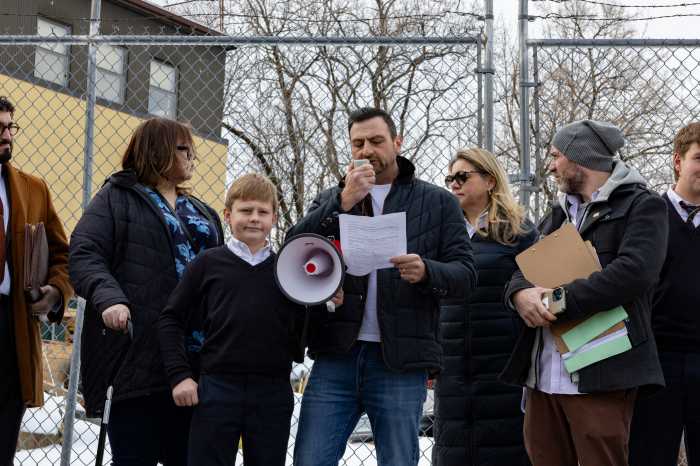
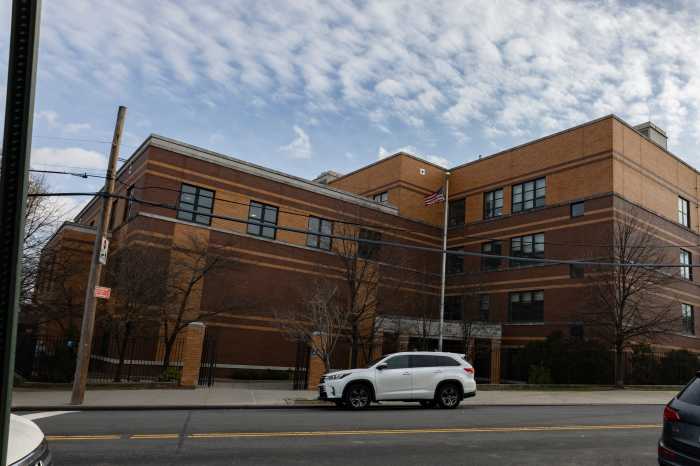
However, BESS projects have attracted criticism from local communities, with Middle Village residents and elected officials raising concerns about a planned facility directly opposite PS/IS 128Q. Those concerns centered on safety and health effects from hazardous chemicals, fires and noise pollution.
In particular, opponents have pointed to a fire at the Moss Landing energy storage facility fire in California and several that occurred in Warwick, New York.
However, officials have noted “key differences” between those sites and the planned BESS facilities in New York City.
Of the almost 7,500 BESS in the state, only three have caught fire for a .04% failure rate. To date, there has not been a fire or safety incident at any of the 30 BESSs already operating in the city.
The batteries used in the Moss Landing and Warwick facilities are not permitted for use within the city, with BESS facilities in the city using batteries sealed in water-proof, fire-proof and noise-dampening containers, as required by the FDNY.
Energy storage facilities in the city utilize a system that automatically shuts off any cell that is overheating.
“I’m confident that the Fire Department knows this area much better than I do,” Robbins said. “I’m inclined to take their word on the standards that BESS are held to.”
Villar-Leeman similarly expressed confidence that any BESS installed in the city would not pose a safety risk. She added that the risk of BESS fires is negligible compared to risks posed by peaker plants or blackouts.
“New York City has one of the strictest requirements for energy storage, safety and permitting compared to anywhere in the country,” she said. “So the concerns that are raised about fires seen in other places are very, very, very unlikely to happen here.
“Even the fires that have happened in other places have gotten disproportionate media attention to how common they are, so they are still incredibly rare occurrences,” she continued. “If you compare BESS to the risks that we live with every day, with our fossil fuel infrastructure. There are many injuries and explosions and even deaths that occur every year from natural gas infrastructure.”