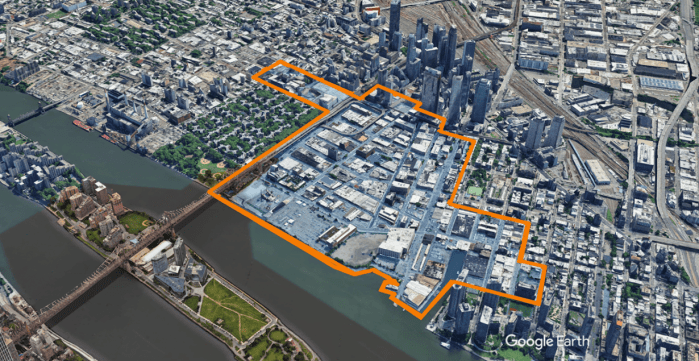
One of the biggest real estate stories in Long Island City over the last year was the planning and passage of the OneLIC Neighborhood Plan.
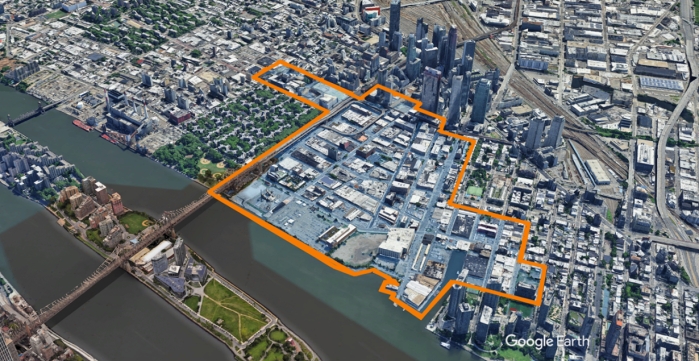
Passed unanimously by the New York City Council last November, the OneLIC Neighborhood Plan will create up to 14,700 new homes, including 4,300 affordable units, along with 15 acres of new public space, as part of a rezoning of 54 full or partial blocks in the neighborhood.
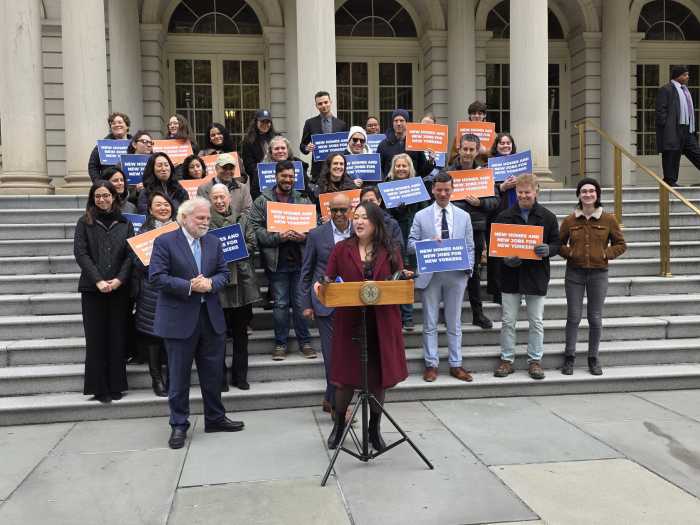
The plan had also previously been unanimously approved by the New York City Council’s Subcommittee on Zoning and Franchises and Committee on Land Use at the end of October, shortly after Council Member Julie Won, who represents the part of Long Island City that will be impacted by the OneLIC Neighborhood Plan, announced that $1.97 billion in commitments had been secured from the city.
On the same day as OneLIC’s passage in the City Council, developers committed another $100 million to help cover the public amenities that will be built, including arts and culture spaces.
Won and several local parks advocates came together last January to discuss the lack of green spaces in her district, where they emphasized the importance of the planned additions under OneLIC. One planned project they highlighted as a necessity was the restoration and revitalization of Newtown Creek, which has suffered from heavy pollution. Other notable projects they were hopeful that the OneLIC plan will fulfill are the Dutch Kills Loop, which would transform the sides of the Newtown Creek waterway and add plenty of new green space, the addition of a new dog park at Murray Park and a new walking track at Queensbridge Park for seniors.
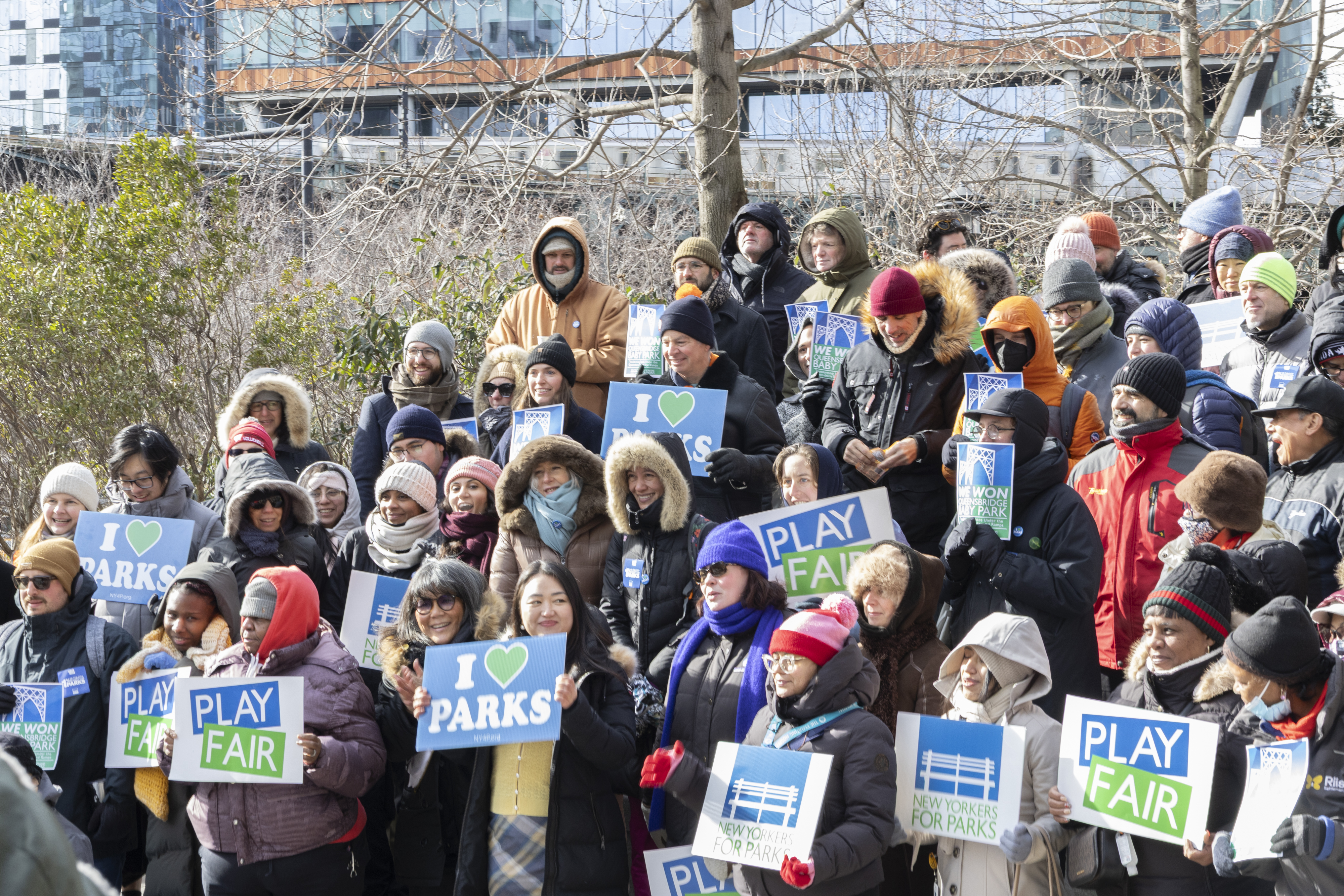
Shortly before OneLIC was passed by the City Council, Won, who spearheaded the effort, credited extensive public engagement over the prior two years for the unanimous approval from the Subcommittee on Zoning and Franchises and Committee on Land Use. She said this engagement helped separate OneLIC from the four previous failed rezoning efforts for the neighborhood. There were 21 large public forums for OneLIC, with 14,000 mailers having also gone out.
OneLIC was first proposed by the New York City Department of City Planning and then-Mayor Eric Adams’ administration. The rezoning was meant to revise outdated zoning regulations for mixed-use developments.
Won initially opposed the proposal when it was released last September, saying it did not far enough for the local community. However, after lengthy negotiations with the Adams administration, in which she secured the $1.97 billion in commitments, including for 1,300 new school seats, upgrades to the neighborhood’s sewage and plumbing infrastructure and around 15 acres of open space, which included a fully connected waterfront from Gantry Plaza State Park to Queensbridge Park, she felt her concerns were addressed.
Private developments that are located in the area of the OneLIC Neighborhood Plan rezoning will be mapped under Mandatory Inclusionary Housing’s Option 1 or 3. Developments mapped under Option 1 must have at least 25% of the housing units available at an average of 60% of the Area Median Income (AMI), with at least 10% of the units being set aside for households earning 40% AMI. Housing developments mapped under Option 3 must have at least 20% of the units being affordable, with an average of 40% AMI.
OneLIC is the largest neighborhood-specific rezoning plan that has been approved by the City Council over the last 25 years. The city and local stakeholders will be working together to establish a community oversight committee responsible for tracking the implementation of the city’s commitments.
More housing coming to Astoria
Astoria has seen several new housing projects since the start of 2025. The neighborhood’s location, which is in close proximity to Manhattan, combined with many old office buildings being turned into housing developments, have made it an area with high demand. The construction of new housing developments is intended to at least put a dent in the overwhelming demand for housing in Astoria.
Construction of new buildings and launches of housing lotteries have become frequent in Astoria. Many of these buildings are capable of housing more than 100 people.
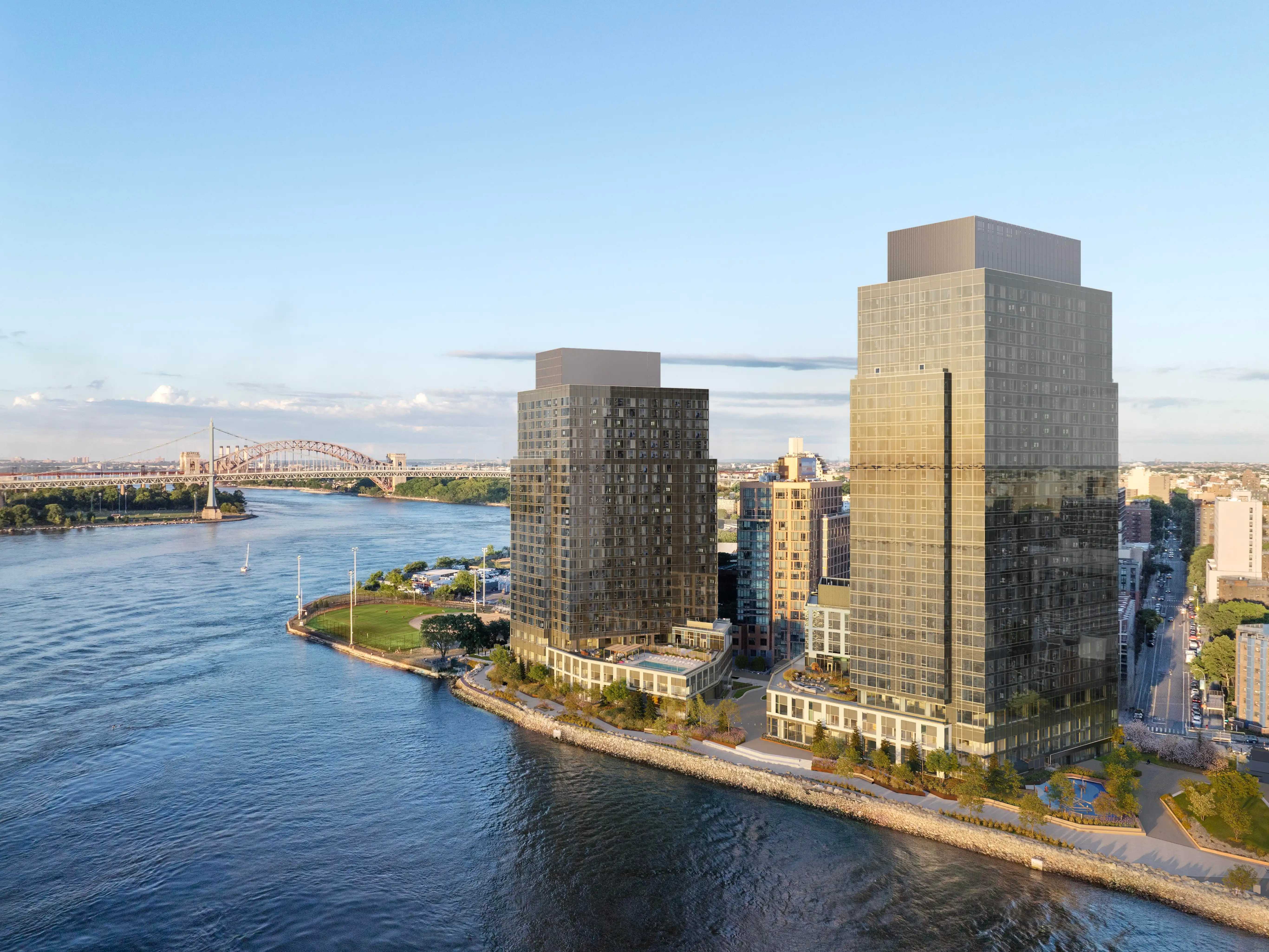
The Hallets Point developments are some of the most notable new buildings in the area. Located at 10 Hallets Point, 20 Hallets Point and 30 Hallets Point, the three buildings have more than 1,000 residential units. A housing lottery was launched in March 2025 for 41 total units across the latter two buildings.
Construction completed late last January on five buildings across Astoria that had 138 combined units, while at around the same time, work was being done at six other sites, five of which are either residential or mixed-use. The five buildings that are progressing will have 166 total residential units.
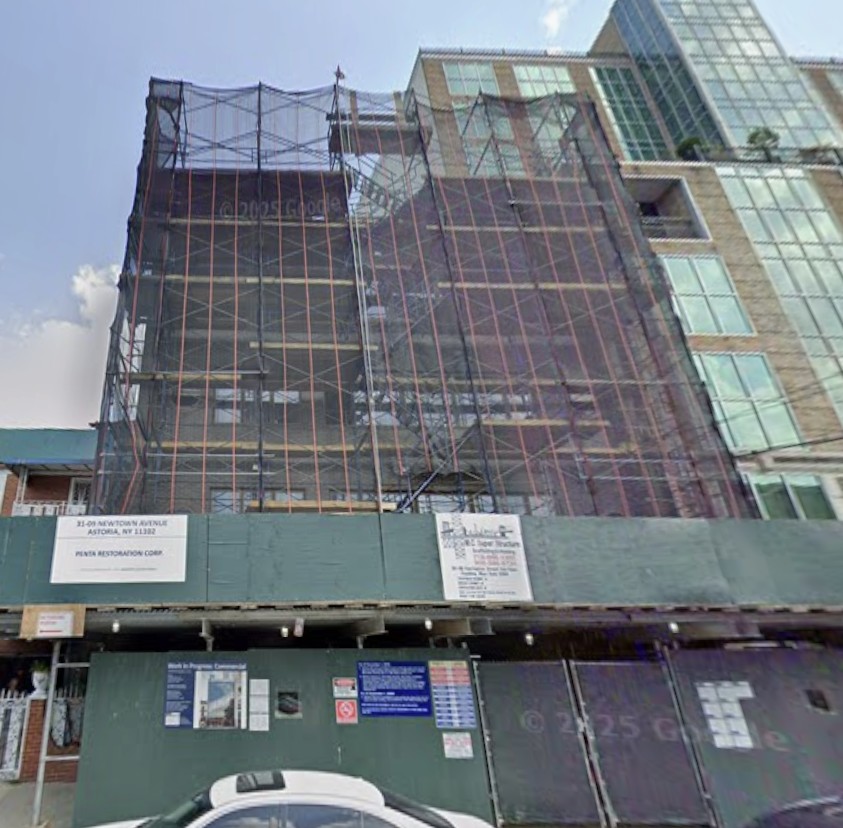
Work began last month on five more residential buildings in Astoria, which will combine to bring at least 100 more housing units to the neighborhood when completed.
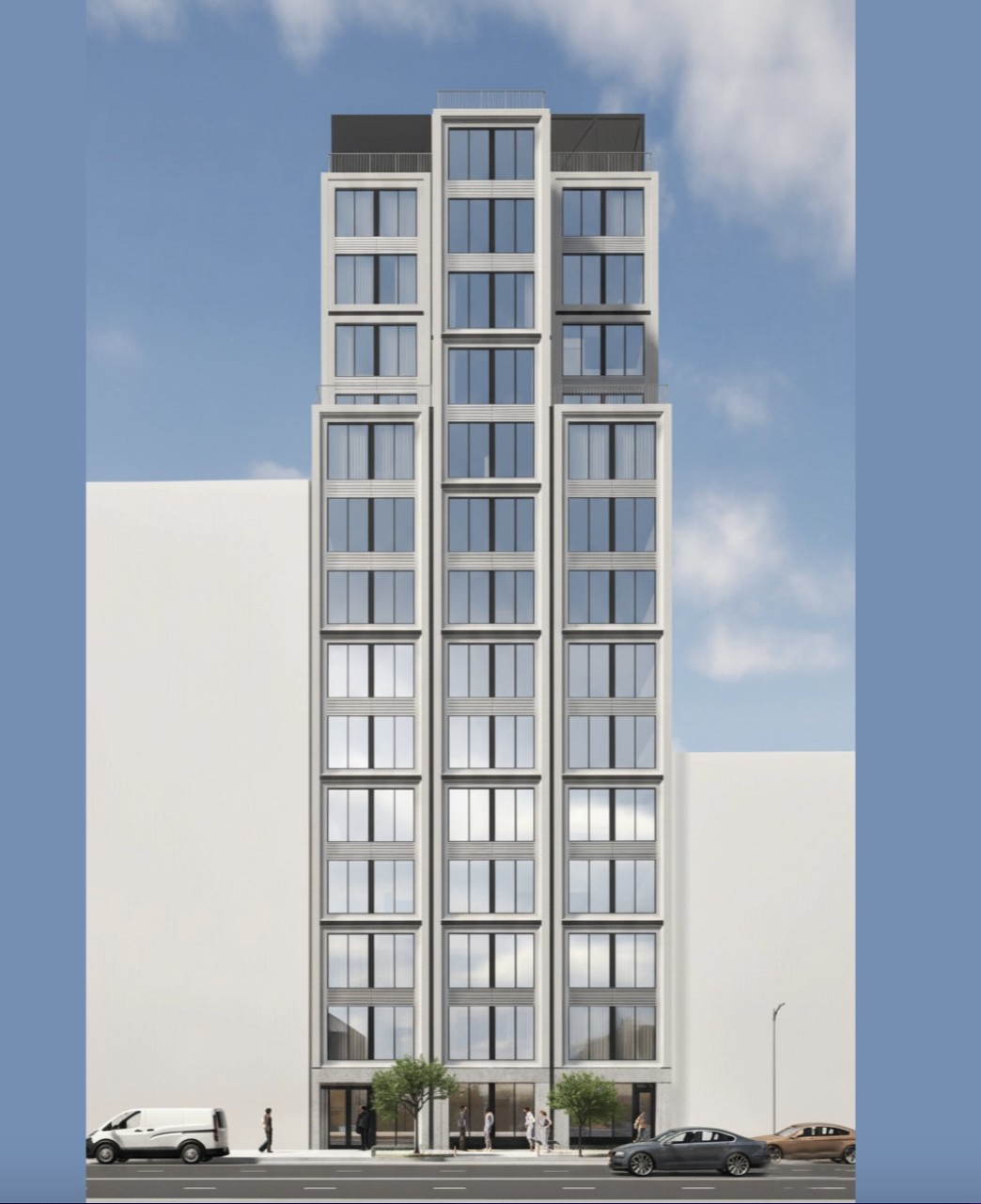
Around the same time, excavation began at 30-11 12th St., where a residential building with 124 housing units is being built.